Can You Get SR-22 Without Car Ownership?
12 November 2026
See How We're Different
or call us: (727) 620-0620
Not owning a car doesn't necessarily mean you're exempt from insurance requirements after a license suspension. If Florida requires you to provide proof of financial responsibility, you may still need qualifying coverage before you can restore your driving privileges.
If you're wondering, "Can you get SR-22 without car ownership?", the answer is yes. Eligible drivers can obtain an SR-22 filing through a non-owner auto insurance policy, even when they don't own or register a vehicle.
An SR-22 isn't a separate insurance policy. It's a certificate your insurance company files with the state to verify that you maintain the required liability coverage. Non-owner insurance can provide the coverage needed to support that filing.
However, eligibility depends on your driving circumstances, access to other vehicles, and the requirements associated with your suspension.
At 5-Star Insurance [Link to: "non-owner sr22 insurance"], we help drivers understand SR-22 and FR-44 requirements, compare available policies, and arrange the appropriate filings. Whether you're between vehicles or working toward license reinstatement, understanding your options can help you avoid unnecessary expenses and coverage problems.
How Does Non-Owner SR-22 Insurance Work?
Non-owner SR-22 insurance combines two separate components: a liability insurance policy and a certificate of financial responsibility.
The insurance policy provides coverage for certain accidents involving eligible vehicles you don't own. The SR-22 certificate confirms to the Florida Department of Highway Safety and Motor Vehicles (FLHSMV) that you maintain the required insurance.
This arrangement can benefit people who need proof of coverage but don't have a vehicle registered in their name.
For example, someone who sold their car following a license suspension might still need an SR-22 to satisfy Florida's reinstatement requirements. Rather than purchasing another vehicle solely to obtain insurance, they may qualify for non-owner coverage.
Florida allows drivers to use qualifying non-owner policies for certain SR-22 requirements. However, the policy must satisfy the applicable liability limits and be accepted for the specific filing.
An SR-22 may be required following certain serious traffic violations, uninsured accidents, or driving-related suspensions. The exact requirement depends on the circumstances and the state's determination.
Drivers with qualifying DUI-related convictions in Florida generally need an FR-44 instead. This certificate requires higher liability limits than a standard SR-22.
For applicable SR-22 bodily injury and property damage requirements, the limits generally include $10,000 per person, $20,000 per accident, and $10,000 for property damage. Florida's FR-44 requirements generally involve $100,000 per person, $300,000 per accident, and $50,000 for property damage.
However, the precise insurance requirements depend on the reason for the suspension.
Non-owner insurance doesn't eliminate the filing requirement. It provides a potential way to satisfy that requirement without insuring a personally owned vehicle.
Once the qualifying policy becomes active, the insurance carrier submits the SR-22 certificate to the appropriate state authority.
The filing must remain supported by continuous insurance coverage throughout the required period.
If the policy lapses or is canceled, the insurer may notify the state. That notification can lead to another suspension or additional reinstatement requirements.
For this reason, choosing an appropriate policy and maintaining it consistently are both essential.
What Does Non-Owner Insurance Cover for Drivers Without a Vehicle?
Non-owner insurance is designed for people who don't own a vehicle but occasionally drive eligible borrowed or rented cars.
Unlike a standard owner policy, which insures a specific vehicle, non-owner coverage generally provides liability protection based on the insured driver's qualifying use of another person's vehicle.
This protection may help pay for injuries or property damage you cause to others in a covered accident.
For example, if you occasionally borrow a friend's car with permission and cause an accident, non-owner liability coverage may apply, subject to the policy's conditions and exclusions.
However, the policy generally doesn't pay to repair the borrowed vehicle or replace your personal belongings.
Non-owner coverage also typically excludes vehicles owned by you or available for your regular use. This distinction is particularly important for people who share a household with other drivers.
The following comparison explains how non-owner and owner policies generally differ.
| Coverage or Situation | Non-Owner Insurance | Owner Auto Insurance |
|---|---|---|
| Vehicle ownership | Designed for eligible drivers without a vehicle | Designed for drivers who own or insure a specific vehicle |
| Liability protection | Generally covers eligible bodily injury and property damage claims | Provides liability coverage for covered use of the insured vehicle |
| Borrowed vehicles | May cover occasional use, subject to conditions | Coverage varies by policy and driving arrangement |
| Rental vehicles | May provide liability coverage, depending on the policy | Rental coverage depends on the policy and endorsements |
| Vehicle damage | Generally excludes damage to the borrowed vehicle | May cover vehicle damage when collision or comprehensive protection is purchased |
| Household vehicles | Commonly excludes vehicles regularly available for use | May cover listed household vehicles and eligible drivers |
| SR-22 filing | May support qualifying non-owner filings | May support filings associated with an insured vehicle |
Although non-owner insurance may provide useful liability protection, it doesn't automatically cover every situation involving a borrowed vehicle.
For example, an insurer may treat occasional use of a friend's car differently from regularly driving a spouse's or roommate's vehicle.
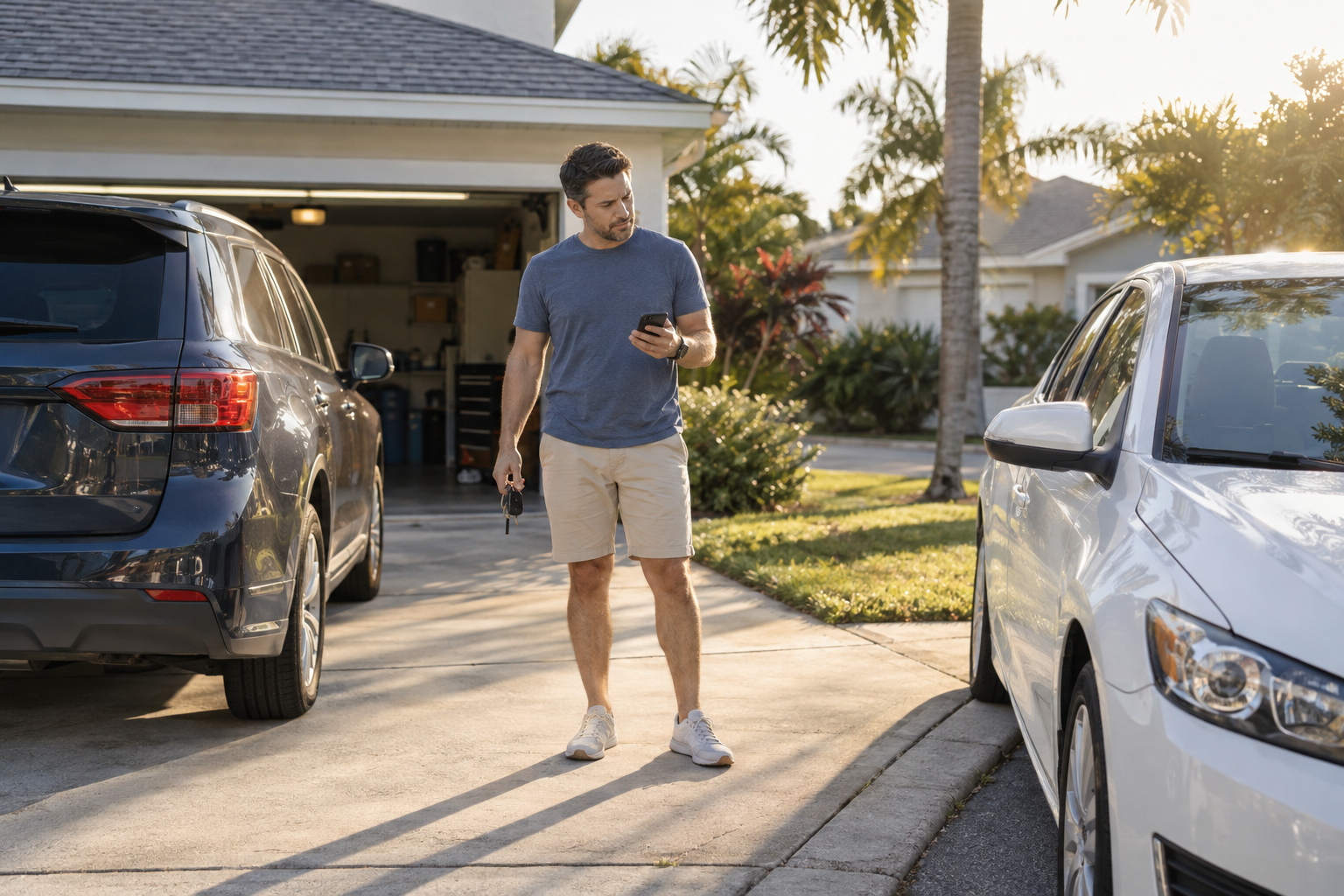
If you have continuous access to a household car, the insurance company may consider that vehicle available for your regular use.
In that situation, you may need to be listed on the vehicle owner's policy rather than relying on non-owner coverage.
Similarly, a non-owner policy isn't suitable for a vehicle titled or registered in your name.
Florida requires owners of registered vehicles to maintain applicable vehicle-specific insurance [Link to: "do i need sr-22 and regular insurance"]. A non-owner policy cannot replace those obligations.
The right coverage depends on who owns the vehicle, where it is kept, how often you drive it, and the requirements established by the insurer.
Before purchasing a policy, explain these details clearly to your insurance agent.
This helps prevent misunderstandings about eligibility and reduces the risk of discovering coverage limitations after an accident.
Who Qualifies for Non-Owner SR-22 Insurance in Florida?
Non-owner SR-22 insurance may be suitable for Florida drivers who need to maintain financial responsibility but don't own or regularly operate a particular vehicle.
Eligibility isn't determined solely by whether your name appears on a vehicle title.
Insurance companies also consider your access to vehicles, driving habits, household arrangements, and the circumstances behind your filing requirement.
A non-owner policy may be appropriate for several situations:
- Drivers between vehicles: You sold your car but still need to maintain qualifying coverage during an active SR-22 filing period.
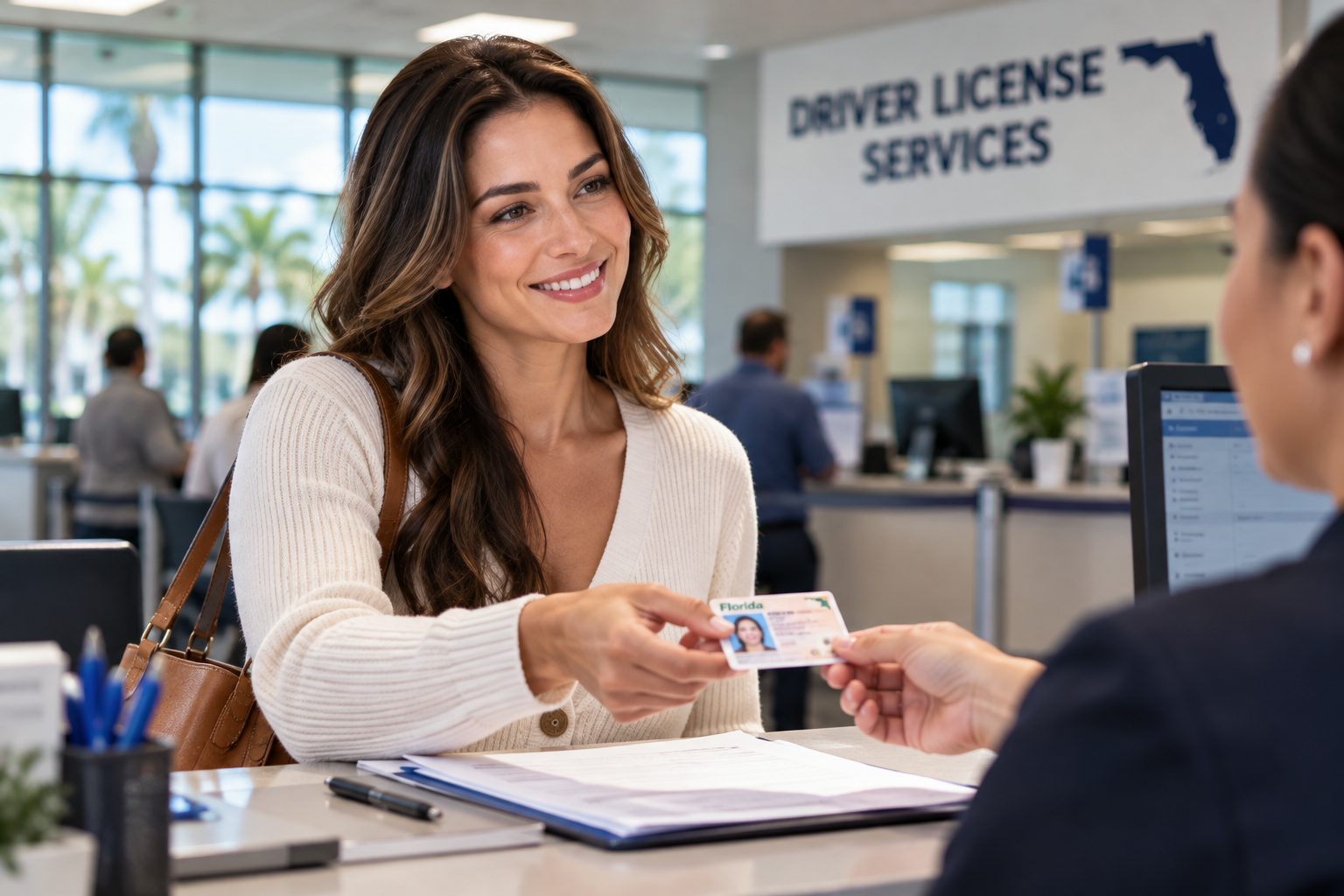
- People seeking license reinstatement: You must provide proof of financial responsibility before restoring your driving privileges, even though you don't currently own a vehicle.
- Occasional borrowers: You sometimes drive a friend's or relative's vehicle with permission but don't have regular access to it.
- Occasional renters: You rent vehicles periodically and need liability coverage that meets your filing requirements, subject to the policy's rental provisions.
- Drivers maintaining continuous coverage: You want to avoid an interruption in qualifying insurance while deciding whether to purchase another vehicle.
However, a non-owner policy isn't appropriate for every driver without a vehicle registered in their name.
Consider someone who lives with a family member and drives that person's car to work every day.
Even though the driver doesn't legally own the vehicle, regular access may make non-owner coverage unsuitable.
The insurer may require the driver to be added to the household policy instead.
Similarly, someone who purchases a vehicle during the SR-22 filing period generally needs to transition to an owner policy.
The deciding factor is your actual driving arrangement, not simply whether you own a car.
Insurance companies may also evaluate your driving history, previous accidents, serious convictions, and insurance cancellations.
High-risk drivers can sometimes face fewer available policy options or higher premiums. However, needing an SR-22 doesn't automatically mean that every insurer will decline coverage.
Comparing companies that handle financial responsibility filings can help identify suitable options.
At 5-Star Insurance, we assist Florida drivers with non-owner SR-22 and FR-44 coverage, including situations involving suspended licenses and previous driving violations.
Our team can help review your circumstances and explain whether non-owner insurance or another type of policy may be more appropriate.
How to Get an SR-22 Filing Without Owning a Car
Obtaining an SR-22 without owning a vehicle begins with confirming your state's requirements and selecting an eligible insurance policy.
The process generally involves arranging qualifying liability coverage, activating the policy, and having the insurer submit the certificate to the appropriate licensing authority.
You don't purchase an SR-22 as a standalone insurance product.
Instead, the filing accompanies an active policy that satisfies the required financial responsibility limits.
Follow these steps to get started:
- Review your suspension or reinstatement notice. Confirm whether the state requires an SR-22 or FR-44. Check the filing period, liability limits, and any additional conditions.
- Determine whether non-owner coverage fits. Consider whether you own a vehicle, regularly drive a household car, or occasionally borrow eligible vehicles.
- Request an insurance quote. Contact an insurer or agency experienced with SR-22 filings. Provide accurate information about your license status, driving history, and coverage needs.
- Compare available policies. Evaluate liability limits, exclusions, premiums, filing fees, and payment arrangements. Make sure the insurer can submit the necessary certificate.
- Activate qualifying insurance. Complete the application and make the required payment. Confirm the effective date before relying on the policy.
- Arrange the DMV filing. Your insurance company submits the certificate to the appropriate state authority. Request confirmation for your records.
- Verify your reinstatement status. Confirm that the licensing authority has accepted your filing and determine whether other fees, waiting periods, or conditions remain.
When applying, be prepared to provide your driver's license details, current address, driving history, and information about the filing requirement.
The insurer may also ask whether you have access to a vehicle owned by someone in your household.
Answering accurately is important because eligibility and coverage depend on your circumstances.
If your driving privileges were suspended outside Florida, additional considerations may apply.
For example, a driver who moves to Florida while maintaining an SR-22 obligation in Texas may still need to satisfy the original state's requirements.
Moving doesn't automatically eliminate an existing financial responsibility obligation.
Before changing insurance, confirm which state must receive the filing and whether the new carrier can meet those requirements.
Once the certificate is submitted, remember that the filing itself doesn't automatically restore your license.
You may still need to pay reinstatement fees, complete a required program, or satisfy other conditions imposed by the state.
Always verify that your driving privileges have been restored before operating a vehicle.
What Does Non-Owner SR-22 Insurance Cost, and How Long Must You Keep It?
Non-owner SR-22 insurance is often more affordable than a standard owner policy because it provides liability protection without covering damage to a specific vehicle. However, premiums vary based on your driving history, previous accidents, location, coverage limits, and insurance company.
The violation behind your SR-22 requirement often affects your premium more than the filing itself. Insurers may charge higher rates following serious traffic convictions or repeated violations.
An additional SR-22 filing fee may apply. When comparing quotes, consider the total premium, initial payment, installment charges, and filing costs. Florida drivers requiring an FR-44 may pay more because of the higher liability limits.
Maintaining continuous coverage is essential. Florida SR-22 and FR-44 requirements commonly last three years, although the exact period depends on your circumstances. Confirm your filing requirements with the Florida Department of Highway Safety and Motor Vehicles (FLHSMV).
To avoid coverage lapses:
- Pay premiums on time and monitor renewal dates.
- Keep your contact information updated.
- Arrange replacement coverage before switching insurers.
- Notify your agent if you purchase a vehicle.
- Confirm your filing period has ended before removing the certificate.
If your policy lapses, your insurer may notify the state, potentially triggering another license suspension or reinstatement fees.
If you purchase a vehicle, you'll generally need to replace non-owner coverage with an owner policy while maintaining the required SR-22 filing.
Once your filing obligation ends, verify its completion with the licensing authority. Maintaining continuous insurance and a clean driving record can help improve future coverage options.
Get Non-Owner SR-22 Insurance with 5-Star Insurance
You don't need to purchase a vehicle simply because Florida requires proof of financial responsibility.
For eligible drivers, non-owner SR-22 insurance offers a way to maintain qualifying liability coverage while satisfying a state filing requirement.
However, choosing the appropriate policy requires understanding your driving habits, vehicle access, and the conditions associated with your suspension.
At 5-Star Insurance, we help Florida drivers navigate SR-22 and FR-44 requirements, compare available insurance options, and arrange the necessary filings.
Whether you're seeking license reinstatement, maintaining coverage between vehicles, or trying to manage higher insurance costs, our team can help explain your options.
We understand that dealing with suspended driving privileges can be stressful. Our goal is to make the insurance process clearer and help you find coverage that fits your circumstances and applicable state requirements.
Need an SR-22 but don't own a car? Contact 5-Star Insurance today for a free quote. Explore available non-owner insurance options, get assistance with your filing, and take the next step toward restoring your driving privileges.

Recent Posts