Florida FR44 Requirements After Suspension: Insurance, Filing, and Reinstatement
5 November 2026
See How We're Different
or call us: (727) 620-0620
A DUI-related license suspension in Florida can leave you with several steps to complete before you can legally drive again. One of them may be an FR-44 insurance filing .
Understanding the Florida FR44 requirements after suspension can help you avoid buying the wrong coverage, missing a filing deadline, or facing another suspension after your license is restored.
An FR-44 is a certificate of financial responsibility confirming that you carry the higher liability insurance limits required by the state. It isn't a separate insurance policy. Your insurance company submits the certificate to the Florida Department of Highway Safety and Motor Vehicles (FLHSMV).
Drivers who need an FR-44 generally must carry $100,000 in bodily injury liability per person, $300,000 per accident, and $50,000 in property damage liability. The requirement commonly lasts three years after license reinstatement.
Before purchasing coverage, confirm what's listed on your driving record. The type of filing, coverage start date, and reinstatement requirements all affect your next steps.
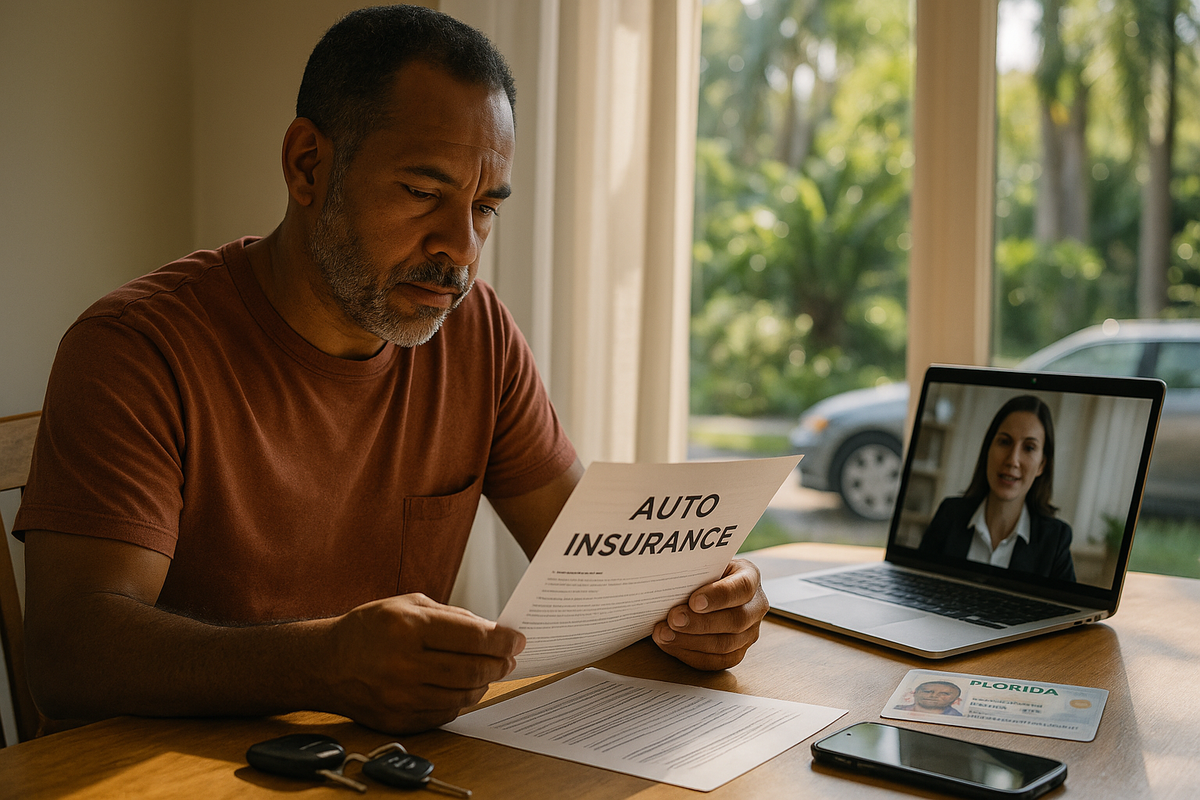
Florida FR-44 Insurance Requirements after a DUI Conviction
Florida requires certain drivers convicted of driving under the influence to demonstrate greater financial responsibility before regaining their driving privileges.
Under Florida Statute 324.023, drivers subject to the FR-44 requirement must maintain higher liability limits than those generally required for standard auto insurance.
The minimum coverage amounts are:
- $100,000 per person for bodily injury liability.
- $300,000 per accident for bodily injuries involving multiple people.
- $50,000 per accident for property damage liability.
These limits are often described as 100/300/50 coverage.
Bodily injury liability helps pay for injuries you cause to other people in a covered accident, subject to your policy terms. Property damage liability helps pay for damage to another person's vehicle or property.
Neither type of liability coverage automatically pays for damage to your own car.
Who Needs an FR-44 Filing?
An FR-44 is required following certain qualifying Florida DUI convictions involving alcohol or drugs.
Not every driver with a suspended license needs this filing. The state may impose different requirements depending on the offense and the circumstances surrounding the suspension.
For example, a driver whose license was suspended for an insurance violation may need an SR-22 instead. A suspension involving unpaid citations or another administrative issue may have different conditions. Accidents, multiple traffic tickets, or reckless driving alone do not generally trigger Florida's FR-44 requirement.
Your FLHSMV notice or official driving record should identify the applicable insurance requirement.
Can You Purchase Coverage While Your License Is Suspended?
Yes. Florida drivers can generally purchase qualifying insurance even if their driving privileges haven't been restored.
In fact, purchasing coverage and arranging the filing may be necessary before reinstatement.
Having insurance doesn't give you permission to drive while your license remains suspended.
You must complete the state's reinstatement process and confirm that your driving privileges have been restored.
5-Star Insurance helps Florida drivers find coverage for DUI-related filing requirements, including situations involving a suspended license.
FR-44 vs. SR-22: Understanding the Filing Differences
An FR-44 and an SR-22 serve a similar purpose. Both are certificates filed by an insurance carrier to provide proof to the state that a driver maintains the required liability insurance.
The difference is the circumstances that trigger each filing and the amount of insurance the driver must carry.
An FR-44 generally applies to certain DUI-related convictions in Florida. An SR-22 may be required for other violations, including certain insurance-related suspensions.
Florida FR-44 vs. SR-22 Insurance Comparison
| Requirement | FR-44 | SR-22 |
|---|---|---|
| Purpose | Proves higher liability insurance coverage | Proves qualifying liability insurance coverage |
| Typical reason | DUI-related conviction | Certain violations or license suspensions |
| Liability limits | $100,000/$300,000/$50,000 | Generally lower than FR-44 limits, depending on the requirement |
| Filing process | Submitted by the insurance carrier | Submitted by the insurance carrier |
| Coverage period | Commonly three years from reinstatement | Depends on the state's requirement |
| Vehicle ownership | Owner or qualifying non-owner coverage | Owner or qualifying non-owner coverage |
| Policy cancellation | Can lead to another suspension | Can also affect driving privileges |
How Electronic Filing Works
When you purchase a qualifying policy, the insurer submits the required certificate to the Florida FLHSMV.
The filing verifies that the appropriate coverage is in force. It's separate from the insurance identification card you may receive.
The insurance carrier must also report certain changes, including cancellations that affect your ability to satisfy the state's requirement.
This is why purchasing a policy isn't necessarily the last step. You also need to make sure the department has received the correct filing.
Why the Distinction Matters
Purchasing SR-22 coverage when the state requires an FR-44 may leave you without sufficient insurance to satisfy your reinstatement conditions.
The reverse can also create unnecessary expense if you purchase higher coverage limits than your specific filing requires.
Before requesting a quote, identify the certificate listed on your Florida driving record.
Insurance companies familiar with high-risk auto insurance can help match the filing and policy to the driver's circumstances.
How to Reinstate a Suspended Driver License in Florida
Getting insurance is one part of the license reinstatement process [link to: "florida 44 license reinstatement process]. Depending on your violation, the state may require additional payments, documentation, or completion of a suspension period.
A DUI conviction can involve separate criminal and administrative penalties. Meeting an insurance requirement doesn't automatically resolve those obligations.
Steps to Complete before License Reinstatement
- Check your suspension status. Review your Florida FLHSMV notice or driving record to identify the reason for your suspension and any outstanding conditions.
- Confirm the insurance requirement. Determine whether you need an FR-44, SR-22, or another form of insurance verification.
- Purchase qualifying coverage. Choose an insurance policy with the liability limits required for your situation.
- Arrange the filing. Have the insurance company submit the appropriate certificate electronically to the department.
- Complete additional obligations. Pay applicable reinstatement fees and satisfy any court requirements, DUI-related education, or other conditions listed on your record.
- Verify your driving privileges. Confirm that the state has processed your requirements and restored your eligibility before driving.
Completing these steps in the correct order can help prevent delays caused by missing documents or insufficient insurance limits.
How Long Must You Carry FR-44 Insurance after a DUI?
The FR-44 insurance requirement generally lasts three years from the date of driver license reinstatement, not from the date of the offense or conviction.
Your individual requirement should be confirmed with the department because the applicable start date and compliance conditions matter.
During that period, you must maintain the qualifying liability coverage.
If you cancel your policy, miss a payment that results in cancellation, or reduce your liability limits below the required amounts, the insurer may notify the state.
This can result in another license suspension.
What Happens if Your Coverage Lapses?
A lapse can create problems even if you haven't been driving.
Once the insurance company reports that qualifying coverage is no longer active, your driving privileges may be affected.
Restoring coverage afterward doesn't necessarily resolve the suspension automatically. You may need a new filing, additional reinstatement steps, or payment of applicable fees.
If you're having trouble making a payment, contact your insurance provider before the policy cancels. Ask about available payment arrangements or other coverage options.
Keeping an active policy is generally easier than dealing with another suspension.
Can You Get a Hardship License after a DUI?
Some Florida drivers may qualify for a hardship license that allows limited driving while their regular license remains suspended.
These driving privileges are restricted to approved purposes, which may include employment, education, medical needs, or other authorized activities.
Eligibility depends on your individual circumstances, including the offense and applicable state requirements.
A hardship license doesn't eliminate the underlying suspension or remove the need for qualifying insurance.
The appropriate state authority determines whether you're eligible and what restrictions apply.
Florida Non-Owner FR-44 Insurance vs. Owner Coverage
You don't necessarily need to own a car to satisfy an FR-44 insurance requirement.
Florida non-owner insurance may be available to drivers who need qualifying liability coverage but don't have a vehicle registered or titled in their name.
The right policy depends on vehicle ownership, household access, and how you expect to use a car.
When Non-owner Insurance May Be Appropriate
A non-owner policy generally provides liability coverage for occasional use of vehicles you don't own, subject to the policy's terms.
It may suit someone who needs to maintain the required insurance filing but doesn't currently own a car.
For example, a driver who sold their vehicle after a DUI may still need to maintain qualifying coverage during the compliance period.
A non-owner policy may allow that driver to satisfy the insurance requirement without insuring a personally owned vehicle, if they meet the insurer's eligibility conditions.
Non-owner insurance has limitations.
It generally doesn't provide physical damage coverage for the vehicle being driven. It also may exclude vehicles regularly available to you or owned by someone in your household.
If you frequently drive a family member's car, that access needs to be disclosed before purchasing coverage.
When an Owner Policy Is the Better Choice
If you own or register a vehicle, a standard owner policy is generally the appropriate option.
That can remain true even when the vehicle is parked most of the time or you don't currently have permission to drive.
The policy needs to meet the liability limits associated with the state's filing requirement.
Depending on your needs, additional coverage may be available for damage to your own vehicle.
An insurance agent can help determine whether your ownership and driving circumstances fit the carrier's eligibility rules.
What if You Buy a Car during Your Filing Period?
Your insurance needs can change during the three-year compliance period.
If you purchase a vehicle while maintaining non-owner coverage, contact your insurance provider before driving it.
You may need to switch to an owner policy and arrange for the required certificate to remain active.
Don't assume that a non-owner policy automatically covers a newly purchased car.
The same applies if you begin regularly using a household vehicle or gain access to a car that wasn't disclosed when your policy started.
Making the proper policy changes before your driving situation changes can help prevent coverage gaps.
FR-44 Insurance Cost and Ways to Keep Coverage Affordable
FR-44 insurance often costs more than standard auto insurance because it requires higher liability limits and commonly follows a DUI-related conviction.
There isn't one fixed FR-44 insurance cost for every Florida driver.
Your premium depends on the insurance company's rating factors, your driving history, the coverage selected, and whether you need an owner or non-owner policy.
A recent DUI conviction, previous traffic violations, or past insurance lapses may also affect the price.
Why Quotes Differ between Insurance Carriers
Insurance companies don't all evaluate risk or price coverage the same way.
One carrier may offer a better rate for a driver with a recent DUI, while another may provide more suitable terms for someone needing non-owner coverage.
Comparing quotes can help you see those differences before committing to a policy.
The lowest advertised price doesn't always represent the lowest total cost. Make sure you're comparing policies with the correct coverage limits and filing eligibility.
What if You Can’t Afford FR-44 Insurance?
If the premium is difficult to manage, review available options before allowing your coverage to cancel.
You may be able to compare other carriers, discuss payment arrangements, or select a policy structure that better reflects your actual vehicle usage.
Florida removed the requirement that FR-44 certificates be non-cancellable effective October 1, 2023. A minimum six-month policy term still applies, but that doesn't mean every driver must pay six months of premiums upfront. Payment options depend on the insurance carrier, so it's important to confirm whether installment payments are available and understand the policy's cancellation terms.
Non-owner insurance may be worth considering if you don't own a vehicle and meet the eligibility requirements.
It isn't a substitute for owner coverage when you have a car or regular access to one.
The goal is to find insurance you can maintain throughout the required period, rather than purchasing a cheaper policy that doesn't meet the state's conditions.
How to Find an Insurance Carrier That Offers FR-44 Coverage?
Not every insurance company offers FR-44 filings, and eligibility can vary depending on your driving history, license status, and coverage needs.
Before choosing an insurer, confirm that it can issue a policy meeting Florida's required liability limits and submit the necessary filing to the state.
Compare quotes from carriers that accept drivers with DUI-related violations. Look at the total premium, payment options, coverage terms, and filing process before making a decision.
5-Star Insurance helps Florida drivers compare available coverage options, including owner and non-owner policies. The team can help you find qualifying insurance that meets your filing requirements and fits your budget.
Get Help with Your Florida FR-44 Filing
Dealing with a suspended license can be frustrating, especially when insurance costs and reinstatement conditions are involved.
Getting the right coverage in place is one part of moving forward.
Before purchasing a policy, confirm whether the state requires an FR-44, check the applicable liability limits, and make sure your insurer can complete the filing.
You should also understand how long the coverage must remain active and what could happen if your policy lapses.
5-Star Insurance works with Florida drivers who need high-risk auto insurance, including DUI-related filings, owner policies, and non-owner coverage.
The team can help you review insurance options, compare quotes, and arrange the required filing.
Need an FR-44 insurance quote in Florida?
Contact 5-Star Insurance at (727) 620-0620 or visit 5starinsurance.com to get started.
Get help finding qualifying coverage that fits your circumstances and budget, so you can complete the insurance portion of your reinstatement process.

Recent Posts