How Much Does FR44 Insurance Cost in Florida in 2026?
30 July 2026
See How We're Different
or call us: (727) 620-0620

A DUI conviction in Florida doesn't just come with fines and court appearances. It triggers one of the most expensive insurance requirements in the country: the FR44 filing. If you're trying to figure out how much FR44 insurance costs in Florida in 2026, the short answer is that you'll pay significantly more than a standard policy, often two to three times your previous premium. The exact amount depends on your driving record, where you live, and which carrier you choose. Florida is one of only two states that requires an FR44 instead of the more common SR22, and its mandatory liability limits are far higher than what most drivers carry. That distinction alone makes your premiums jump. The good news is that you have options to manage these costs, and understanding the filing's structure gives you a real advantage. This guide breaks down current pricing, the factors that shape your quote, and practical strategies to reduce what you pay over the three-year filing period.
Understanding Florida FR44 Requirements for 2026
Florida requires an FR44 certificate after specific alcohol-related or drug-related driving offenses. This includes DUI convictions, refusal to submit to a breathalyzer test, and certain vehicular manslaughter charges. The FR44 is a certificate your insurance company files directly with the Florida Department of Highway Safety and Motor Vehicles (DHSMV) to prove you carry the state-mandated higher liability coverage.
Your insurer is legally obligated to notify the DHSMV if your policy lapses, cancels, or expires. That notification happens electronically, and the consequences are immediate: your license gets suspended again. This is why maintaining continuous coverage for the full filing period is so critical.
Difference Between SR22 and FR44
Most states require an SR22 filing for high-risk drivers, but Florida and Virginia stand apart by requiring an FR44 for alcohol-related offenses. The core difference is the coverage amount. An SR22 typically certifies that you carry your state's minimum liability limits. An FR44, on the other hand, certifies coverage at much higher thresholds, which is precisely why it costs more.
Florida does still use the SR22 for non-alcohol offenses like driving without insurance or accumulating too many points. If your offense involved alcohol or drugs, though, you'll need the FR44 with its elevated limits.
Mandatory Liability Limits in Florida
Standard Florida auto insurance requires $10,000 in personal injury protection (PIP) and $10,000 in property damage liability. Florida is a no-fault state, meaning your PIP covers your own medical expenses up to that $10,000 limit regardless of who caused the accident. The catch is that PIP won't cover everything in a serious crash, leaving you personally liable for the difference.
An FR44 filing raises your required minimums to $100,000 per person and $300,000 per accident in bodily injury liability, plus $50,000 in property damage. These limits are substantially higher than what most Florida drivers carry, and they're the primary reason FR44 policies cost so much more than standard coverage.
Average Monthly and Annual Costs
The average annual cost for FR44 insurance in Florida ranges from $3,500 to $6,200, representing a significant increase over standard premiums. On a monthly basis, you're looking at roughly $290 to $520 depending on your profile. Drivers with a clean record aside from the DUI tend to land on the lower end, while those with multiple violations or prior claims can expect to pay near the top of that range.
These figures reflect 2026 pricing, which has risen roughly 12% compared to 2024 rates due to broader market trends in Florida, including increased litigation costs and hurricane-related claims pressure across the state.
The Impact of the Non-Cancellable Policy Rule
FR44 policies in Florida carry a non-cancellable provision, meaning you can't voluntarily cancel the policy during the three-year filing period without facing consequences. If your policy cancels for any reason, including missed payments, your insurer notifies the DHSMV and your license is suspended again. Worse, the three-year clock may reset entirely, forcing you to start the filing period over.
This rule makes it essential to budget for the full 36 months of premiums before you commit to a policy. Setting up automatic payments can prevent an accidental lapse that would cost you far more in the long run.
Comparison of FR44 vs. Standard Auto Premiums
The difference between FR44 and standard premiums is stark. Here's a side-by-side comparison for a typical Florida driver:
| Coverage Type | Standard Policy | FR44 Policy |
|---|---|---|
| Bodily Injury (per person) | $25,000 | $100,000 |
| Bodily Injury (per accident) | $50,000 | $300,000 |
| Property Damage | $10,000 | $50,000 |
| Average Annual Premium | $1,800 - $2,400 | $3,500 - $6,200 |
| Filing Fee | None | $15 - $50 |
The premium gap reflects both the higher coverage limits and the surcharge insurers apply to high-risk drivers. You're paying more for more coverage, but you're also paying a risk premium that the carrier assigns to DUI-related filings.
Factors That Influence Your FR44 Quote
No two FR44 quotes look the same. Insurers weigh a combination of personal, geographic, and vehicle-related factors when calculating your premium. Understanding these variables helps you identify where you might find savings.
Your age and gender play a role, as do your credit score and marital status. Florida allows insurers to use credit-based insurance scores, and drivers with lower scores tend to pay more across the board, not just for FR44 policies.
Location and Driving History
Where you live in Florida has a measurable impact on your rate. Urban areas like Miami-Dade, Broward, and Hillsborough counties carry higher premiums due to greater traffic density, higher accident rates, and more frequent uninsured motorist claims. A driver in Jacksonville might pay 15-20% less than someone with an identical profile in Miami.
Your driving history beyond the DUI matters too. If you had speeding tickets, at-fault accidents, or prior lapses in coverage before the DUI conviction, your rate will reflect that cumulative risk. Carriers look at the full picture, typically reviewing the past five to seven years of your record.
Vehicle Type and Safety Ratings
The car you drive directly affects your FR44 premium. High-theft models like certain Honda Civics and Toyota Camrys can push your rate up because insurers factor in the likelihood of a comprehensive claim. On the flip side, vehicles with strong safety ratings and lower repair costs tend to earn modest discounts.
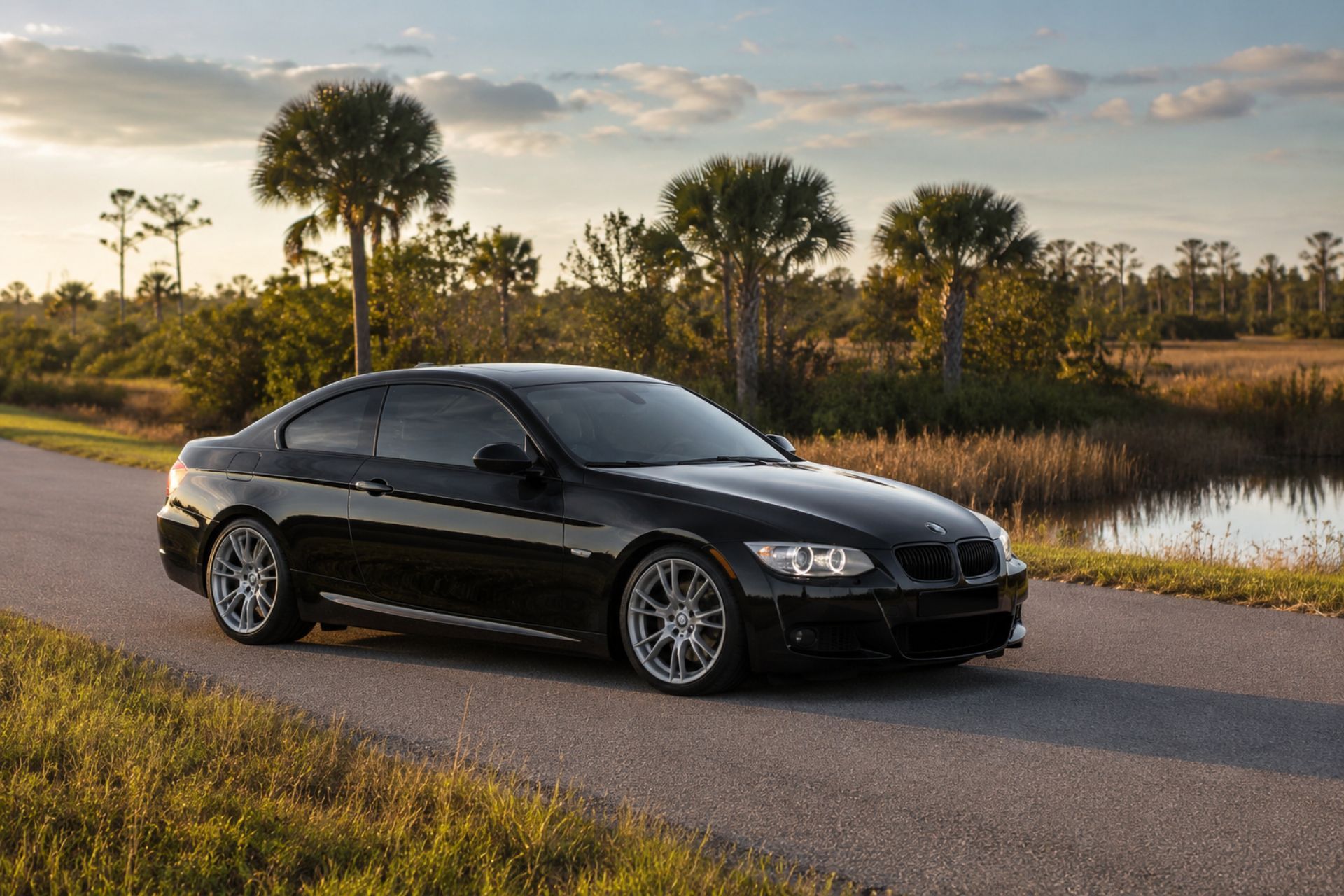
Luxury and performance vehicles are particularly expensive to insure under an FR44 because their repair costs are high and they're statistically associated with more aggressive driving patterns. If you're shopping for a vehicle during your filing period, choosing a mid-range sedan with top safety marks from the IIHS can make a noticeable difference in your premium.
Florida Liability Coverage Breakdown
Florida's no-fault system requires every driver to carry $10,000 in PIP coverage, which pays for your own medical expenses and lost wages regardless of fault. The FR44 doesn't change this requirement, but it adds mandatory bodily injury and property damage liability on top of it.
The $100,000/$300,000 bodily injury limits protect other people you injure in an accident. If you cause a crash that sends someone to the hospital with $80,000 in medical bills, your policy covers it. Without these limits, you'd be personally responsible for that amount. The $50,000 property damage limit covers damage to other people's vehicles or property. These are minimums, not caps on what you could owe, so
carrying higher limits is worth considering if your budget allows.
How to Lower Your FR44 Expenses
Reducing your FR44 costs requires a strategic approach. Start by gathering quotes from at least four to six different carriers using identical coverage levels. Rates vary widely because each insurer weighs risk factors differently. National carriers like Progressive and Dairyland are known for writing high-risk policies, but local independent agents often have access to smaller regional carriers with competitive pricing.
Completing a state-approved defensive driving course can earn you a discount with many insurers. Bundling your auto policy with renters or homeowners insurance is another reliable way to lower your overall cost. Some carriers also offer telematics programs, such as Progressive's Snapshot, that monitor your driving behavior and reward safe habits with lower rates. The trade-off is sharing your driving data, including speed, braking patterns, and time of day you drive.
Raising your deductible on comprehensive and collision coverage (if you carry it) can also reduce your monthly payment, though you'll pay more out of pocket if you file a claim.
Non-Owner FR44 Policies for Savings
If you don't own a vehicle, a non-owner FR44 policy can save you a significant amount. These policies satisfy the state's filing requirement while covering you as a driver of borrowed or rented vehicles. Because they don't cover a specific car, premiums are typically 30-50% lower than a standard FR44 policy.
One thing to keep in mind: non-owner policies don't include comprehensive or collision coverage. If you regularly drive someone else's car, that vehicle's own policy would need to cover physical damage. Non-owner FR44s are ideal for people who rely on public transportation or ride-sharing but still need to maintain their filing to get their license reinstated.
Common Questions About Florida FR44s
How long do I have to keep my FR44?
Florida requires you to maintain your FR44 filing for a minimum of three years from the date your license is reinstated. The clock starts when the DHSMV processes your filing, not when you purchase the policy. Any lapse in coverage can reset this period.
Can I pay for my FR44 in monthly installments?
Yes, most insurers offer monthly payment plans for FR44 policies. You'll typically pay a higher total cost compared to paying in full because of installment fees, but the lower monthly outlay makes it more manageable. Some carriers charge a down payment of one to two months' premium upfront.
What happens if my policy cancels early?
If your FR44 policy cancels before the three-year period ends, your insurer notifies the DHSMV electronically, and your license is suspended. You'll need to purchase a new policy, pay reinstatement fees, and in many cases restart the three-year filing period from scratch.
Does an FR44 cover damage to my own car?
No. The FR44 filing only certifies liability coverage, which pays for damage or injuries you cause to others. To cover your own vehicle, you'd need to add comprehensive and collision coverage to your policy separately. These are optional but recommended if your car has significant value.
Will my rates go down after three years?
In most cases, yes. Once your FR44 filing period ends and the DUI ages on your record, you become eligible for standard insurance rates again. Most insurers look back five to seven years, so your rates may not drop to pre-DUI levels immediately, but the FR44 surcharge itself disappears. Shopping around at the three-year mark is essential because some carriers reduce rates more aggressively than others for drivers exiting the high-risk category.
Next Steps for Getting Your License Back
Getting your Florida license reinstated after a DUI requires more than just buying an FR44 policy. You'll need to complete any court-ordered requirements, including DUI school and community service, pay all fines and reinstatement fees to the DHSMV, and provide proof of your FR44 filing. The filing itself is handled by your insurer, not by you directly.
Your path forward starts with honest comparison shopping. Contact at least four to six carriers or work with an independent agent who specializes in high-risk filings. Provide identical coverage details to each one so you're comparing apples to apples. Ask about available discounts, including defensive driving courses, bundling options, and telematics programs.
The FR44 filing period is finite. Three years of higher premiums is a significant expense, but it's a defined timeline with a clear end point. Focus on maintaining continuous coverage, driving safely, and positioning yourself for the best possible rate when the filing period concludes. Every month of clean driving history works in your favor for the quote you'll receive on the other side.

Recent Posts