

Riding year-round in Florida means your motorcycle isn't a weekend hobby; it's a daily reality. That also means your exposure to risk is higher than riders in states where bikes sit in garages for half the year. Florida motorcycle insurance works differently from standard auto coverage, and the gaps can catch you off guard if you're not paying attention. This guide covers liability, collision, comprehensive, and custom parts coverage so you can build a policy that actually matches how you ride. Whether you own a stock cruiser or a heavily modified sportbike, understanding these coverage types isn't optional. Florida's insurance framework treats motorcycles as a separate category from passenger vehicles, and that distinction affects everything from what the state requires to what you should carry voluntarily. The difference between state minimums and real-world protection is significant, and a single at-fault accident can expose your personal assets if you're underinsured. Getting this right now saves you from financial disaster later.
Florida Motorcycle Laws vs. Standard Auto Insurance
Florida's approach to motorcycle insurance confuses many riders, especially those who move from states with straightforward mandatory coverage. The state doesn't require motorcycle riders to carry insurance before they ride, but it does impose financial responsibility after an accident. That's a critical distinction. If you cause a crash and can't demonstrate the ability to pay for damages, you'll face license suspension and potential civil liability. This system differs sharply from how Florida handles standard auto insurance, where drivers must carry minimum coverage before registration. The result is that many riders assume they don't need a policy at all, which is a costly misunderstanding.
The Financial Responsibility Requirement
Florida operates under a financial responsibility model for motorcycles rather than a mandatory insurance model. If you're involved in an accident and found at fault, you must prove you can cover damages up to $10,000 for property damage and $10,000 for bodily injury per person, with a $20,000 cap per accident. Failing to demonstrate this capacity triggers license suspension and mandatory SR-22 filing for three years.
The catch is that most riders can't self-insure for these amounts on short notice. An SR-22 filing, which is a certificate proving you carry at least the state's minimum liability limits, stays on your record and increases your premiums. If your policy lapses during that period, the filing clock resets. Carrying liability insurance before an accident occurs is the most practical way to meet this requirement without financial disruption.
Why PIP Doesn't Apply to Motorcycles
Florida's no-fault system requires auto drivers to carry Personal Injury Protection, commonly known as PIP, which covers your own medical expenses regardless of fault. Motorcycles are explicitly excluded from this requirement. You cannot purchase PIP on a motorcycle policy, and your auto PIP policy will not cover injuries sustained while riding a motorcycle.
This matters because motorcycle accidents tend to produce more severe injuries than car crashes. Without PIP, your only options for covering your own medical costs are health insurance, MedPay (medical payments coverage added to your motorcycle policy), or a successful liability claim against the other driver. If you're at fault, health insurance becomes your sole safety net. That gap alone makes a strong case for adding MedPay to any Florida motorcycle policy, typically available for a modest additional premium.
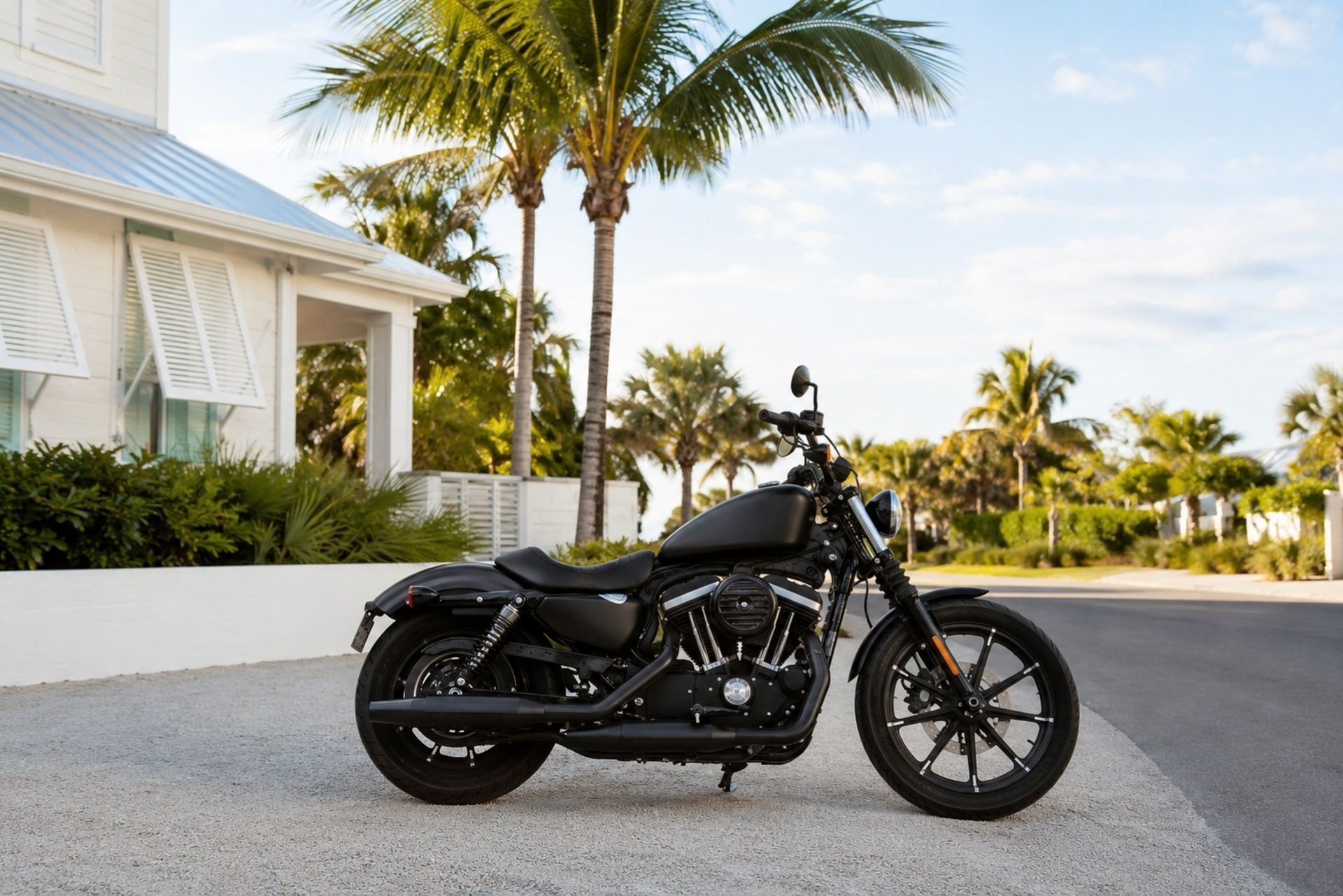

Building a complete motorcycle insurance policy in Florida means understanding each coverage type and how it protects you in different scenarios. The state's minimal requirements leave significant gaps, and filling those gaps is your responsibility.
Liability and Guest Liability
Liability coverage pays for injuries and property damage you cause to others in an accident. It's the foundation of any motorcycle policy and the coverage type that satisfies Florida's financial responsibility law. A standard liability policy includes bodily injury liability and property damage liability, expressed as split limits like 25/50/25 (meaning $25,000 per person for injuries, $50,000 per accident, and $25,000 for property damage).
Guest liability, sometimes called passenger liability, covers injuries to anyone riding on your motorcycle with permission. This isn't always included automatically, so confirm it's part of your policy if you ever carry a passenger. A single passenger injury claim can exceed $100,000 in medical costs, making this coverage essential rather than optional.
Comprehensive and Collision Protection
Collision coverage pays for damage to your motorcycle after a crash, regardless of fault. Comprehensive coverage handles everything else: theft, vandalism, fire, falling objects, animal strikes, and weather damage. Florida's hurricane exposure makes comprehensive coverage particularly relevant, as the state's property insurance market continues to adjust to storm-related risks.
If you're financing or leasing your motorcycle, your lender will almost certainly require both collision and comprehensive coverage. Even if you own your bike outright, consider the replacement cost. A motorcycle worth $8,000 or more generally justifies carrying both coverages with a $500 or $1,000 deductible. Riders with older bikes worth under $3,000 may find the premiums outweigh the potential payout.
One thing to keep in mind: custom parts and accessories are typically not covered under standard comprehensive or collision policies. If you've invested in aftermarket exhaust systems, custom paint, saddlebags, or performance upgrades, you'll need a dedicated custom parts and accessories endorsement to protect that investment.
Uninsured Motorist Coverage
This is arguably the most important optional coverage for Florida riders. Florida's uninsured driver rate has climbed to over 25% in 2026, meaning roughly one in four drivers on the road around you carries no insurance at all. Uninsured motorist coverage (UM) pays for your injuries and, in some cases, your property damage when the at-fault driver has no insurance or insufficient coverage.
UM coverage comes in two forms: stacked and unstacked. If you own multiple vehicles, stacking allows you to combine the UM limits across all your policies, giving you higher total protection. Unstacked coverage applies only the limit from the specific vehicle involved. Florida law requires insurers to offer UM coverage, but you can reject it in writing. Given the state's high uninsured rate, rejecting it is a risk most riders shouldn't take.
Comparing State Minimums vs. Recommended Protection
Florida's minimum requirements leave you exposed in almost any serious accident. Here's what that looks like in practice compared to what experienced riders and insurance professionals typically recommend.
Coverage Comparison Table
| Coverage Type | Florida Minimum | Recommended Level |
|---|---|---|
| Bodily Injury Liability | $10,000 / $20,000 | $100,000 / $300,000 |
| Property Damage Liability | $10,000 | $50,000 - $100,000 |
| Uninsured Motorist (UM) | Not required | $100,000 / $300,000 |
| Collision | Not required | Actual cash value with $500 deductible |
| Comprehensive | Not required | Actual cash value with $250 - $500 deductible |
| MedPay | Not required | $5,000 - $10,000 |
| Custom Parts | Not required | Matches your aftermarket investment |
The gap between minimums and recommended levels is dramatic. A single trip to a trauma center after a motorcycle accident can generate bills exceeding $100,000. State minimums of $10,000 per person leave you personally liable for the rest if you're at fault. That liability can result in wage garnishment, asset seizure, or bankruptcy.
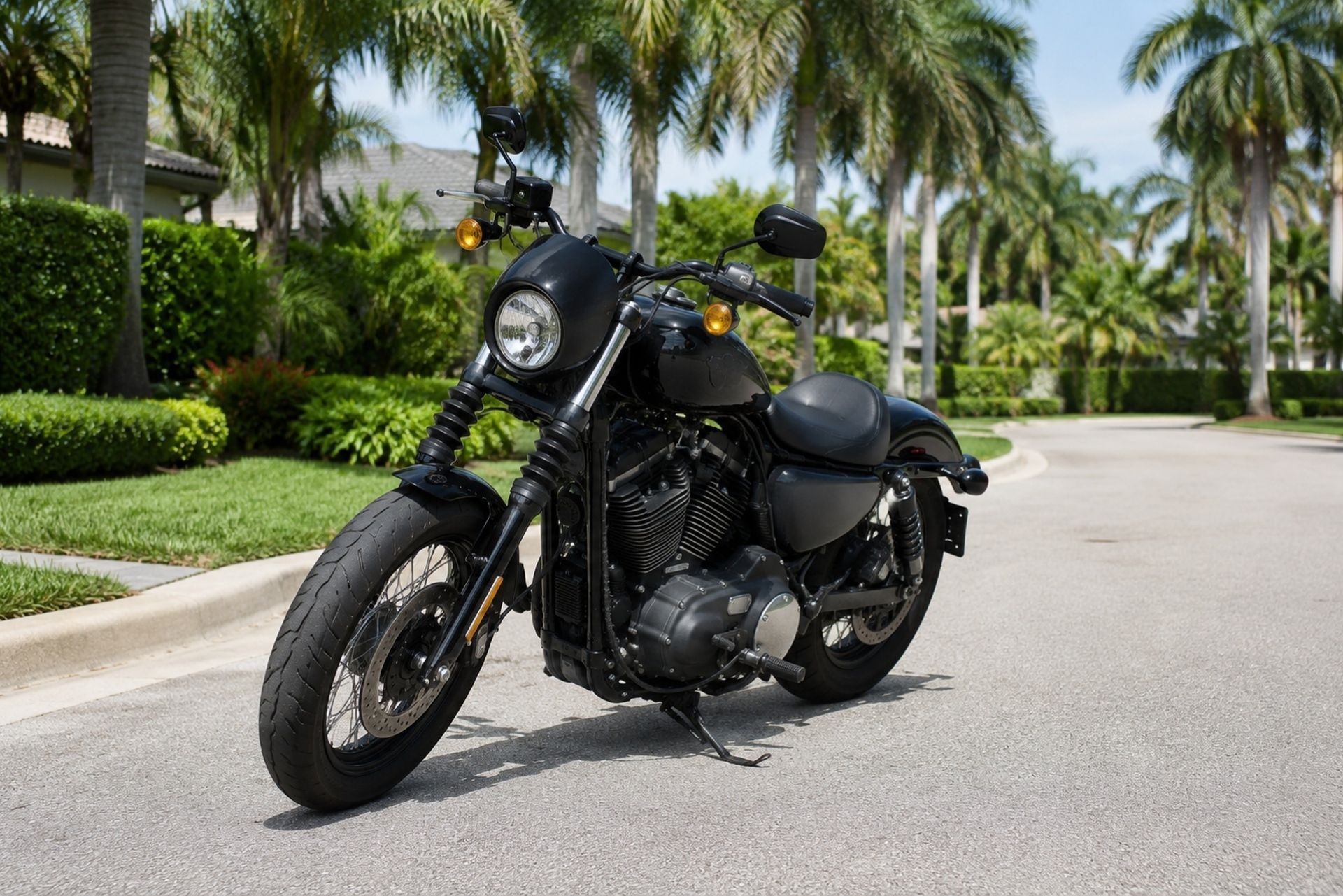
Your motorcycle insurance premium isn't a random number. Insurers calculate it based on a specific set of variables, and understanding them gives you some control over what you pay.
Your bike's make, model, and engine displacement are the starting point. Sportbikes with high horsepower consistently cost more to insure than cruisers or touring bikes because they're involved in more frequent and severe accidents. The motorcycle insurance market has seen premiums shift in response to claims data, with supersport models carrying the highest rates.
Your riding history matters significantly. A clean driving record with no at-fault accidents or moving violations earns you the best rates. Riders with DUI convictions or multiple speeding tickets can expect premiums two to three times higher than clean-record riders. Completing a motorcycle safety course, such as those offered through the Motorcycle Safety Foundation, can offset some of that cost and often qualifies you for a discount of 5% to 15%.
Where you garage your bike in Florida also affects pricing. Urban areas like Miami, Tampa, and Orlando carry higher premiums due to traffic density and theft rates. Rural areas generally cost less. Your annual mileage, whether you use the bike for commuting or recreation, and your age all factor in as well.
Here's what that means for you: gather quotes from at least four to six different carriers using identical coverage levels. Prices for the same coverage can vary by 40% or more between companies.
An independent agent who works with multiple insurers can run these comparisons for you and identify discounts you might miss on your own, such as bundling your motorcycle policy with your auto or homeowners insurance.
Common Questions About Florida Motorcycle Insurance
Is motorcycle insurance legally required in Florida? Not before you ride, but you must prove financial responsibility after any at-fault accident. Carrying insurance beforehand is the simplest way to meet this obligation.
Does my car insurance cover me while riding my motorcycle? No. Auto PIP and liability coverage do not extend to motorcycles. You need a separate motorcycle policy.
How much does motorcycle insurance cost in Florida? Rates vary widely. A rider with a clean record on a mid-size cruiser might pay $300 to $700 annually for full coverage. Sportbike riders or those with violations can pay $1,500 or more. The cost depends on your specific profile and coverage selections.
What happens if I drop UM coverage to save money? You save a small amount on your premium but lose protection against the 25%+ of Florida drivers who carry no insurance. If an uninsured driver hits you, you'd pay your own medical bills and repair costs out of pocket.
Are my aftermarket parts covered automatically? Standard policies typically cover only factory-original equipment. You'll need a custom parts endorsement to cover aftermarket modifications, and you should keep receipts and photos documenting your upgrades.
Do I need insurance if I only ride seasonally? If you ride at all on public roads, you face the same financial responsibility requirements. Some insurers offer seasonal or lay-up policies that reduce your premium during months the bike is stored.
Making the Right Choice for Your Ride
Florida's motorcycle insurance framework puts the burden of protection squarely on you. The state won't force you to buy a policy, but the financial consequences of riding without one can be severe. A proper policy covering liability, collision, comprehensive, and custom parts protection isn't just a safety net; it's a financial plan for the unexpected.
Start by evaluating what you'd lose in a worst-case scenario. Consider your bike's value, your medical exposure without PIP, and the likelihood of encountering an uninsured driver. Then build your policy from there, not from the state minimums downward.
The
Florida insurance market in 2026 remains competitive, which works in your favor when shopping. Compare quotes from multiple carriers, ask about bundling discounts, and don't skip UM coverage. Your future self will thank you for spending the extra time and money now to get the right protection in place before you need it.
About The Author:
Evan Marcotte
As an Auto Insurance Specialist at 5-Star Insurance, I’m passionate about helping drivers get the protection they need with speed, clarity, and confidence. My goal is to make every policy simple to understand and every client fully supported — from quote to claim.
Menu Pop-Up
Real Reviews from Florida Drivers
At 5-Star Insurance, we help drivers across Florida get insured quickly and affordably even in challenging situations. Whether it’s handling SR-22 and FR-44 filings or finding the most budget-friendly policy, our clients count on us to make the process fast, simple, and stress-free. Here’s what some of them have shared

Coverage Tailored to Your Needs
We specialize in essential auto insurance products for Florida drivers:
Auto Insurance
Standard auto coverage for Florida drivers, including liability, comprehensive, and collision options.
Commercial Auto Insurance
Protection for vehicles used for business and commercial purposes.
Liability-Only Auto Insurance
Basic, affordable coverage meeting Florida’s minimum requirements.
SR-22 Insurance
Required filing for drivers needing to reinstate their license after violations.
Motorcycle Insurance
Affordable insurance for motorcycles, scooters, and similar vehicles.
Clear Answers to Your Auto Insurance Questions
At 5-Star Insurance, we make sure every driver understands their options. Whether you are dealing with a suspension, DUI, or just need affordable coverage, we are here to help you get back on the road with confidence.
Stay Informed with Our Latest Articles
Gain insights to make smarter decisions about your insurance coverage:
Check out Our Latest Videos
Quick clips to keep you up to date on SR22 and FR44 insights and news
Contact Us
