

Owning a Honda in Florida comes with a specific set of insurance considerations that differ from nearly every other state. Florida's unique no-fault system, combined with regional risks like flooding and high urban traffic density, shapes how much you'll pay and what coverage you actually need. The good news? Florida's auto insurance market is shifting in favor of drivers. The state's five largest auto insurance groups, representing 78% of the market, have
announced average rate decreases of approximately 8% heading into 2026. That's meaningful relief, especially for Honda owners who already benefit from lower-than-average repair costs. But cheaper premiums don't mean you should settle for minimum coverage. The gap between what Florida requires and what actually protects you financially is wide, and understanding that gap is the first step toward a smarter policy. Whether you drive a brand-new CR-V or a ten-year-old Civic, your Honda deserves a policy built around Florida's specific risks, not just its minimum legal thresholds.
Understanding Florida Insurance Laws for Honda Owners
Florida's insurance framework stands apart from most states, and it directly affects how you insure your Honda. The state mandates specific coverage types that don't include what many drivers assume is required, like bodily injury liability. That gap catches a lot of people off guard, especially those who've moved from states with more conventional requirements.
Minimum State Requirements: PIP and PDL
Florida requires just two types of coverage: Personal Injury Protection (PIP) at $10,000 and Property Damage Liability (PDL) at $10,000. PIP covers 80% of your medical expenses and 60% of lost wages after an accident, regardless of who caused it. PDL covers damage you cause to someone else's property, like their vehicle or a fence.
Here's what that means for you: there is no state mandate for bodily injury liability coverage. If you cause an accident and seriously injure another driver, you're personally responsible for their medical bills beyond what their own PIP covers. For a Honda owner carrying only the minimum, a single serious accident could result in a lawsuit and personal financial exposure that far exceeds the value of the car itself.
The No-Fault System in the Sunshine State
Florida operates under a no-fault insurance model. After an accident, each driver's own PIP policy pays their medical bills, regardless of fault. This system was designed to reduce litigation and speed up claim payments. The catch is that PIP's $10,000 limit runs out fast in any serious injury scenario.
You can step outside the no-fault system and sue the at-fault driver only if injuries meet a specific legal threshold, typically involving permanent injury, significant scarring, or disability. For everyday fender benders, though, you're relying on your own PIP. Florida's tort reform efforts have started delivering real results for consumers, contributing to those declining premiums across the state.

Popular Honda Models and Their Impact on Rates
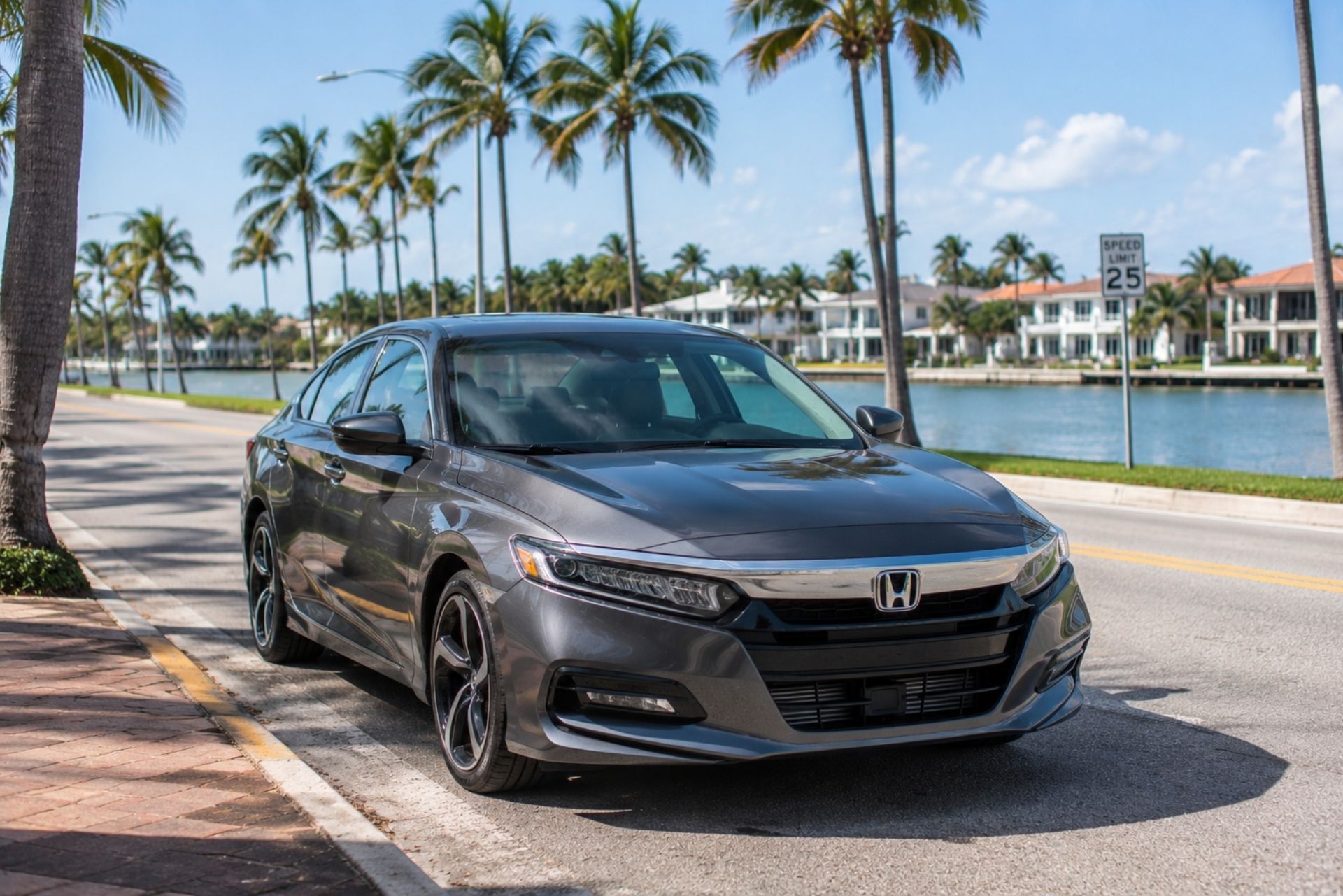
Your specific Honda model plays a direct role in what you'll pay for auto insurance in Florida. Insurers look at repair costs, safety ratings, theft frequency, and claim history for each model year. Not all Hondas are priced equally, and understanding why can help you anticipate your premium.
Insuring Best-Sellers: Civic, Accord, and CR-V
The Honda Civic consistently ranks among the most stolen vehicles in the United States, which pushes its comprehensive coverage costs higher than you might expect for an affordable sedan. Older Civics from the late 1990s and 2000s remain especially popular theft targets because their parts are interchangeable across many model years.
The Accord tends to sit in a moderate premium range. It's a midsize sedan with solid crash test scores and reasonable repair costs. The CR-V, Honda's best-selling SUV, often carries slightly higher premiums than the Civic or Accord due to its higher vehicle value, but its strong safety ratings help offset some of that cost. The HR-V and Pilot fall on opposite ends of the spectrum, with the HR-V being one of the cheapest Hondas to insure and the Pilot costing more due to its size and replacement part pricing.
Safety Features and Insurance Discounts
Honda's Safety Sense suite, standard on most 2024 and newer models, includes automatic emergency braking, lane departure warning, and adaptive cruise control. These features directly reduce accident frequency and severity, which insurers reward with discounts.
Ask your carrier specifically about Advanced Driver Assistance System (ADAS) discounts. Not every insurer applies them automatically. You may also qualify for discounts through telematics programs. Progressive's Snapshot and State Farm's Drive Safe & Save monitor your braking habits, mileage, and time-of-day driving patterns. These programs can shave 10% to 30% off your premium if your driving data is favorable. The trade-off is privacy: these programs track your location and driving behavior continuously.
The difference between Florida's minimum required coverage and a policy that genuinely protects you is substantial. Many Honda owners, especially those financing or leasing, will need coverage well beyond the state minimum.
Coverage Comparison Table: Basic vs. Full Protection
| Coverage Type | Basic (State Minimum) | Full Protection |
|---|---|---|
| PIP | $10,000 | $10,000 |
| PDL | $10,000 | $50,000 - $100,000 |
| Bodily Injury Liability | Not required | $100,000/$300,000 |
| Collision | Not required | Included (deductible varies) |
| Comprehensive | Not required | Included (deductible varies) |
| Uninsured Motorist | Not required | $100,000/$300,000 |
| Medical Payments | Not required | $5,000 - $10,000 |
One thing to keep in mind: if you're financing your Honda through a dealer or bank, your lender will almost certainly require collision and comprehensive coverage. Even if you own your vehicle outright, carrying only the state minimum leaves you exposed to significant out-of-pocket costs after a serious accident.
The Importance of Uninsured Motorist Coverage
Florida has one of the highest uninsured driver rates in the country, hovering near 20%. That means roughly one in five drivers you share the road with may carry no bodily injury coverage at all. If an uninsured driver hits you and causes serious injuries, your PIP's $10,000 won't come close to covering extended hospital stays, surgery, or rehabilitation.
Uninsured/underinsured motorist (UM/UIM) coverage fills that gap. It pays for your medical bills and lost wages when the at-fault driver can't. For Honda owners in high-traffic corridors like I-95, I-4, or the Turnpike, this coverage isn't optional in any practical sense. It's one of the most common coverage gaps I see, and it's the one that causes the most financial damage when an accident happens.
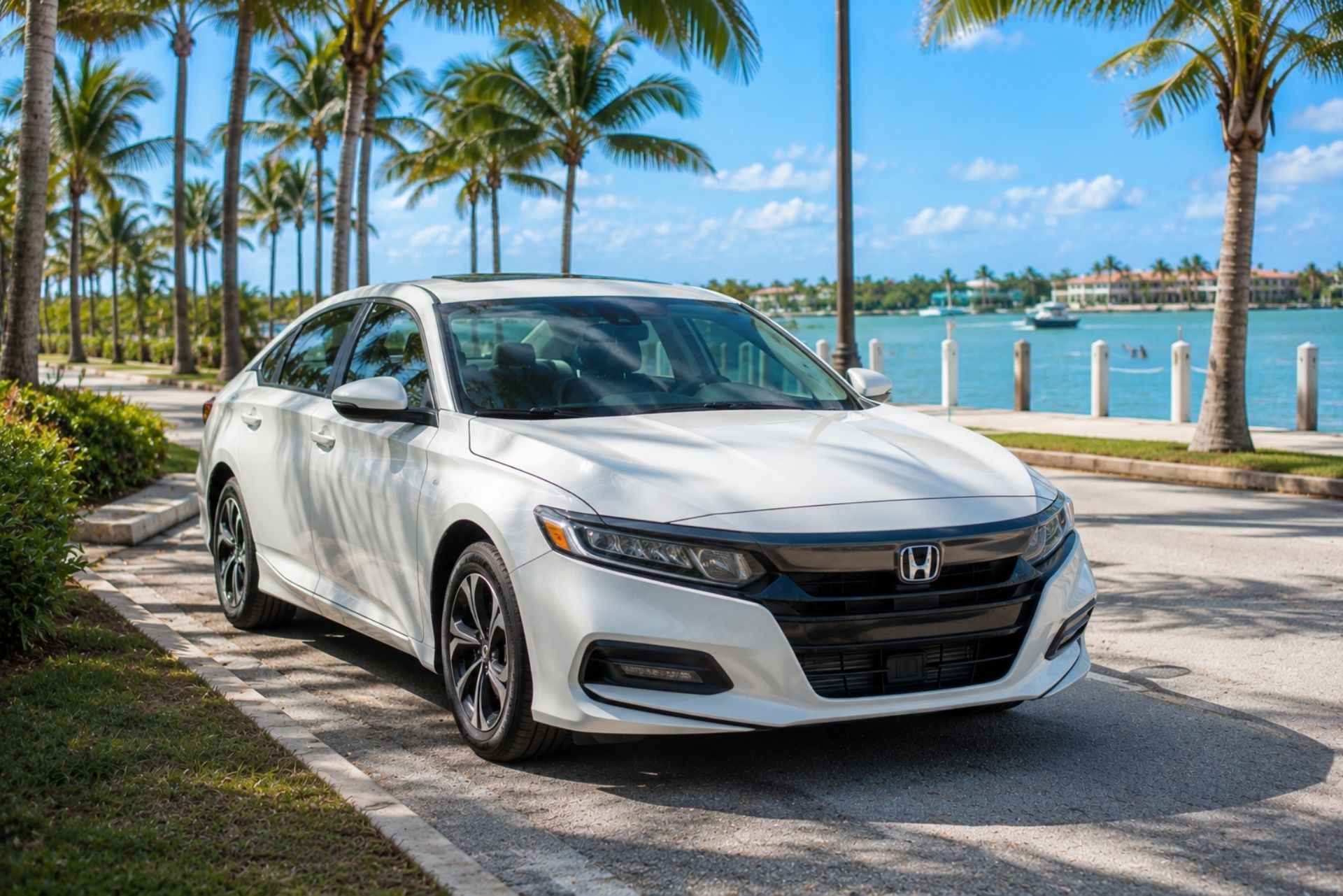
Your premium isn't just about your car. Florida's geography, weather patterns, and crime statistics all factor into what you'll pay. Two Honda Civic owners in the same state can see wildly different quotes based on their zip code alone.
Regional Risk: Flood Zones and High-Traffic Areas
South Florida, particularly Miami-Dade, Broward, and Palm Beach counties, consistently carries the highest auto insurance premiums in the state. Dense traffic, frequent flooding during hurricane season, and high accident rates all contribute. If you park your Honda in a flood-prone area, your comprehensive premium reflects that risk directly.
Tampa Bay and Orlando also see elevated rates due to congestion and tourist traffic. On the flip side, rural areas in North Florida and the Panhandle tend to offer lower premiums. Florida's insurance market has been trending toward lower rates statewide, but regional variation remains significant. The state has seen the largest rate drop in the nation during 2026, which benefits drivers across all regions.
Theft Rates and Security System Benefits
Honda Civics and Accords appear on the National Insurance Crime Bureau's "most stolen" list year after year. Older models without immobilizers are especially vulnerable. If you drive a 2000s-era Civic, expect your comprehensive premium to reflect that theft risk.
Installing an aftermarket alarm system, steering wheel lock, or GPS tracking device can earn you a discount of 5% to 15% depending on your insurer. Factory-installed immobilizers on newer Hondas already help, but adding a visible deterrent or tracking system gives you both a practical safety benefit and a rate reduction. Always notify your insurer after installing security upgrades so the discount applies to your next renewal.
Common Questions About Florida Honda Insurance
Do I need bodily injury liability insurance for my Honda in Florida? Florida doesn't require it, but you should carry it. Without bodily injury liability, you're personally liable for injuries you cause. Most agents recommend at least $100,000/$300,000 in coverage.
What's the difference between an SR-22 and an FR-44 in Florida? An SR-22 is a certificate proving you carry minimum liability coverage, typically required after a license suspension. An FR-44 is Florida-specific, required after a DUI conviction, and mandates higher coverage limits: $100,000/$300,000 bodily injury and $50,000 property damage. FR-44 filings must be maintained for three years, and any lapse resets the clock.
Is a Honda Civic expensive to insure in Florida? It depends on the model year. Newer Civics with advanced safety features are moderately priced to insure. Older Civics, especially from the late 1990s to mid-2000s, cost more for comprehensive coverage due to high theft rates.
How many quotes should I get before choosing a policy? Gather quotes from at least four to six different carriers using identical coverage levels. This ensures you're comparing apples to apples. An independent insurance agent can pull multiple quotes simultaneously, saving you time.
Will my rates go down in 2026? Likely yes. Florida's insurance market is at a turning point, with major carriers filing for rate decreases. Your individual rate depends on your driving record, location, and coverage choices, but the overall trend is favorable.
Does my Honda's safety rating affect my premium? Yes. Honda models with top IIHS or NHTSA safety ratings qualify for lower premiums. Features like automatic emergency braking and blind-spot monitoring reduce claim frequency, which insurers reward.
Making the Right Choice for Your Honda
Finding the right auto insurance for your Honda in Florida comes down to understanding what the state requires versus what actually protects your finances. The minimum coverage, $10,000 PIP and $10,000 PDL, is a starting point, not a destination. With one in five Florida drivers potentially uninsured, carrying UM/UIM coverage is a practical necessity, not a luxury.
Your Honda model matters more than you might think. A newer CR-V with Honda Safety Sense will cost less to insure than a 2003 Civic with no immobilizer, even though the CR-V is worth far more. Take advantage of safety feature discounts, telematics programs, and security system credits to bring your premium down.
The 2026 rate environment is working in your favor. Carriers are reducing premiums across the board, so this is a strong time to shop around. Get quotes from at least four to six insurers, or work with a local independent agent who can compare multiple carriers at once. Match your coverage to your actual risk exposure, not just the legal minimum, and you'll drive with genuine financial protection behind you.
About The Author:
Evan Marcotte
As an Auto Insurance Specialist at 5-Star Insurance, I’m passionate about helping drivers get the protection they need with speed, clarity, and confidence. My goal is to make every policy simple to understand and every client fully supported — from quote to claim.
Menu Pop-Up
Real Reviews from Florida Drivers
At 5-Star Insurance, we help drivers across Florida get insured quickly and affordably even in challenging situations. Whether it’s handling SR-22 and FR-44 filings or finding the most budget-friendly policy, our clients count on us to make the process fast, simple, and stress-free. Here’s what some of them have shared

Coverage Tailored to Your Needs
We specialize in essential auto insurance products for Florida drivers:
Auto Insurance
Standard auto coverage for Florida drivers, including liability, comprehensive, and collision options.
Commercial Auto Insurance
Protection for vehicles used for business and commercial purposes.
Liability-Only Auto Insurance
Basic, affordable coverage meeting Florida’s minimum requirements.
SR-22 Insurance
Required filing for drivers needing to reinstate their license after violations.
Motorcycle Insurance
Affordable insurance for motorcycles, scooters, and similar vehicles.
Clear Answers to Your Auto Insurance Questions
At 5-Star Insurance, we make sure every driver understands their options. Whether you are dealing with a suspension, DUI, or just need affordable coverage, we are here to help you get back on the road with confidence.
Stay Informed with Our Latest Articles
Gain insights to make smarter decisions about your insurance coverage:
Check out Our Latest Videos
Quick clips to keep you up to date on SR22 and FR44 insights and news
Contact Us
