

Running a courier or last-mile delivery operation in Florida means your vehicles are on the road constantly, often in dense urban corridors with unpredictable traffic and weather. A single uninsured claim, whether it involves a damaged parcel, a fender bender at a loading dock, or a slip-and-fall at a client's doorstep, can threaten your entire business.
Florida courier insurance requires a layered approach covering commercial auto,
hired and non-owned vehicles, cargo protection, and liability. The good news is that Florida's top five auto insurance groups reported an average negative 8% rate change for 2026, following a negative 6.5% average decrease the prior year, which means premiums are trending downward for well-prepared operators. That said, lower rates don't help if you're carrying the wrong coverage. This guide breaks down each essential policy type, explains Florida-specific rules you can't afford to ignore, and helps you build a coverage stack that actually fits your delivery business.
Understanding Florida's Courier Insurance Landscape
Florida's courier industry has grown substantially as e-commerce and same-day delivery expectations continue to rise. Whether you operate a fleet of cargo vans or a single vehicle doing pharmaceutical deliveries, the insurance requirements are more complex than most new operators expect. The state imposes specific financial responsibility laws, and contract partners like Amazon, FedEx Ground, and medical supply companies often demand coverage limits well above state minimums.
Why Personal Auto Policies Aren't Enough
Your personal auto policy contains a commercial use exclusion. This clause voids coverage the moment you're using your vehicle for business deliveries. If you're involved in a collision while transporting a client's goods, your insurer can deny the claim entirely, leaving you personally responsible for vehicle repairs, medical bills, and cargo losses.
The distinction matters because insurers investigate claims. GPS data, delivery app records, and even social media posts can reveal that you were working at the time of an accident. A denied claim doesn't just cost you money for that incident; it can also result in policy cancellation, making future coverage harder and more expensive to obtain. Florida-based courier operators need commercial policies designed specifically for delivery use from day one.
Florida State Minimums vs. Courier Needs
Florida requires $10,000 in Personal Injury Protection (PIP) and $10,000 in Property Damage Liability (PDL) as the bare minimum for all registered vehicles. These limits are dangerously low for courier operations. A single rear-end collision can easily exceed $10,000 in property damage, and medical costs from even minor injuries routinely surpass that figure.
Most courier contracts require $1,000,000 in combined single limit (CSL) commercial auto coverage. Some pharmaceutical and high-value freight contracts push that to $2,000,000. The gap between Florida's legal minimums and real-world business requirements is enormous, and operating at state minimums exposes you to lawsuits that could wipe out your business assets.
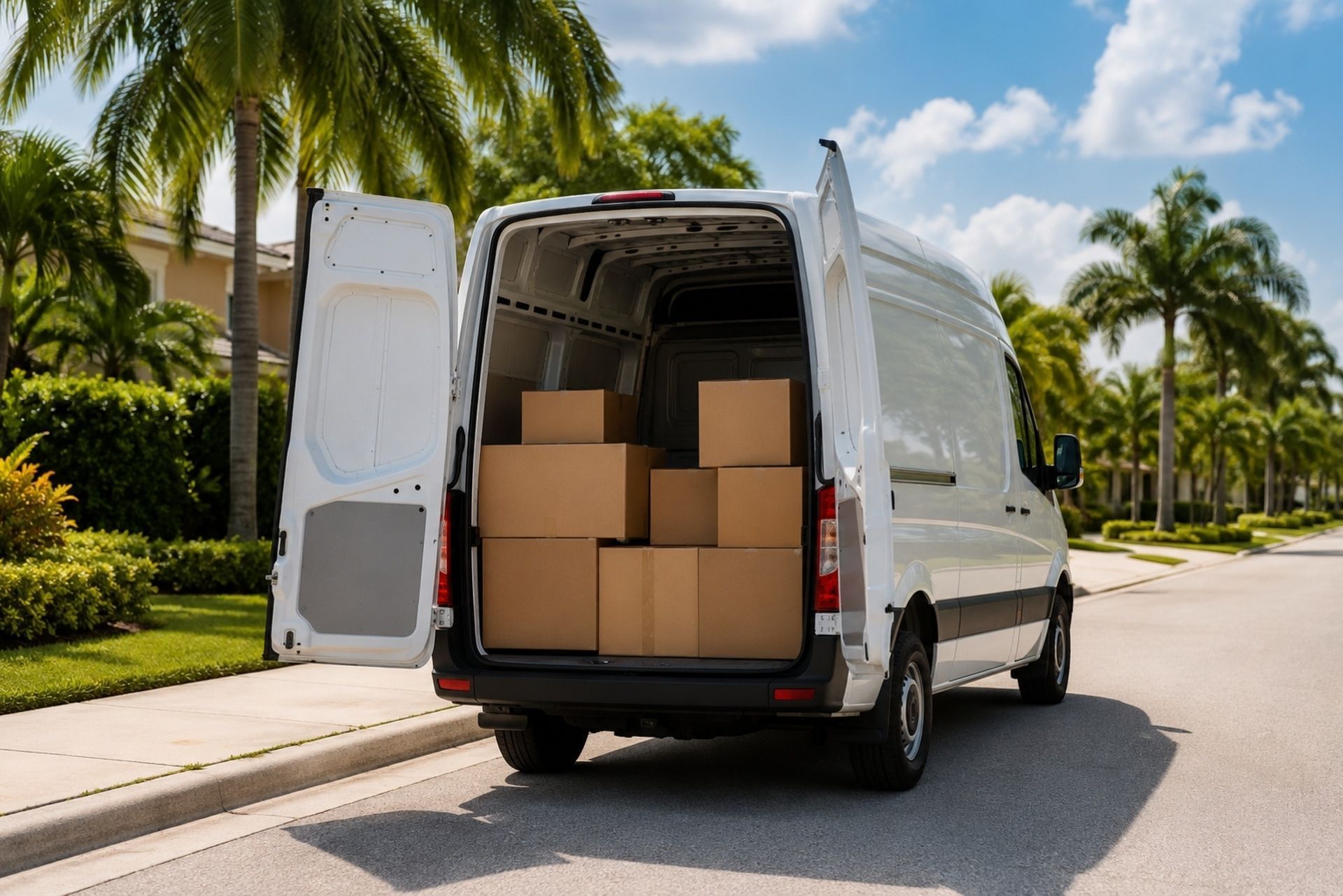

Core Coverage Types for Florida Delivery Drivers
A complete Florida courier insurance program isn't a single policy. It's a combination of coverages, each addressing a different risk. Understanding what each one protects helps you avoid both gaps and redundancies.
Commercial Auto and Hired/Non-Owned Insurance
Commercial auto insurance covers vehicles your business owns or leases. It functions similarly to personal auto coverage but is rated for commercial use, higher mileage, and the specific types of goods you transport. Premiums depend on vehicle type, driver records, annual mileage, and the radius you operate within.
Hired and non-owned auto insurance fills a different gap. If your drivers use personal vehicles for deliveries, or if you rent a vehicle temporarily, this policy covers liability arising from those non-owned vehicles. Specialized last-mile delivery insurance programs often bundle these coverages because most courier operations use a mix of owned and personal vehicles. One thing to keep in mind: hired and non-owned policies typically cover liability only, not physical damage to the vehicle itself.
Cargo and Inland Marine Insurance
Cargo insurance protects the goods you're transporting. If a package is stolen from your van, damaged in a collision, or ruined by water intrusion, cargo coverage pays the claim. Without it, you're personally liable for replacing the customer's goods.
Inland marine insurance is a closely related but broader product. It covers goods, equipment, and materials in transit over land, and it can also protect tools and equipment you carry in your vehicle. Inland marine policies are particularly valuable for couriers handling high-value items like electronics, medical devices, or legal documents. Cargo insurance costs vary based on the value of goods you transport, your claims history, and your security measures. Expect to pay between $400 and $1,800 annually for a standard courier operation, though high-value freight will cost more.
General Liability for Third-Party Incidents
General liability (GL) insurance covers bodily injury and property damage claims that occur outside of vehicle accidents. A delivery driver who trips on a client's stairs and breaks a railing, or a customer who slips on a wet floor after your driver tracks in rain, could both generate GL claims.
Florida general liability premiums for small delivery operations
typically range from $500 to $2,000 annually, depending on revenue, number of employees, and claims history. GL coverage is often required by commercial clients before they'll sign a delivery contract. It's separate from your commercial auto policy and covers a fundamentally different category of risk.
Comparing Essential Coverage Levels
Choosing between basic and comprehensive coverage isn't just about price. It's about understanding which risks you can afford to absorb and which ones could end your business.
Coverage Comparison Table: Basic vs. Comprehensive
| Coverage Type | Basic Plan | Comprehensive Plan |
|---|---|---|
| Commercial Auto Liability | $300,000 CSL | $1,000,000+ CSL |
| Hired & Non-Owned Auto | Not included | Included |
| Cargo/Inland Marine | $5,000 per shipment | $25,000 - $100,000 per shipment |
| General Liability | $500,000 per occurrence | $1,000,000 per occurrence |
| Uninsured Motorist | State minimum only | Matches liability limits |
| Comprehensive/Collision | High deductible ($2,500) | Low deductible ($500 - $1,000) |
| Workers' Compensation | Not included | Included (required for 4+ employees) |
| Approximate Annual Cost | $3,000 - $5,000 per vehicle | $7,000 - $12,000 per vehicle |
The basic plan might work for a solo operator running low-value residential deliveries. The catch is that most B2B contracts and platform partnerships require comprehensive-level coverage. Choosing a basic plan to save money often means losing access to your most profitable delivery contracts.
Florida-Specific Considerations for Couriers
Florida's insurance laws create unique challenges for courier businesses. Two areas deserve particular attention: the state's no-fault PIP system and workers' compensation requirements.
Navigating Florida's No-Fault PIP Laws
Florida operates under a no-fault insurance system. This means your own PIP coverage pays your medical bills after an accident regardless of who caused it, up to $10,000. You can only step outside the no-fault system and sue the at-fault driver if injuries meet a specific severity threshold, including significant and permanent loss of a bodily function, permanent injury, scarring or disfigurement, or death.
Here's what that means for you as a courier operator: your drivers' PIP coverage may not be sufficient for serious injuries sustained on the job. Commercial auto policies should include higher medical payments coverage and uninsured/underinsured motorist protection. Florida has a high rate of uninsured drivers, estimated at roughly 20% of all motorists, so UM/UIM coverage isn't optional in practice even if it's technically elective.
Workers' Compensation for Courier Fleets
Florida law requires workers' compensation insurance for any business with four or more employees, including part-time workers. For courier operations, this threshold is easy to reach. Independent contractor classifications don't automatically exempt you; Florida courts and regulators look at the actual working relationship, not just the contract language.
Workers' comp covers medical expenses and lost wages when a driver is injured on the job. Without it, you face state penalties, loss of contracts, and personal liability for injury costs.
Florida contractor insurance costs for workers' comp vary by classification code, but delivery drivers typically fall into a moderate-risk category. Premiums are calculated as a rate per $100 of payroll, and your experience modification factor (your claims history) directly affects what you pay.
Common Questions About Courier Coverage
FAQs for New Delivery Business Owners
Do I need commercial insurance if I only deliver part-time? Yes. Any use of your vehicle for paid deliveries triggers the commercial use exclusion in personal auto policies. Part-time status doesn't change this.
Will my gig platform's insurance cover me? Most platforms like DoorDash or Amazon Flex provide limited coverage that only applies during active deliveries. It typically has high deductibles and low limits. You should carry your own commercial policy.
How many quotes should I get before buying? Gather quotes from at least four to six different carriers using identical coverage levels. Rates vary significantly between insurers, and independent agents can often access markets you won't find online.
Can I reduce my premiums with telematics? Yes. Programs like Progressive's Snapshot or State Farm's Drive Safe & Save monitor driving behaviors such as hard braking, speed, and time of day. These programs can reduce premiums by 10% to 30%, though they do require sharing your driving data.
What happens if my cargo coverage is too low? You'll pay the difference out of pocket. If you're transporting a $15,000 medical device with only $5,000 in cargo coverage, you're responsible for the remaining $10,000 if it's damaged.
Does general liability cover vehicle accidents?
No. GL covers third-party bodily injury and property damage unrelated to vehicle operation. You need commercial auto insurance for accidents involving your delivery vehicles.
Making the Right Choice for Your Delivery Business
Building the right insurance program for your Florida courier operation comes down to understanding your specific risks and contractual obligations. A solo driver handling residential meal deliveries faces different exposures than a ten-van fleet transporting medical supplies across the state.
Start by reviewing your existing contracts and platform agreements to identify minimum coverage requirements. Then assess the value of goods you transport, the number of drivers and vehicles in your operation, and whether your drivers use personal vehicles. These factors determine which coverages you need and at what limits.
The bottom line: Florida's courier insurance requirements extend well beyond state minimums. Commercial auto, hired and non-owned coverage, cargo protection, general liability, and potentially workers' compensation all play a role in protecting your business. Rates are trending favorably in 2026, so this is a good time to shop aggressively. Get quotes from multiple carriers, work with an independent agent who understands
transportation and logistics insurance in Florida, and build a policy package that matches your actual risk profile, not just the cheapest option available.
About The Author:
Evan Marcotte
As an Auto Insurance Specialist at 5-Star Insurance, I’m passionate about helping drivers get the protection they need with speed, clarity, and confidence. My goal is to make every policy simple to understand and every client fully supported — from quote to claim.
Menu Pop-Up
Real Reviews from Florida Drivers
At 5-Star Insurance, we help drivers across Florida get insured quickly and affordably even in challenging situations. Whether it’s handling SR-22 and FR-44 filings or finding the most budget-friendly policy, our clients count on us to make the process fast, simple, and stress-free. Here’s what some of them have shared

Coverage Tailored to Your Needs
We specialize in essential auto insurance products for Florida drivers:
Auto Insurance
Standard auto coverage for Florida drivers, including liability, comprehensive, and collision options.
Commercial Auto Insurance
Protection for vehicles used for business and commercial purposes.
Liability-Only Auto Insurance
Basic, affordable coverage meeting Florida’s minimum requirements.
SR-22 Insurance
Required filing for drivers needing to reinstate their license after violations.
Motorcycle Insurance
Affordable insurance for motorcycles, scooters, and similar vehicles.
Clear Answers to Your Auto Insurance Questions
At 5-Star Insurance, we make sure every driver understands their options. Whether you are dealing with a suspension, DUI, or just need affordable coverage, we are here to help you get back on the road with confidence.
Stay Informed with Our Latest Articles
Gain insights to make smarter decisions about your insurance coverage:
Check out Our Latest Videos
Quick clips to keep you up to date on SR22 and FR44 insights and news
Contact Us
