

Florida's EV adoption rate has surged over the past two years, and with it, a growing number of drivers are discovering that insuring an electric vehicle isn't quite the same as insuring a gas-powered sedan. The battery pack alone can account for 30% to 50% of the car's total value, repair costs after even minor collisions tend to run higher, and Florida's unique weather risks add another layer of complexity. If you own or are considering an EV in the Sunshine State, understanding your insurance options for liability, battery protection, and EV-specific coverage is essential to avoiding costly surprises. Florida EV owners pay an
average annual premium of approximately $3,450, roughly 28% more than drivers of internal combustion engine vehicles. That gap reflects real differences in repair costs, parts availability, and vehicle value, all of which shape the policies you should be shopping for. This guide breaks down what Florida requires, what it doesn't, and where the real coverage gaps hide.
Understanding Florida EV Insurance Requirements
Florida's insurance framework applies equally to electric and gas-powered vehicles. The state doesn't carve out separate rules for EVs, which means you're subject to the same minimums, the same no-fault system, and the same penalties for lapses. That said, the financial stakes of an EV accident are often higher, making it worth understanding exactly what those minimums cover and where they fall short.
Florida's Minimum Liability Standards
Florida requires all registered vehicles to carry at least $10,000 in Personal Injury Protection (PIP) and $10,000 in Property Damage Liability (PDL). The state does not mandate Bodily Injury Liability (BIL) unless you've had your license suspended or been convicted of certain offenses, at which point you may need to file an FR-44 form with minimum limits of $100,000/$300,000 for bodily injury and $50,000 for property damage.
For EV owners, these minimums deserve scrutiny. A Tesla Model Y or Rivian R1S carries a replacement value well above $40,000, and a collision with another EV could easily exceed the $10,000 PDL minimum. Most insurance professionals recommend carrying at least $100,000/$300,000 in bodily injury and $50,000 or more in property damage liability, regardless of whether Florida mandates it. The catch is that minimum coverage leaves you personally liable for anything above those thresholds.
Personal Injury Protection (PIP) for EV Owners
Florida's no-fault system means your own PIP policy covers your medical expenses and lost wages after an accident, regardless of who caused it. PIP covers 80% of medical costs and 60% of lost wages, up to your $10,000 limit. You must seek treatment within 14 days of the accident for PIP benefits to apply.
One thing to keep in mind: PIP's $10,000 cap hasn't changed in decades, even as medical costs have climbed sharply. A single emergency room visit can exhaust that limit. EV owners should consider adding Medical Payments (MedPay) coverage or carrying uninsured/underinsured motorist coverage to fill the gap. These add-ons typically cost between $50 and $150 per year and provide a meaningful safety net if you're injured in a crash.
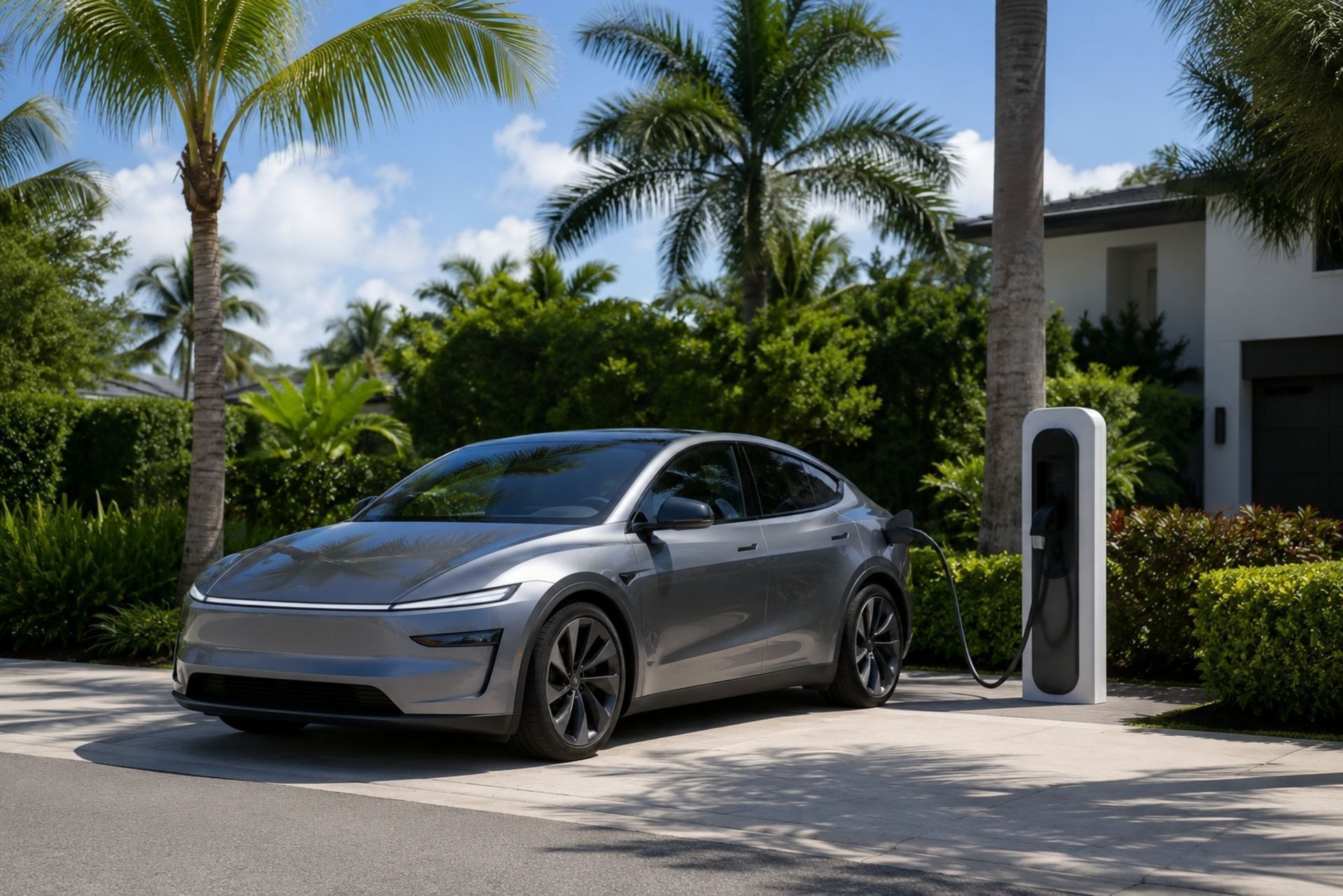

Protecting Your EV's Most Expensive Part: The Battery
The battery pack is the heart of any electric vehicle, and it's also the single most expensive component to repair or replace. A new battery for a Tesla Model 3 can cost between $12,000 and $20,000, while packs for luxury EVs like the BMW iX or Mercedes EQS can exceed $25,000. Your insurance policy's treatment of this component matters more than almost any other coverage detail.
Comprehensive vs. Collision for Battery Damage
Collision coverage pays for battery damage resulting from an accident, such as a rear-end collision that punctures or deforms the battery casing. Comprehensive coverage handles non-collision events: flooding, fire, falling objects, theft, and vandalism. Both are optional under Florida law, but skipping either one on an EV is a significant financial risk.
Here's what that means for you: if a parking lot fender-bender damages your battery enclosure, collision coverage handles the repair. If your EV sits in a flooded garage during hurricane season, comprehensive coverage applies. Many insurers now offer EV-specific endorsements that explicitly cover battery replacement at full value rather than depreciated value, which can make a difference of thousands of dollars on a claim.
Battery Degradation and Warranty Gaps
Most EV manufacturers offer battery warranties covering eight years or 100,000 miles, whichever comes first. These warranties typically guarantee the battery will retain at least 70% of its original capacity. That sounds generous, but there's a gap: if your battery degrades to 72% capacity at year seven, you're outside warranty protection even though range loss is noticeable.
Standard
auto insurance doesn't cover gradual degradation. It's considered normal wear and tear, similar to brake pads or tires wearing down. Some specialty insurers have begun offering battery degradation riders, though availability in Florida remains limited as of 2026. If you're buying a used EV, pay close attention to the remaining warranty period and consider whether a third-party extended warranty for the battery makes financial sense alongside your insurance policy.
Comparison of Standard vs. Specialized EV Coverage
Not all auto insurance policies treat electric vehicles the same way. A standard policy written for a gas-powered car will technically cover your EV, but it may leave gaps around battery replacement, charging equipment, and EV-specific repair costs. Specialized EV policies, offered by a growing number of carriers, address these gaps directly.
Coverage Comparison Table
| Coverage Area | Standard Auto Policy | Specialized EV Policy |
|---|---|---|
| Liability (Bodily Injury/Property Damage) | Included at selected limits | Included at selected limits |
| PIP | $10,000 minimum (Florida) | $10,000 minimum (Florida) |
| Battery Replacement | Covered under collision/comprehensive at depreciated value | Often covered at full replacement cost |
| Home Charging Equipment | Not typically covered | Covered up to $1,500-$2,500 |
| Roadside Assistance (Flatbed Tow) | May include standard towing | Flatbed-only towing specified for EVs |
| Rental Car (EV Substitute) | Standard rental reimbursement | EV-specific rental reimbursement |
| OEM Parts Guarantee | Not guaranteed | Often included |
| Cyber/Software Coverage | Not included | Emerging coverage for software malfunctions |
The price difference between standard and specialized policies varies, but expect to pay 5% to 15% more for EV-specific coverage. Given that a single battery claim can exceed $15,000, the additional premium often pays for itself after one incident.
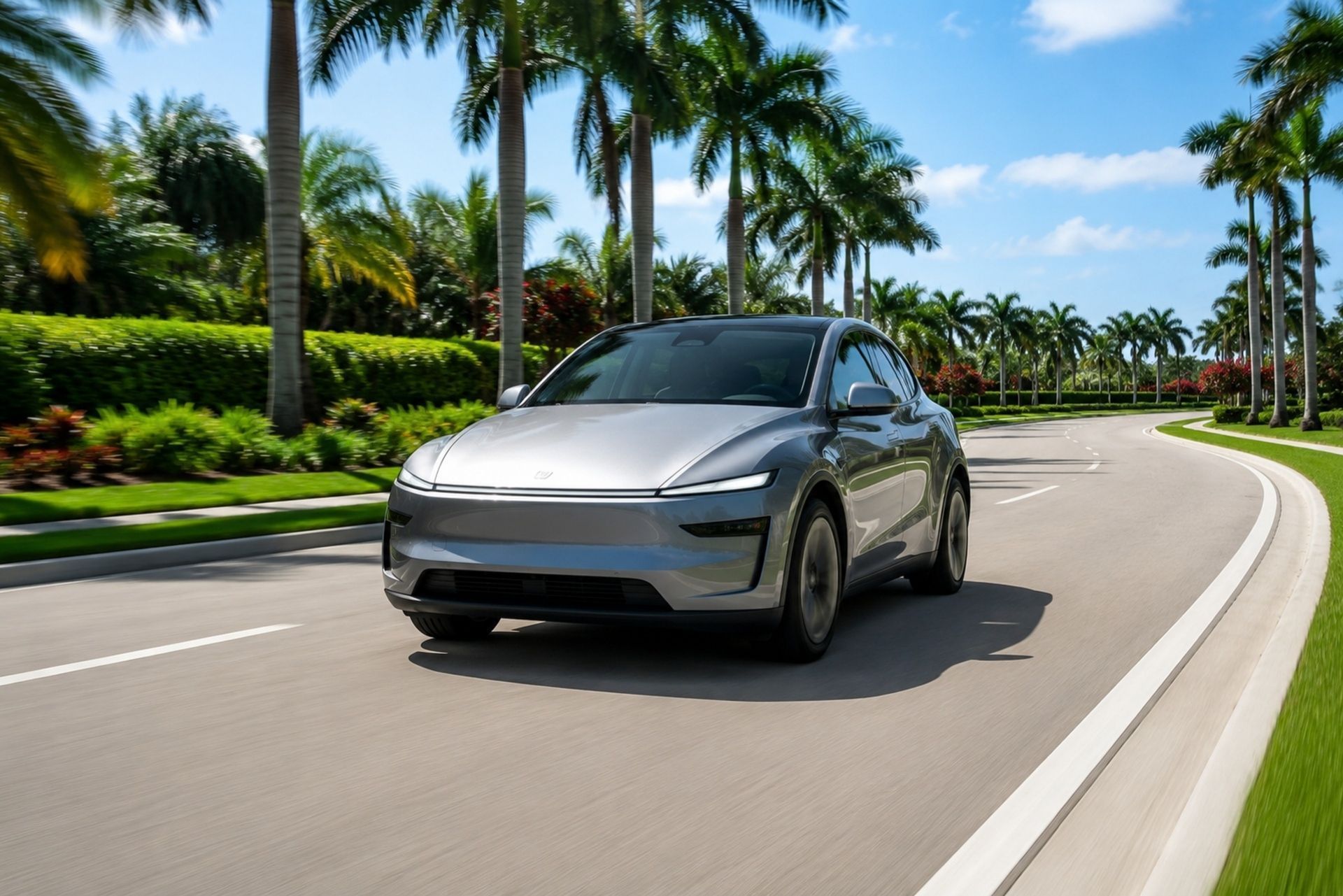
Unique Florida Risks for Electric Vehicles
Florida's climate and geography create insurance considerations that don't apply in most other states. From hurricane season flooding to the liability exposure of home charging setups, EV owners here face a distinct set of risks worth addressing in their policies.
Flood and Storm Surge Protection
Florida leads the nation in flood insurance claims, and EVs are particularly vulnerable to water damage. Saltwater intrusion into a battery pack doesn't just cause immediate failure; it can create delayed thermal events days after exposure. Standard comprehensive coverage typically covers flood damage, but your deductible matters enormously here.
If you live in a FEMA-designated flood zone, your auto insurer may apply a higher comprehensive deductible or exclude certain flood-related claims. Review your policy's flood provisions carefully, especially if you park in a ground-level garage. Some EV owners in South Florida and coastal areas carry separate flood endorsements on their auto policies or reduce their comprehensive deductible during hurricane season (June through November) to limit out-of-pocket exposure.
Charging Station Liability at Home
Installing a Level 2 home charger (240-volt) is standard for most EV owners, but it introduces a liability question that many overlook. If a faulty charger causes a fire that damages your home or a neighbor's property, your homeowner's insurance, not your auto policy, typically responds. However, if the fire damages your vehicle, your auto comprehensive coverage would apply.
The bottom line: make sure your homeowner's or renter's policy covers the charging equipment and any liability arising from its use. Some insurers require you to disclose the installation, and failing to do so could jeopardize a future claim. A licensed electrician's installation certificate and a permit from your local building authority can also strengthen your position if a claim arises.
Common Questions About Florida EV Insurance
Does Florida charge an annual EV fee that affects insurance? Yes. Florida charges a $200 annual registration surcharge for battery-electric vehicles to offset lost gas tax revenue. This fee doesn't directly affect your insurance premium, but it's an ownership cost worth factoring into your total budget.
Are telematics programs available for EV owners in Florida? Several carriers offer usage-based insurance programs, including Progressive's Snapshot and State Farm's Drive Safe & Save. These programs monitor driving behaviors like hard braking, speed, and time of day. They can reduce premiums by 10% to 30%, though you're sharing detailed driving data with your insurer.
Do I need special towing coverage for my EV? EVs should only be transported on flatbed tow trucks. Traditional hook-and-chain or dolly towing can damage the drivetrain. Confirm that your roadside assistance benefit specifies flatbed towing, or add it if it doesn't.
Will my premium drop as my EV's battery ages? Premiums generally decrease as your vehicle depreciates, but battery degradation can complicate this. If your EV's range drops significantly, the replacement cost of the battery may still be high relative to the car's market value, keeping comprehensive premiums elevated.
Can I bundle my EV and home charger under one policy? Some carriers offer bundled auto and home policies that include coverage for home charging equipment. Bundling typically saves 10% to 15% on combined premiums and simplifies claims if a charging-related incident damages both your vehicle and your property.
Making the Right Choice for Your Electric Car
Insuring an EV in Florida requires more thought than insuring a traditional vehicle. The higher repair costs, battery replacement expenses, and Florida-specific weather risks all push toward carrying more coverage than the state minimums require. Start by getting quotes from at least four to six carriers using identical coverage levels so you're comparing real numbers, not different policy structures.
Prioritize a policy that covers battery replacement at full value, includes flatbed towing, and addresses flood damage with a manageable deductible. If you've installed a home charger, coordinate your auto and homeowner's policies to eliminate gaps. Consider a telematics program if you're comfortable sharing driving data, as the savings can offset the higher base premium that comes with EV ownership.
Your path forward is straightforward: gather your quotes, read the battery and flood provisions carefully, and don't settle for a standard policy that wasn't designed with electric vehicles in mind. The right coverage protects not just your car, but the significant investment you've made in driving electric.
About The Author:
Evan Marcotte
As an Auto Insurance Specialist at 5-Star Insurance, I’m passionate about helping drivers get the protection they need with speed, clarity, and confidence. My goal is to make every policy simple to understand and every client fully supported — from quote to claim.
Menu Pop-Up
Real Reviews from Florida Drivers
At 5-Star Insurance, we help drivers across Florida get insured quickly and affordably even in challenging situations. Whether it’s handling SR-22 and FR-44 filings or finding the most budget-friendly policy, our clients count on us to make the process fast, simple, and stress-free. Here’s what some of them have shared

Coverage Tailored to Your Needs
We specialize in essential auto insurance products for Florida drivers:
Auto Insurance
Standard auto coverage for Florida drivers, including liability, comprehensive, and collision options.
Commercial Auto Insurance
Protection for vehicles used for business and commercial purposes.
Liability-Only Auto Insurance
Basic, affordable coverage meeting Florida’s minimum requirements.
SR-22 Insurance
Required filing for drivers needing to reinstate their license after violations.
Motorcycle Insurance
Affordable insurance for motorcycles, scooters, and similar vehicles.
Clear Answers to Your Auto Insurance Questions
At 5-Star Insurance, we make sure every driver understands their options. Whether you are dealing with a suspension, DUI, or just need affordable coverage, we are here to help you get back on the road with confidence.
Stay Informed with Our Latest Articles
Gain insights to make smarter decisions about your insurance coverage:
Check out Our Latest Videos
Quick clips to keep you up to date on SR22 and FR44 insights and news
Contact Us
