

A single misplaced mower blade can send a rock through a client's sliding glass door. A crew member can twist a knee stepping off a trailer. A tropical storm can destroy $40,000 worth of equipment parked in your yard overnight. Running a landscaping business in Florida means facing risks that don't exist in most other states, and your insurance program needs to reflect that reality. Whether you're a solo operator with a truck and a zero-turn or you manage multiple crews across several counties, the right combination of general liability, commercial auto, inland marine equipment coverage, and workers' comp determines whether a bad day becomes a business-ending event. Florida's regulatory environment adds its own wrinkles, from mandatory workers' compensation thresholds to windstorm exclusions that catch owners off guard. This guide breaks down each coverage type, explains what Florida law actually requires, and helps you build a policy package that protects both your crew and your bottom line.
Core Insurance Policies for Florida Landscaping Businesses
Every landscaping operation in Florida needs a foundation of three core policies. These aren't optional extras or nice-to-haves; they're the minimum framework that keeps your business legally compliant and financially protected. Skipping any one of them creates a gap that a single incident can exploit.
The catch is that many landscapers buy the cheapest policy they can find without understanding what's actually covered. A bare-bones general liability policy won't help you if your truck causes a wreck, and commercial auto won't cover a stolen chainsaw. Each policy serves a distinct purpose, and understanding those boundaries is the first step toward real protection.
General Liability for Property Damage and Bodily Injury
General liability (GL) is the policy you'll use most often. It covers third-party bodily injury and property damage that occurs during your work. Think broken sprinkler lines, damaged fences, a client tripping over equipment left on a walkway, or that rock-through-the-window scenario.
Florida doesn't technically mandate GL for landscapers, but most commercial clients and HOAs require proof of coverage before they'll sign a contract. Standard policies start at $1 million per occurrence with a $2 million aggregate. Florida landscapers can expect GL premiums ranging from roughly $500 to $2,500 annually depending on revenue, crew size, and claims history.
One thing to keep in mind: GL policies typically exclude pollution-related claims. If you apply herbicides or pesticides, you'll need a separate endorsement or a standalone pollution liability policy, which we'll cover below.
Workers' Compensation Requirements in Florida
Florida law requires workers' compensation coverage for any landscaping business with one or more employees. That threshold is lower than most industries in the state, where non-construction businesses can often wait until they have four employees. Landscaping falls under construction classifications, so the mandate kicks in immediately.
The good news is that premiums have been trending downward. The Florida Office of Insurance Regulation approved a 6.9% average decrease in workers' compensation premiums effective January 1, 2026, marking the ninth consecutive year of rate reductions. For a landscaping crew, this translates to meaningful savings, though your actual rate depends on your classification code, payroll, and experience modification factor.
Failing to carry workers' comp in Florida carries serious consequences: stop-work orders, fines of $1,000 per day, and personal liability for any injuries your workers sustain. The state's Division of Workers' Compensation actively investigates complaints, and injured employees have specific rights that you can't contract around.
Commercial Auto and Trailer Coverage
Your personal auto policy won't cover vehicles used for business purposes. Period. If your truck is hauling a trailer full of mowers to a job site and causes an accident, your personal insurer will deny the claim. Commercial auto insurance covers your trucks, vans, and trailers for liability, collision, and comprehensive losses.
Florida requires minimum liability limits of $10,000/$20,000 for bodily injury and $10,000 for property damage on personal vehicles, but those minimums are dangerously low for commercial use. Most landscapers should carry at least $500,000 in combined single-limit liability, and $1 million isn't unreasonable if you operate on busy roads or near schools.
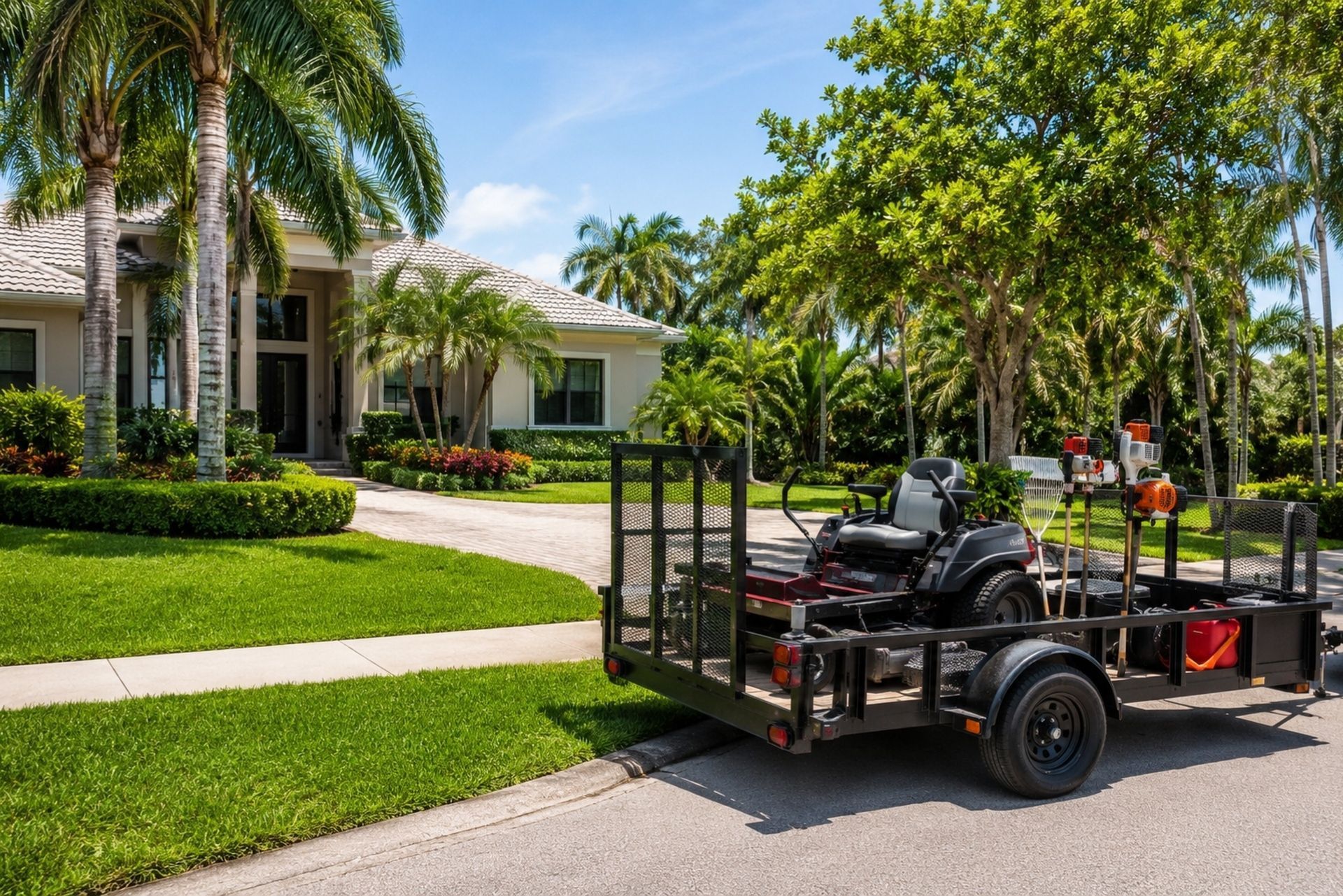
Trailer coverage is often overlooked. Your enclosed or open trailer needs to be specifically listed on your commercial auto policy or covered under an inland marine policy. If it's not listed anywhere, it's not covered.

Protecting Your Specialized Equipment and Tools
Landscaping equipment represents a significant capital investment. A commercial zero-turn mower runs $8,000 to $15,000. Skid steers, trenchers, and stump grinders can cost far more. Standard business property policies are designed for items stored at a fixed location, not gear that travels from job site to job site six days a week.
Inland Marine Insurance for Mobile Gear
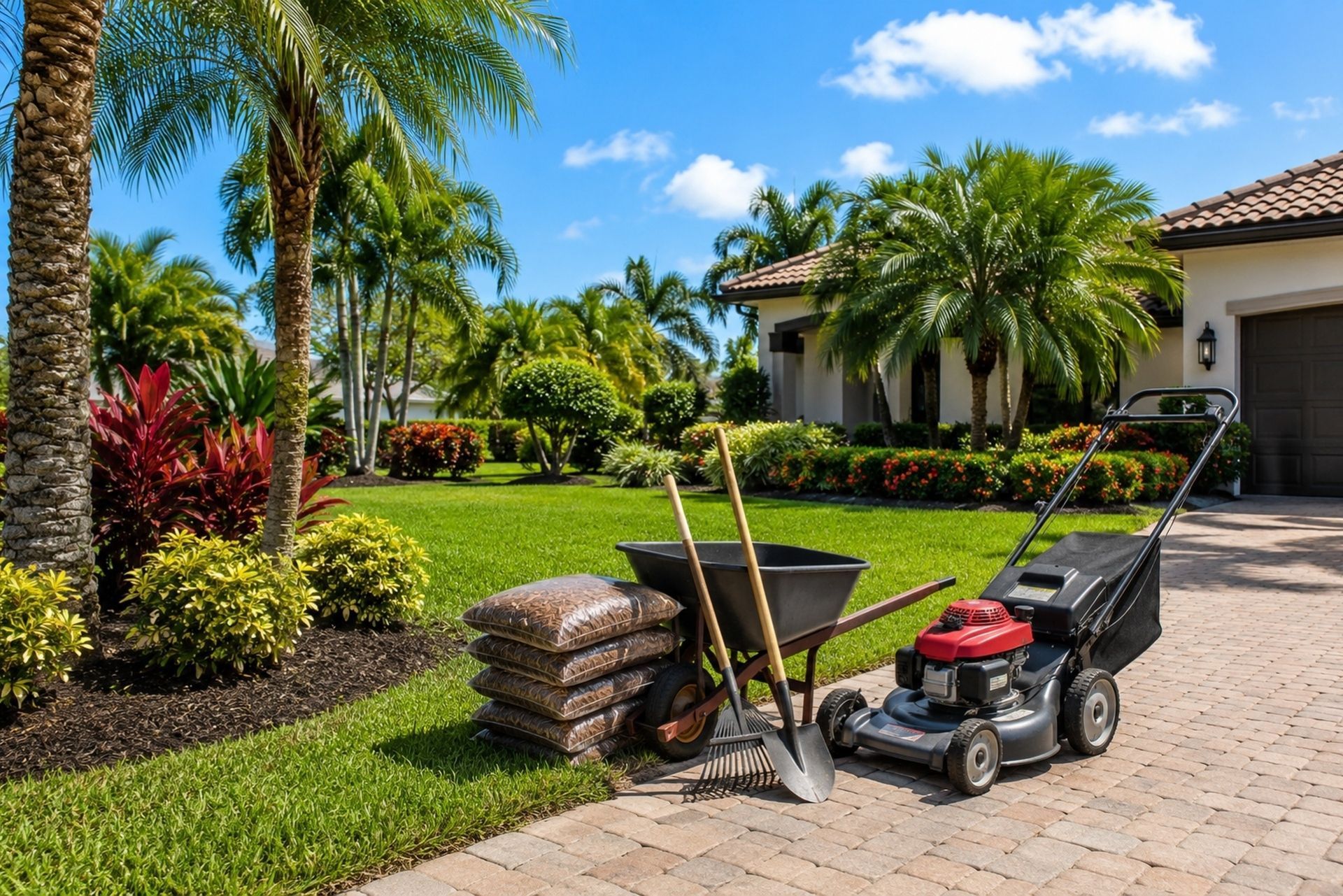
Despite the name, inland marine insurance has nothing to do with boats. It covers property that moves between locations, which makes it the ideal policy for landscaping equipment. Your mowers, blowers, trimmers, chainsaws, aerators, and specialty attachments all qualify.
Inland marine policies can be written on either a scheduled basis, where each item is individually listed with its value, or on a blanket basis, where you insure a total equipment value without itemizing. Scheduled coverage is more precise but requires updating the policy every time you buy or sell equipment. Blanket coverage offers more flexibility but may have per-item sublimits.
For a Florida landscaper, inland marine coverage is a core part of a complete insurance program. Your equipment is exposed to theft, vandalism, accidental damage, and weather events every single day.
Coverage for Theft and Vandalism
Equipment theft is a persistent problem in the landscaping industry. Trailers full of gear parked at job sites or in driveways overnight are easy targets. Florida's warm climate means landscapers often work year-round, and equipment rarely sits idle long enough to be stored securely.
Inland marine policies typically cover theft, but your deductible and any security-related requirements matter. Some insurers offer lower deductibles if you install GPS tracking on high-value items or use lockable enclosed trailers. Others require photos and serial numbers for every scheduled item.
That said, filing a theft claim without a police report will almost always result in a denial. Document your equipment inventory with serial numbers, photos, and purchase receipts. Keep this record separate from the equipment itself, ideally in cloud storage.
Florida-Specific Risks and Environmental Coverage
Florida's climate and regulatory environment create risks that landscapers in other states rarely face. From chemical application liability to hurricane season, your coverage needs to account for hazards unique to this market.
Herbicide and Pesticide Application Liability
If your crews apply any chemical products, including common herbicides like glyphosate or pre-emergent treatments, you're exposed to pollution liability claims. A standard GL policy excludes pollution events, which means overspray that kills a neighbor's garden or chemical runoff into a retention pond won't be covered.
You need a pollution liability endorsement or a standalone environmental liability policy. These cover third-party bodily injury and property damage resulting from the application, drift, or runoff of chemicals you apply. Florida's Department of Agriculture requires specific licensing for commercial pesticide applicators, and operating without proper licensing can void your coverage entirely.
The cost of a pollution endorsement is relatively modest, often $300 to $800 annually, but the claims it covers can run into six figures. Don't skip it.
Hurricane and Windstorm Considerations
Hurricane season runs from June through November, and your equipment, vehicles, and job sites are all vulnerable. Here's what that means for you: many commercial property and inland marine policies in Florida include windstorm exclusions or separate windstorm deductibles that are significantly higher than your standard deductible.
Review your policies carefully for percentage-based deductibles tied to windstorm events. A 5% windstorm deductible on a $100,000 equipment schedule means you're paying the first $5,000 out of pocket. Some Florida commercial insurance carriers have adjusted their windstorm provisions for 2026, so it's worth reviewing your current terms with your agent.
Secure your equipment before any named storm. Insurers can deny claims if they determine you failed to take reasonable precautions, such as leaving a trailer full of equipment in an open lot during a hurricane warning.
| Coverage Type | Basic (State Minimum) | Full Coverage |
|---|---|---|
| PIP | $10,000 (required) | $10,000 (required) |
| PDL | $10,000 (required) | $25,000 - $50,000+ |
| Bodily Injury Liability | Not required | $100,000 / $300,000 |
| Collision | Not included | Included ($500 deductible typical) |
| Comprehensive | Not included | Included ($250 deductible typical) |
| UM/UIM | Not included | Included (matches BIL limits) |
| Typical Annual Cost | $800 - $1,200 | $1,800 - $3,000+ |
Comparing Coverage Levels: Basic vs. Comprehensive
Not every landscaper needs the same coverage. A solo operator with one truck and basic hand tools has different exposure than a company running five crews with $200,000 in equipment. The table below illustrates the practical differences between a stripped-down policy package and a comprehensive one.
Comparison Chart: Liability vs. Full Protection
| Coverage Area | Basic Package | Comprehensive Package |
|---|---|---|
| General Liability | $1M per occurrence | $2M per occurrence with umbrella |
| Workers' Comp | State minimum (if required) | Full coverage with return-to-work program |
| Commercial Auto | $300K combined single limit | $1M combined single limit |
| Inland Marine | Blanket $25K limit | Scheduled coverage, full replacement cost |
| Pollution Liability | Not included | Included via endorsement |
| Windstorm Deductible | 5% of insured value | 2% with named-storm buyback |
| Approximate Annual Cost | $3,500 - $6,000 | $8,000 - $15,000 |
The basic package keeps you legal but leaves significant gaps. The comprehensive package costs more but protects against the scenarios that actually put landscapers out of business.
Common Questions About Landscaping Insurance
FAQ: Cost, Legal Mandates, and Claims
How much does landscaper insurance cost in Florida? A basic GL policy starts around $500 to $800 per year for a small operation. Adding workers' comp, commercial auto, and inland marine typically brings total annual premiums to $4,000 to $12,000 depending on crew size and revenue. The recent workers' comp rate decrease in Florida for 2026 helps reduce that figure slightly.
Is workers' comp required for landscapers in Florida? Yes. Any landscaping business with one or more employees must carry workers' compensation. This applies regardless of whether employees are full-time, part-time, or seasonal. Sole proprietors and partners can exempt themselves but cannot exempt employees.
What happens if I don't have insurance and someone gets hurt on a job? You're personally liable for all medical costs, lost wages, and potential legal fees. Florida can also issue a stop-work order and impose daily fines. The financial exposure from a single serious injury can exceed $500,000.
Does my personal auto insurance cover my work truck? No. If your vehicle is used for business purposes, you need a commercial auto policy. Personal auto insurers routinely deny claims involving commercial use.
Do I need inland marine if I already have a business property policy? Typically, yes. Business property policies cover items at your listed business location. Equipment in transit or stored at a job site usually falls outside that coverage. Landscapers in Florida benefit from dedicated inland marine policies that follow their gear wherever it goes.
Can I reduce my premiums without cutting coverage? Yes. Maintain a clean claims history, install GPS tracking on equipment, implement a written safety program, and gather quotes from at least four to six carriers using identical coverage levels. Bundling policies with a single insurer often yields a 10% to 15% discount.
Making the Right Choice for Your Crew
Your insurance program should grow with your business. A solo operator launching with a truck and a mower can start with GL and commercial auto, then add workers' comp the moment they hire their first employee. As your equipment inventory grows, inland marine becomes essential. When you start applying chemicals, pollution liability fills a critical gap.
Don't treat insurance as a one-time purchase. Review your policies annually, update equipment schedules, and adjust liability limits as your revenue increases. A policy that fit your business two years ago may leave you dangerously underinsured today.
The smartest move you can make is working with an independent agent who understands Florida's landscaping industry. They can compare quotes across multiple carriers, identify coverage gaps you didn't know existed, and structure a program that balances cost with genuine protection. Your crew depends on you to keep the business running, and the right insurance makes sure one bad day doesn't end everything you've built.
About The Author:
Evan Marcotte
As an Auto Insurance Specialist at 5-Star Insurance, I’m passionate about helping drivers get the protection they need with speed, clarity, and confidence. My goal is to make every policy simple to understand and every client fully supported — from quote to claim.
Menu Pop-Up
Real Reviews from Florida Drivers
At 5-Star Insurance, we help drivers across Florida get insured quickly and affordably even in challenging situations. Whether it’s handling SR-22 and FR-44 filings or finding the most budget-friendly policy, our clients count on us to make the process fast, simple, and stress-free. Here’s what some of them have shared

Coverage Tailored to Your Needs
We specialize in essential auto insurance products for Florida drivers:
Auto Insurance
Standard auto coverage for Florida drivers, including liability, comprehensive, and collision options.
Commercial Auto Insurance
Protection for vehicles used for business and commercial purposes.
Liability-Only Auto Insurance
Basic, affordable coverage meeting Florida’s minimum requirements.
SR-22 Insurance
Required filing for drivers needing to reinstate their license after violations.
Motorcycle Insurance
Affordable insurance for motorcycles, scooters, and similar vehicles.
Clear Answers to Your Auto Insurance Questions
At 5-Star Insurance, we make sure every driver understands their options. Whether you are dealing with a suspension, DUI, or just need affordable coverage, we are here to help you get back on the road with confidence.
Stay Informed with Our Latest Articles
Gain insights to make smarter decisions about your insurance coverage:
Check out Our Latest Videos
Quick clips to keep you up to date on SR22 and FR44 insights and news
Contact Us
