

Running a painting business in Florida means working around hurricanes, high humidity, and some of the strictest contractor licensing rules in the country. A single accident on a job site, a damaged client property, or an uninsured employee injury can wipe out years of profit overnight. Whether you're a solo operator rolling primer on condos in Fort Lauderdale or managing a crew of fifteen across Tampa Bay, the right insurance coverage isn't optional: it's the foundation your business stands on. This guide covers everything Florida painters need to know about general liability, tools and equipment protection,
commercial auto policies, and workers' compensation, so you can bid on jobs with confidence and stay compliant with state law.
Essential Insurance Policies for Florida Painters
Every painting contractor in Florida faces a specific set of risks. You're working on ladders, handling chemical solvents, driving loaded vans between job sites, and sending crews into clients' homes and businesses. No single policy covers all of these exposures. A complete coverage approach for Florida painter insurance typically includes four core policies: general liability, workers' compensation, tools and equipment coverage, and commercial auto. Each one addresses a distinct category of risk, and gaps between them are where most claims fall through.
General Liability: Protecting Against Third-Party Claims
General liability insurance is the policy most clients will ask about before you set foot on their property. It covers bodily injury and property damage claims made by third parties, meaning anyone who isn't your employee. If a homeowner trips over your drop cloth, or your crew splatters exterior paint onto a neighbor's car, general liability responds to those claims.
Most Florida painters carry between $500,000 and $1 million in per-occurrence limits, with a $2 million aggregate. Property managers and general contractors frequently require the higher end of that range before they'll add you to a project. The policy also includes completed operations coverage, which protects you after you've finished a job. If paint peels six months later and the client alleges faulty workmanship caused water damage, your completed operations coverage handles the defense costs and any settlement.
Workers' Compensation: Florida State Requirements
Florida requires workers' comp for any construction employer with one or more employees. Painting is classified as construction under state law, so this rule applies to you. Even subcontractors you hire may need to carry their own workers' comp, or their exposure rolls up under your policy.
The good news is that Florida has approved a 9.8% average decrease in workers' compensation premiums for 2026, marking the eighth consecutive year of rate reductions. That said, painting carries a classification code (NCCI 5474 for most interior/exterior residential work) with moderate rates. Your premium is calculated as a rate per $100 of payroll, so accurate payroll reporting matters. Misclassifying employees or underreporting payroll can trigger audits and penalties that dwarf any premium savings.
Tools and Equipment Coverage for Mobile Crews
Your sprayers, pressure washers, scaffolding, and ladders are the assets that generate your revenue. Standard general liability policies don't cover your own property. If your $4,000 airless sprayer is stolen from a job site or your scaffold collapses and destroys your equipment, you need an inland marine or tools and equipment policy.
These policies typically cover theft, vandalism, fire, and accidental damage. You can insure items on a scheduled basis (listing each piece with its value) or on a blanket basis up to a set limit. One thing to keep in mind: most policies require you to store equipment in a locked vehicle or secured area overnight. Leaving a trailer unlocked at a job site could void your claim.

Florida-Specific Requirements and Licensing
DBPR Regulations for Painting Contractors
The Florida Department of Business and Professional Regulation (DBPR) oversees contractor licensing. Painting contractors fall under the "Specialty Contractor" category and must register at the county or local level rather than obtaining a state-certified license. Your local building department will determine the specific insurance documentation required for registration.
Most counties require proof of general liability insurance at minimum. Some also require workers' comp compliance documentation, which you can obtain through the Florida Division of Workers' Compensation. Operating without proper registration can result in fines up to $10,000 per offense, and repeat violations can lead to criminal charges.
County vs. State Level Insurance Minimums
Florida doesn't set a single statewide insurance minimum for painting contractors. Instead, requirements vary by county and municipality. Miami-Dade County, for example, often requires higher liability limits than rural counties in the Panhandle. Broward County has its own contractor licensing board with distinct insurance thresholds.
Here's what that means for you: if you work across multiple counties, you need to meet the highest minimum among all jurisdictions where you operate. Many painters find it simpler to carry $1 million per occurrence and $2 million aggregate, which satisfies virtually every county requirement in the state. Check with each county's contractor licensing office before bidding on projects outside your home territory.
Comparing Coverage: Basic vs. Comprehensive Protection
A bare-minimum insurance setup might keep you technically legal, but it leaves significant gaps. The difference between basic and comprehensive coverage often determines whether a single bad claim closes your business or becomes a manageable setback.
Coverage Comparison Table
| Coverage Area | Basic Protection | Comprehensive Protection |
|---|---|---|
| General Liability | $500K per occurrence / $1M aggregate | $1M per occurrence / $2M aggregate |
| Workers' Comp | State minimum (required with 1+ employees) | State minimum plus employer's liability ($500K+) |
| Tools & Equipment | No coverage (self-insured) | Inland marine policy ($25K-$100K limit) |
| Commercial Auto | State minimum liability only | Full coverage with hired/non-owned auto |
| Umbrella/Excess | None | $1M-$2M umbrella over all underlying policies |
| Professional Liability | None | Errors & omissions for color/finish disputes |
The catch is that basic coverage might save you $1,500 to $3,000 per year in premiums, but a single uncovered claim can cost ten times that amount. Commercial clients and general contractors increasingly require comprehensive coverage before awarding contracts.
Risk Factors for Residential vs. Commercial Jobs
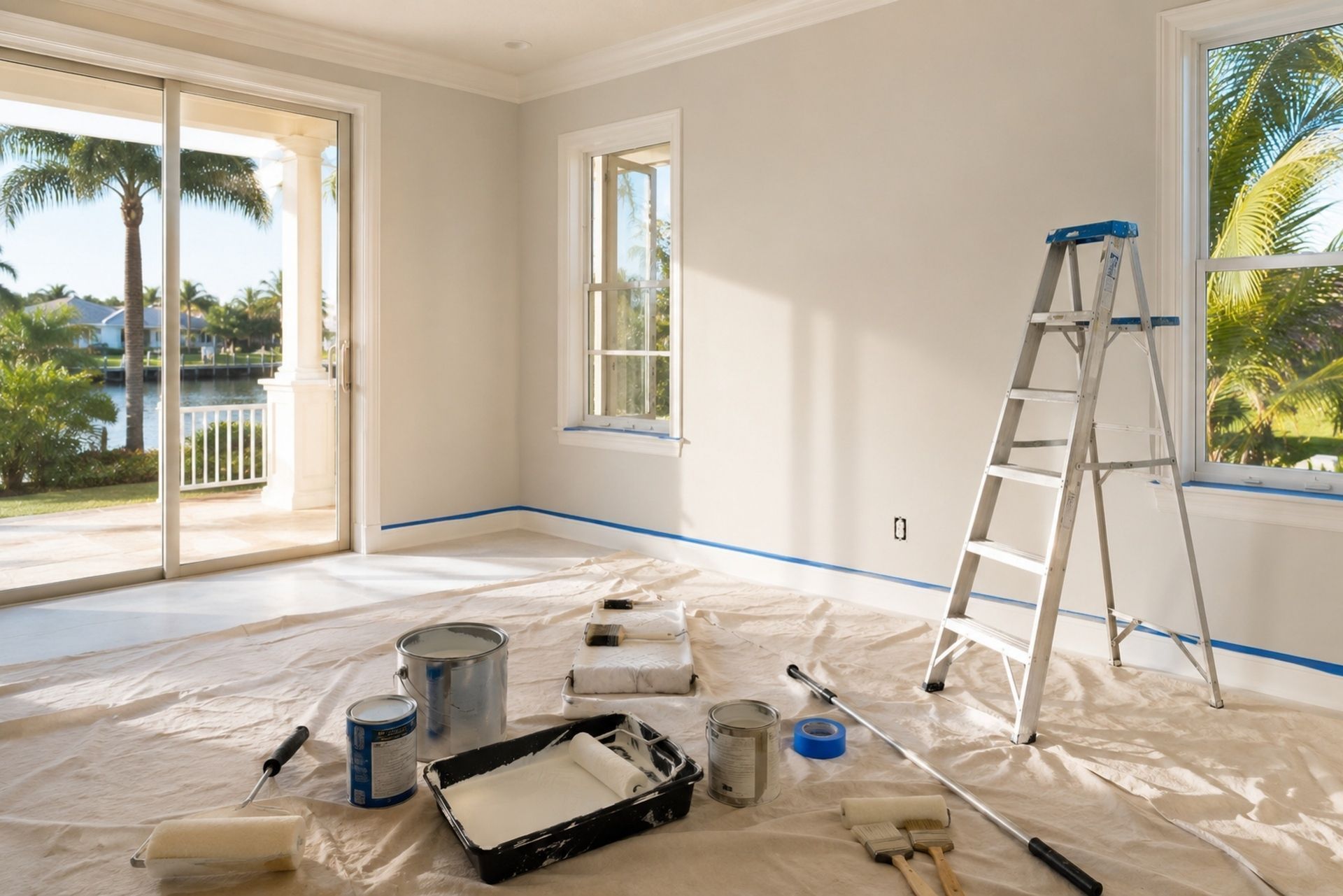
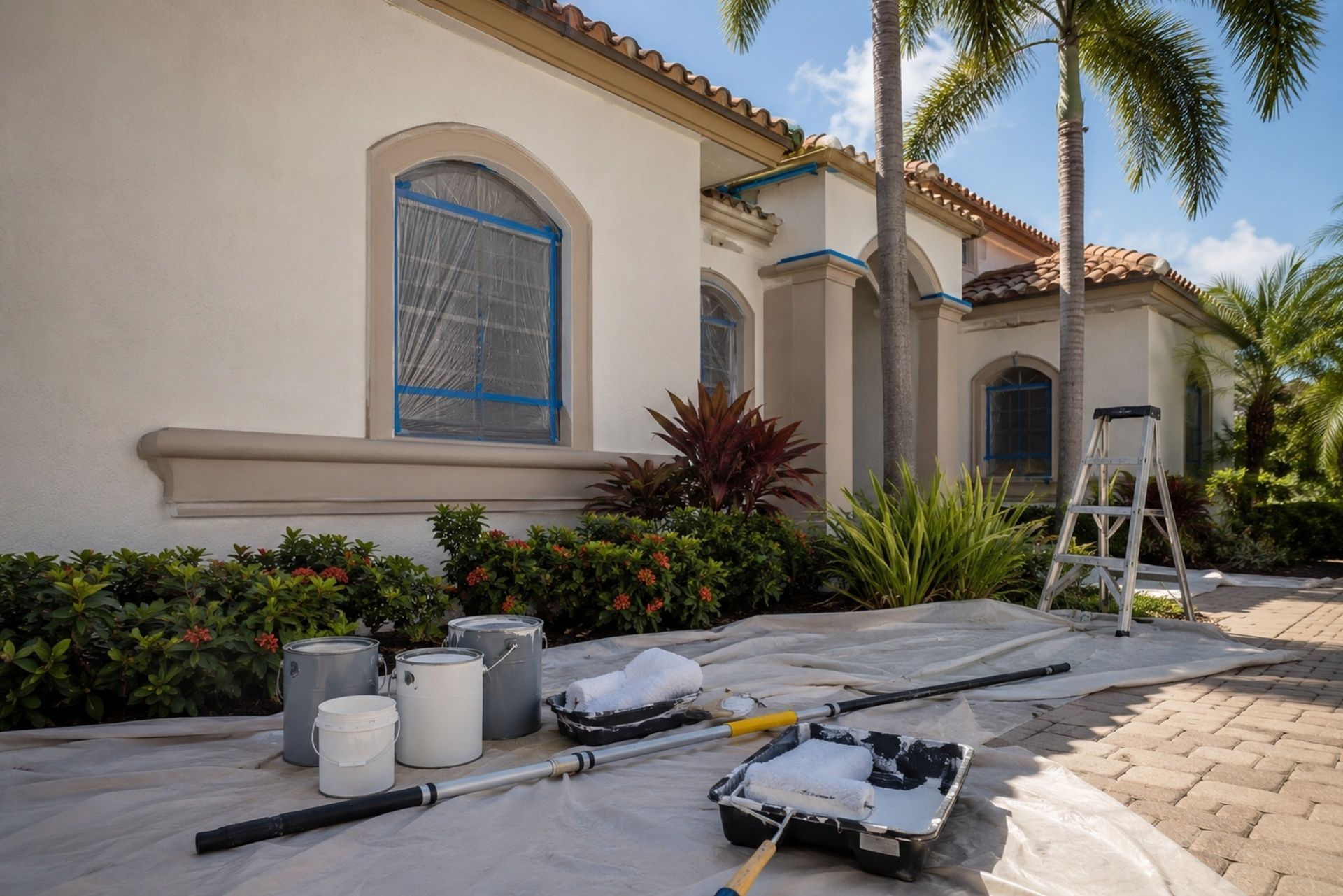
Residential and commercial painting carry different risk profiles, and insurers price them accordingly. Commercial work typically involves higher structures, more complex access requirements, and greater exposure to third-party foot traffic. A painter working on a retail storefront in downtown Orlando faces different hazards than someone repainting bedrooms in a subdivision.
Insurers also consider the types of surfaces and coatings you work with. Lead paint abatement, industrial coatings, and work involving hazardous materials all increase your premium. If you stick to standard latex interior/exterior residential work, your rates will be lower than a contractor handling epoxy floor coatings in warehouse facilities. Your claims history over the past three to five years is the single biggest factor: even one large claim can increase premiums by 20% or more.
How Payroll and Revenue Affect Costs
Workers' comp premiums are directly tied to your payroll. General liability premiums are often based on annual revenue. This means your insurance costs scale with your business. A painting company generating $500,000 in annual revenue with $200,000 in payroll will pay significantly more than a solo operator earning $80,000.
Accurate reporting is critical. Insurers conduct annual audits comparing your estimated payroll and revenue against actual figures. If you underestimated, you'll owe additional premium at audit time. If you overestimated, you'll receive a credit. Some painters get quotes from at least four to six different carriers using identical coverage levels to ensure they're getting competitive pricing. Working with an independent agent who specializes in contractor insurance can streamline this process.
Common Questions About Painter Insurance
Do I need insurance if I'm just a one-person shop?
Yes. Even without employees, Florida counties require general liability insurance for contractor registration. You're also personally liable for any damage or injury you cause on a job site. Without insurance, a single lawsuit could put your personal assets at risk, including your home if it isn't protected by Florida's homestead exemption in this context.
Will my personal auto policy cover my work van?
Almost certainly not. Personal auto policies exclude vehicles used for business purposes in most cases. If you're hauling ladders, paint, and equipment to job sites, you need a commercial auto policy. Using your personal policy for work and filing a claim could result in a denial and even policy cancellation.
How do I get a Certificate of Insurance for a client?
Contact your insurance agent or carrier and request a Certificate of Insurance (COI). Most agents can issue one within 24 hours. The COI lists your coverage types, limits, and policy dates. Many property managers and general contractors require being listed as an "additional insured" on your policy, which your agent can add via endorsement, often at no extra charge.
What happens if I accidentally spill paint on a client's expensive rug?
This is a textbook general liability claim. Your policy would cover the cost to clean or replace the rug, minus your deductible. Document the damage immediately with photos, notify your insurance carrier promptly, and avoid admitting fault or making promises about payment. The insurer will investigate and handle the claim directly with the client.
Protecting Your Business for the Long Term
Florida's painting industry remains competitive, and the contractors who survive long-term are the ones who treat insurance as a business investment rather than an expense. Your coverage needs will change as you hire employees, take on larger projects, and expand into new counties. Review your policies annually, especially before your renewal date, to ensure your limits and coverages still match your actual operations.
Getting the right Florida painter insurance, from general liability and workers' comp to tools coverage and commercial auto, doesn't have to be complicated. Start by gathering quotes from multiple carriers with identical coverage levels. Work with an independent agent who understands Florida's county-by-county requirements. Keep your payroll and revenue estimates accurate to avoid surprise audit bills. The time you invest in building a solid insurance program today protects every dollar you earn tomorrow.
About The Author:
Evan Marcotte
As an Auto Insurance Specialist at 5-Star Insurance, I’m passionate about helping drivers get the protection they need with speed, clarity, and confidence. My goal is to make every policy simple to understand and every client fully supported — from quote to claim.
Menu Pop-Up
Real Reviews from Florida Drivers
At 5-Star Insurance, we help drivers across Florida get insured quickly and affordably even in challenging situations. Whether it’s handling SR-22 and FR-44 filings or finding the most budget-friendly policy, our clients count on us to make the process fast, simple, and stress-free. Here’s what some of them have shared

Coverage Tailored to Your Needs
We specialize in essential auto insurance products for Florida drivers:
Auto Insurance
Standard auto coverage for Florida drivers, including liability, comprehensive, and collision options.
Commercial Auto Insurance
Protection for vehicles used for business and commercial purposes.
Liability-Only Auto Insurance
Basic, affordable coverage meeting Florida’s minimum requirements.
SR-22 Insurance
Required filing for drivers needing to reinstate their license after violations.
Motorcycle Insurance
Affordable insurance for motorcycles, scooters, and similar vehicles.
Clear Answers to Your Auto Insurance Questions
At 5-Star Insurance, we make sure every driver understands their options. Whether you are dealing with a suspension, DUI, or just need affordable coverage, we are here to help you get back on the road with confidence.
Stay Informed with Our Latest Articles
Gain insights to make smarter decisions about your insurance coverage:
Check out Our Latest Videos
Quick clips to keep you up to date on SR22 and FR44 insights and news
Contact Us
