

Running a
catering business in Virginia means juggling food safety, client expectations, staffing, and logistics, often all in a single weekend. What many operators overlook until it's too late is the insurance foundation holding everything together. A single foodborne illness claim or a server's slip at a wedding venue can generate costs that dwarf an entire season's revenue.
This guide to Virginia catering insurance coverage and costs breaks down the policies you actually need, what they'll run you in 2026, and where you can trim premiums without exposing your business. Whether you're a sole proprietor running a small operation from a commissary kitchen or managing a team of twenty across multiple events per week, understanding your insurance obligations isn't optional. Virginia's
regulatory environment places specific demands on food service businesses, and venues increasingly require proof of coverage before they'll even let you through the door. The right insurance portfolio protects your finances, your reputation, and your ability to keep booking events.
Essential Insurance Requirements for Virginia Caterers
Every catering business in Virginia needs a
core set of policies before serving its first plate. These aren't optional add-ons; they're the baseline that protects you from the most
common and most expensive claims in the food service industry.
General Liability and Foodborne Illness Coverage
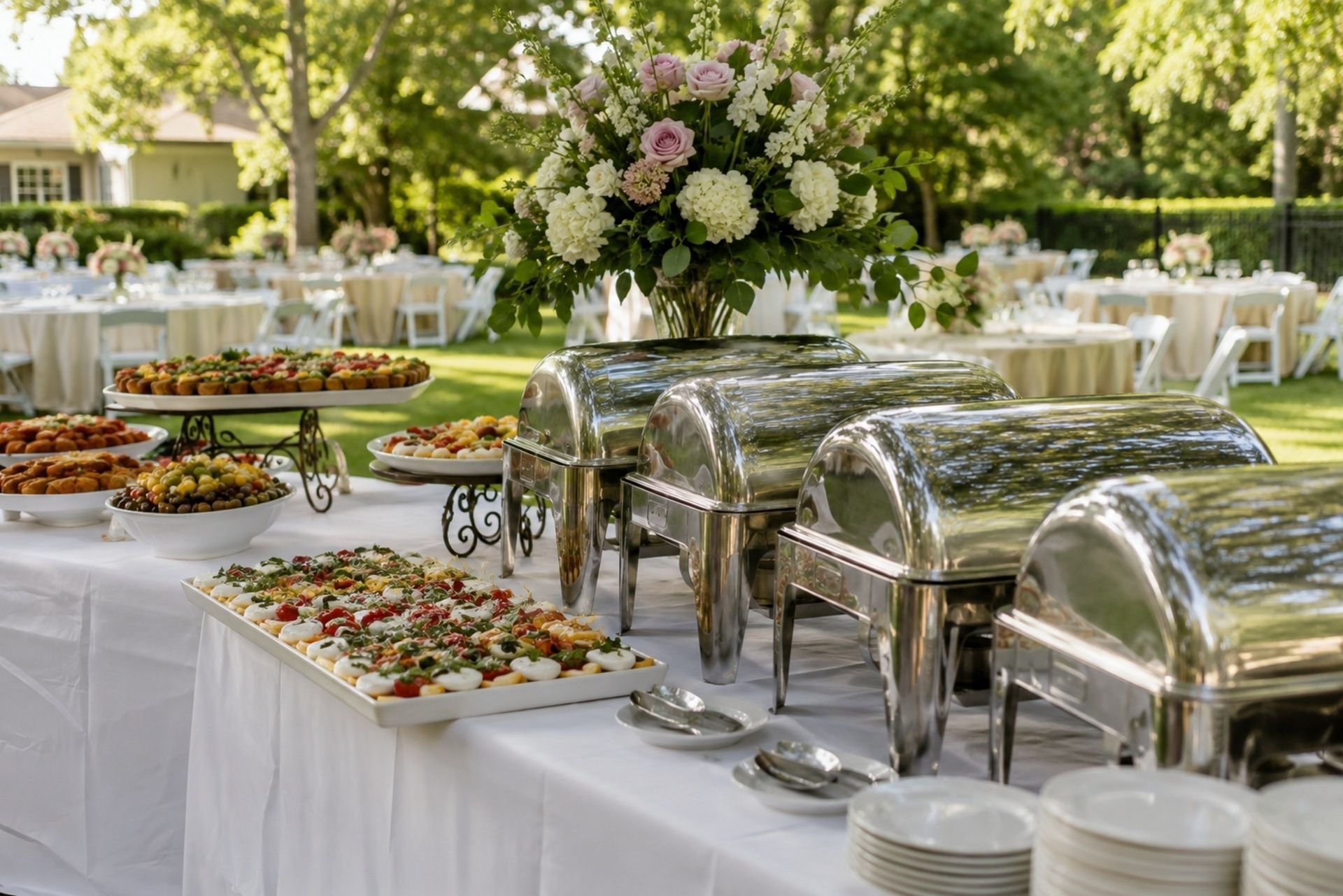
General liability insurance is the first policy any Virginia caterer should secure. It covers third-party bodily injury, property damage, and personal injury claims that arise during your operations. If a guest trips over your chafing dish setup and breaks a wrist, or your staff accidentally damages a venue's hardwood floor, general liability responds.
The catch is that standard general liability policies don't always include adequate foodborne illness coverage. A norovirus outbreak traced to your shrimp cocktail could trigger dozens of claims simultaneously. You'll want to confirm your policy includes products-completed operations coverage, which extends protection to illness or injury caused by food after it's been served. Virginia caterers typically need a minimum of $1 million per occurrence and $2 million aggregate in general liability limits to satisfy most venue and client requirements.
Liquor Liability for Beverage Service
If your catering operation serves alcohol, even beer and wine, you need a separate liquor liability policy. Virginia's dram shop laws can hold alcohol servers liable for injuries caused by intoxicated guests. This applies whether you hold the ABC license yourself or serve under the client's permit.
Liquor liability premiums vary based on the percentage of revenue derived from alcohol sales. A caterer earning 30% or more of revenue from bar service will pay considerably more than one that occasionally pours wine at seated dinners. One thing to keep in mind: many general liability policies explicitly exclude alcohol-related claims, so don't assume you're covered without verifying your policy language.
Virginia Workers' Compensation Mandates
Virginia law requires workers' compensation insurance for any business with two or more employees, including part-time and seasonal staff. For caterers who regularly bring on extra servers, bartenders, and kitchen help for events, this threshold is easy to hit.
Workers' comp covers medical expenses and lost wages for employees injured on the job. Kitchen burns, knife injuries, and lifting-related back strains are
among the most common claims in food service. Failing to carry workers' comp in Virginia can result in fines, criminal penalties, and personal liability for any workplace injury. The Virginia Workers' Compensation Commission actively audits businesses, so compliance isn't something you can quietly skip.

Specialized Policies for Catering Assets
Beyond the core liability policies, your physical assets and equipment need their own protection. Standard business property insurance often falls short for caterers because so much of your work happens away from a fixed location.
Commercial Auto for Delivery Vans and Food Trucks
Your personal auto policy won't cover a delivery van loaded with chafing dishes and prepared food. Any vehicle used for business purposes requires commercial auto insurance. This includes owned vehicles, leased vans, and even employees' personal cars used for deliveries under a hired and non-owned auto endorsement.
Virginia requires minimum auto liability limits of $30,000 per person and $60,000 per accident for bodily injury, plus $20,000 for property damage. Most caterers should carry well above these minimums, especially if transporting expensive equipment. If you operate a food truck, your commercial auto policy will also need to account for the truck's fitted
kitchen equipment.
Off-Premises Inland Marine for Equipment
Inland marine insurance covers your business property while it's in transit or at a job site. For caterers, this means protection for items like commercial-grade chafing sets, portable ovens, serving ware, linens, and audiovisual equipment.
A standard business property policy typically covers items only at your listed business location. The moment you load a $15,000 espresso machine into your van for a corporate event, it may no longer be covered. Inland marine fills that gap. Premiums are generally modest relative to the value protected, often running $300 to $800 annually depending on the total insured value of your portable equipment.
Your premium isn't a fixed number pulled from a rate chart. Insurers evaluate several variables specific to your operation before quoting a price.
Annual Revenue and Event Volume
Revenue is the single largest factor in determining your general liability premium. Insurers view higher revenue as a proxy for greater exposure: more events mean more opportunities for something to go wrong. A caterer handling 200 events per year faces statistically higher risk than one doing 40.
Small catering operations in Virginia with annual revenues under $250,000 typically pay between $2,000 and $4,500 per year for a general liability policy. As revenue climbs past $500,000, expect premiums to increase proportionally. Insurers may also ask about your average event size, since a 500-person gala presents different risk than a 30-person dinner party.
Staff Size and Payroll Obligations
Workers' compensation premiums are calculated as a rate per $100 of payroll, and the rate varies by job classification. Kitchen staff and servers carry different risk profiles, and your premium reflects the mix.
Here's what that means for you: if you rely heavily on seasonal or event-based staff, your payroll fluctuates, and so do your workers' comp costs. Many Virginia caterers benefit from pay-as-you-go workers' comp plans that adjust premiums monthly based on actual payroll rather than estimated annual figures. This prevents the unpleasant surprise of a large audit bill at the end of your policy term.
Estimated Costs for Virginia Business Owners
Pricing varies by operation size, services offered, and claims history. The table below provides a realistic snapshot of 2026 costs for Virginia-based caterers.
| Coverage Type | Small Operation (Under $250K Revenue) | Mid-Size Operation ($250K-$750K Revenue) |
|---|---|---|
| General Liability | $2,000 - $4,500/year | $4,500 - $9,000/year |
| Liquor Liability | $500 - $1,500/year | $1,500 - $4,000/year |
| Workers' Compensation | $1,200 - $3,000/year | $3,000 - $8,000/year |
| Commercial Auto | $1,500 - $3,500/year | $3,500 - $7,000/year |
| Inland Marine | $300 - $800/year | $800 - $2,000/year |
| Total Estimated Annual Cost | $5,500 - $13,300 | $13,300 - $30,000 |
These figures assume no significant claims history and standard coverage limits. Caterers with prior claims, especially foodborne illness incidents, should expect higher quotes. Gathering quotes from at least four to six carriers using identical coverage limits is the most reliable way to find competitive pricing. A local
independent agent familiar with Virginia's food service market can run these comparisons efficiently.
Most Virginia event venues, from historic estates in Charlottesville to waterfront properties in Hampton Roads, require a certificate of insurance (COI) before allowing a caterer on-site. A COI is a document issued by your insurer that verifies your active coverage and policy limits.
Venues commonly require $1 million per occurrence in general liability and ask to be listed as an additional insured on your policy. This means the venue receives certain protections under your policy for claims arising from your catering work. Your insurer can usually issue a COI within 24 to 48 hours, but during peak wedding season (May through October in Virginia), plan ahead.
On the flip side, some venues impose requirements beyond standard general liability. Historic properties may require specific property damage sub-limits. Venues with exclusive alcohol policies may require proof of liquor liability with higher-than-normal limits. Review each venue's insurance requirements early in the booking process so you're not scrambling days before an event.
Strategies for Reducing Your Insurance Expenses
Insurance is a necessary cost, but you don't have to overpay. Several practical strategies can lower your premiums without reducing meaningful coverage.
- Bundle multiple policies with a single carrier through a Business Owner's Policy (BOP), which often combines general liability and property coverage at a discount of 10% to 20%.
- Increase your deductibles on property and inland marine policies. Moving from a $500 to a $1,000 deductible can reduce premiums noticeably.
- Implement a formal food safety program, including ServSafe certification for all kitchen staff. Insurers view documented safety protocols as a sign of reduced risk.
- Maintain a clean claims history. Even one foodborne illness claim can raise your premiums for three to five years.
- Install GPS tracking and telematics devices in your delivery vehicles. Some carriers offer usage-based insurance discounts for fleets that demonstrate safe driving behavior, with programs monitoring speed, braking patterns, and mileage.
- Review your policy annually. Your operation changes year to year, and you may be paying for coverage you no longer need, or carrying limits that no longer match your exposure.
Frequently Asked Questions
Does my home kitchen insurance cover catering work? No. Homeowner's policies exclude business activities. You need a separate commercial general liability policy even if you prep food at home under Virginia's cottage food regulations.
How quickly can I get a certificate of insurance for a venue? Most insurers issue COIs within one to two business days. During busy seasons, request yours at least a week before the event to avoid delays.
Do I need liquor liability if the client provides the alcohol? It depends on who pours. If your staff serves the drinks, you could still face liability. Confirm your exposure with your agent based on your specific arrangement.
Is workers' comp required if I only hire independent contractors? Virginia law applies workers' comp requirements to employees, not true independent contractors. However, misclassifying workers is a common and costly mistake. If you control how and when your staff works, they're likely employees in the eyes of the state.
Can I get insurance for a single event instead of an annual policy? Yes. Single-event policies exist and typically cost $150 to $500 depending on event size and coverage limits. That said, annual policies are far more cost-effective if you cater more than a handful of events per year.
Your Path Forward
Building the right Virginia catering insurance portfolio comes down to understanding your specific risks and matching them with appropriate coverage. Start with general liability and workers' compensation as your foundation, then layer on liquor liability, commercial auto, and inland marine based on your services and assets.
Don't treat insurance as a set-it-and-forget-it expense. Review your policies each year as your revenue, staff size, and service offerings evolve. Work with an independent agent who understands Virginia's food service industry, and always compare quotes across multiple carriers before renewing. The goal isn't to buy the cheapest policy available; it's to buy the right coverage so a single bad event doesn't end your business. Take the time now to audit your current coverage, identify any gaps, and get quotes that reflect your 2026 operation. Your future self will thank you.
About The Author:
Evan Marcotte
As an Auto Insurance Specialist at 5-Star Insurance, I’m passionate about helping drivers get the protection they need with speed, clarity, and confidence. My goal is to make every policy simple to understand and every client fully supported — from quote to claim.
Menu Pop-Up
Real Reviews from Florida Drivers
At 5-Star Insurance, we help drivers across Florida get insured quickly and affordably even in challenging situations. Whether it’s handling SR-22 and FR-44 filings or finding the most budget-friendly policy, our clients count on us to make the process fast, simple, and stress-free. Here’s what some of them have shared

Coverage Tailored to Your Needs
We specialize in essential auto insurance products for Florida drivers:
Auto Insurance
Standard auto coverage for Florida drivers, including liability, comprehensive, and collision options.
Commercial Auto Insurance
Protection for vehicles used for business and commercial purposes.
Liability-Only Auto Insurance
Basic, affordable coverage meeting Florida’s minimum requirements.
SR-22 Insurance
Required filing for drivers needing to reinstate their license after violations.
Motorcycle Insurance
Affordable insurance for motorcycles, scooters, and similar vehicles.
Clear Answers to Your Auto Insurance Questions
At 5-Star Insurance, we make sure every driver understands their options. Whether you are dealing with a suspension, DUI, or just need affordable coverage, we are here to help you get back on the road with confidence.
Stay Informed with Our Latest Articles
Gain insights to make smarter decisions about your insurance coverage:
Check out Our Latest Videos
Quick clips to keep you up to date on SR22 and FR44 insights and news
Contact Us
