

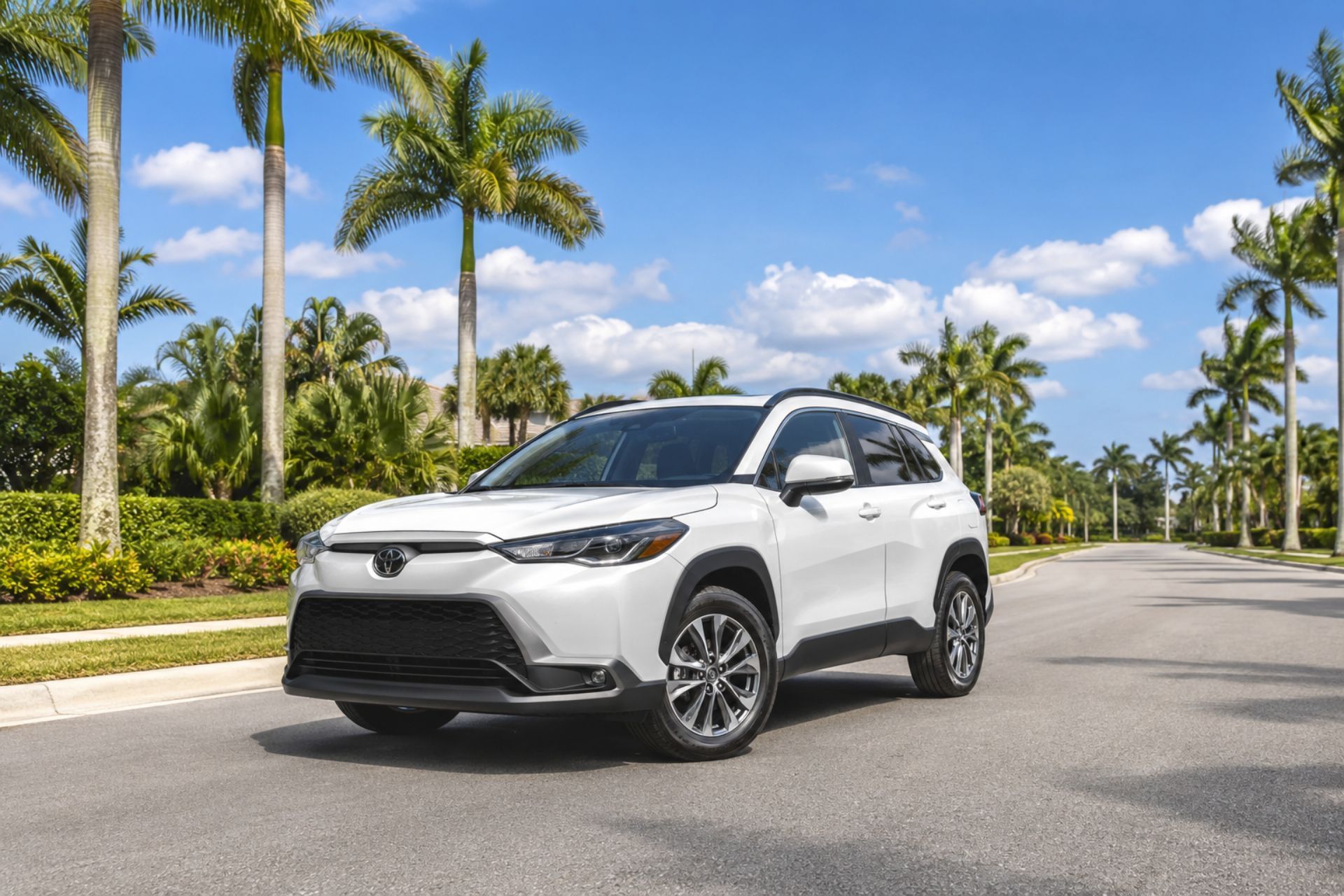
Toyota has held its position as the best-selling automaker in the United States for years, and Florida is no exception. From the Corolla-filled driveways of suburban Orlando to the Tacomas cruising the Keys, Toyotas are everywhere on Florida roads. That popularity, combined with the state's unique insurance laws, creates a specific set of considerations for owners shopping for auto insurance on their Toyota in Florida.
The good news? Florida's insurance market is shifting in favor of drivers right now. The state's top five auto insurance groups, representing 78% of the market, are implementing an average rate decrease of 8% for 2026. That's welcome relief for Toyota owners who've been paying some of the highest premiums in the country. But lower rates don't mean you should accept the first quote you receive. The right coverage at the right price requires understanding how Florida's insurance system works, what your specific Toyota model costs to insure, and where the real savings opportunities hide.
This guide breaks down everything you need to know, from
state-mandated minimums to model-specific pricing factors, so you can make a confident, informed decision.
Understanding Florida Insurance Requirements for Toyota Owners
Florida's insurance framework differs from most states, and those differences directly affect what you'll pay and what protection you actually carry. Before comparing quotes, you need to understand what the state requires and, just as important, what it doesn't.
The Florida No-Fault System and PIP Coverage
Florida operates under a no-fault insurance system, meaning your own policy pays for your medical expenses after an accident regardless of who caused it. The core of this system is Personal Injury Protection, commonly called PIP. Every registered vehicle in Florida must carry $10,000 in PIP coverage.
Here's what that means for you: PIP covers 80% of your medical bills and 60% of lost wages up to that $10,000 cap. The catch is that $10,000 doesn't go far in a serious accident. A single ER visit and follow-up imaging can exhaust that limit, leaving you personally responsible for anything beyond it. That's why many Toyota owners add uninsured/underinsured motorist coverage and medical payments coverage to fill the gap.
One thing to keep in mind: Florida does not require bodily injury liability coverage as a baseline. You're not legally obligated to carry it. But if you cause an accident that injures someone and you lack bodily injury coverage, you could face lawsuits, wage garnishment, and even license suspension under Florida's Financial Responsibility Law.
Property Damage Liability Requirements
The second mandatory coverage is Property Damage Liability, set at a minimum of $10,000. This pays for damage you cause to someone else's vehicle or property. Given that the average new car in 2026 costs well over $40,000, a $10,000 limit is dangerously low.
If you rear-end a late-model SUV and cause $25,000 in damage, you're personally on the hook for the remaining $15,000. Most insurance professionals recommend carrying at least $50,000 in property damage liability, and $100,000 isn't unreasonable if you drive frequently in high-traffic areas like Miami-Dade or Broward County.

Popular Toyota Models and Their Insurance Profiles
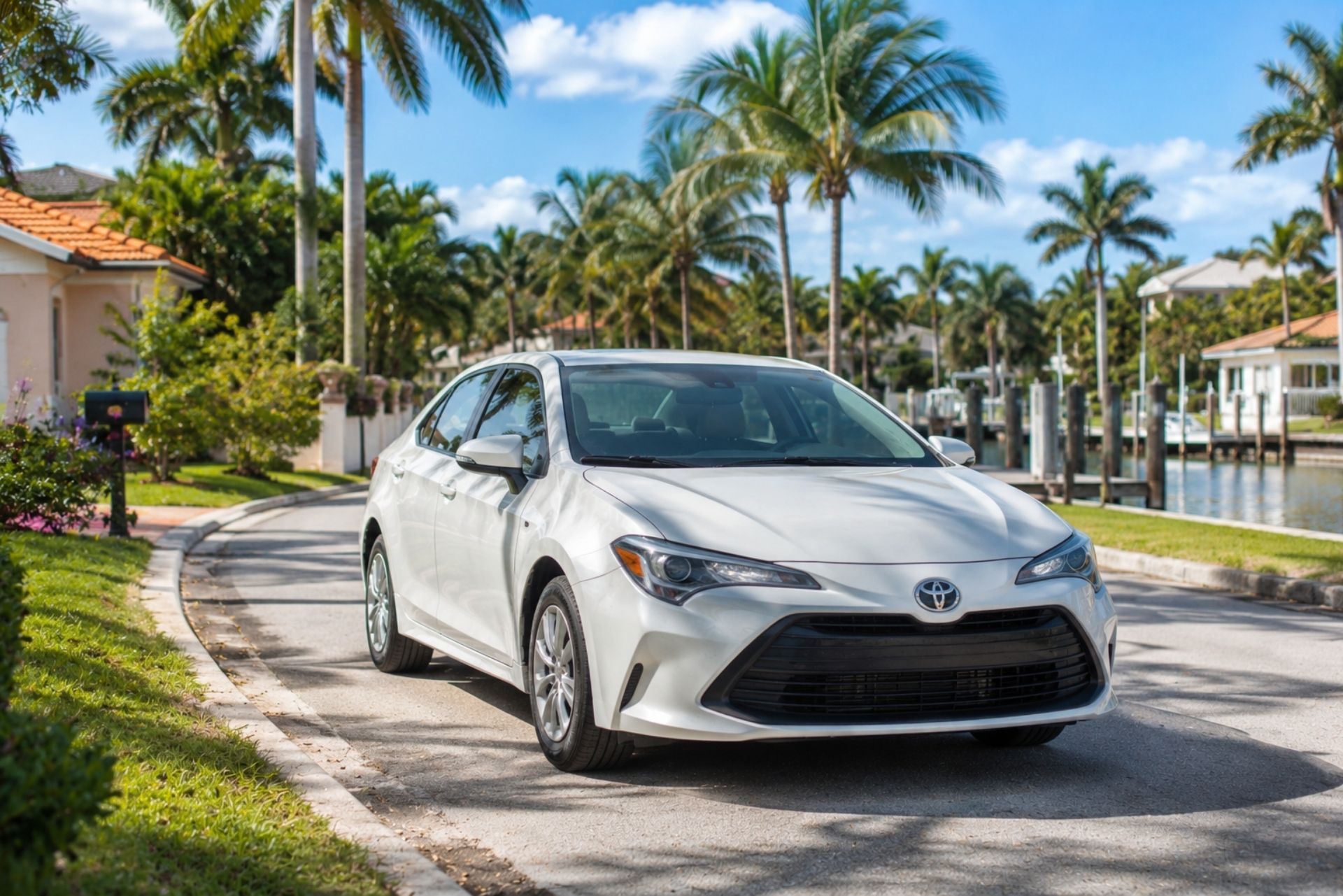
Your specific Toyota model plays a significant role in what you'll pay for coverage. Repair costs, theft rates, safety ratings, and even the typical driver profile for each model all factor into your premium.
Insuring High-Volume Sedans: Camry and Corolla
The Camry and Corolla consistently rank among the least expensive Toyota models to insure. Their parts are widely available, repair costs stay reasonable, and their safety ratings are strong. A 2024 or 2025 Camry with standard safety features typically costs between $1,800 and $2,600 annually to insure in Florida with full coverage, though your specific rate depends on your driving record, ZIP code, and chosen deductibles.
That said, high sales volume means more of these cars on the road, which can slightly increase claim frequency data. Insurers look at aggregate loss data for each model, not just your individual risk.
Coverage for SUVs and Trucks: RAV4, Tacoma, and Tundra
The RAV4 has become Toyota's best-selling model nationally, and its insurance costs reflect its midrange pricing and solid crash-test performance. Expect premiums slightly higher than a Corolla but lower than most competitors in the compact SUV segment.
The Tacoma and Tundra present a different picture. These trucks carry higher repair and replacement costs, and the Tundra in particular can push annual premiums past $3,000 with comprehensive and collision coverage. Theft is another factor: the Tacoma has historically appeared on vehicle theft lists, which can inflate comprehensive coverage costs. If you own a Tacoma, ask your insurer about anti-theft discount eligibility.
Hybrid Considerations for the Prius and Venza
Hybrid Toyotas like the Prius and Venza Hybrid introduce unique insurance variables. Their battery packs and specialized components cost more to repair or replace than conventional powertrains. A hybrid battery replacement alone can run $3,000 to $6,000.
On the flip side, hybrid drivers often qualify for eco-friendly vehicle discounts with certain carriers. The Prius also benefits from a driver demographic that statistically files fewer claims, which helps keep rates competitive. If you're driving a hybrid, make sure your policy includes coverage adequate for those higher component costs, particularly if you carry collision coverage.
Comparing Basic vs. Enhanced Protection for Your Toyota
Comparison Chart: State Minimums vs. Full Coverage
The difference between Florida's minimum requirements and a full coverage policy is substantial. Here's a clear comparison:
| Coverage Type | State Minimum | Full Coverage |
|---|---|---|
| PIP | $10,000 | $10,000 |
| Property Damage Liability | $10,000 | $50,000 - $100,000 |
| Bodily Injury Liability | Not required | $100,000/$300,000 |
| Collision | Not required | $500 - $1,000 deductible |
| Comprehensive | Not required | $500 - $1,000 deductible |
| Uninsured Motorist | Not required | $100,000/$300,000 |
| Approximate Annual Cost | $600 - $900 | $1,800 - $3,200 |
State minimum coverage is the cheapest option, but it leaves you exposed to significant financial risk. If you're financing or leasing your Toyota, your lender will require full coverage anyway. Even if you own your vehicle outright, the gap between minimum and full coverage often costs less than you'd expect, particularly with the
rate decreases Florida drivers are seeing in 2026.
Factors That Influence Toyota Insurance Rates in Florida
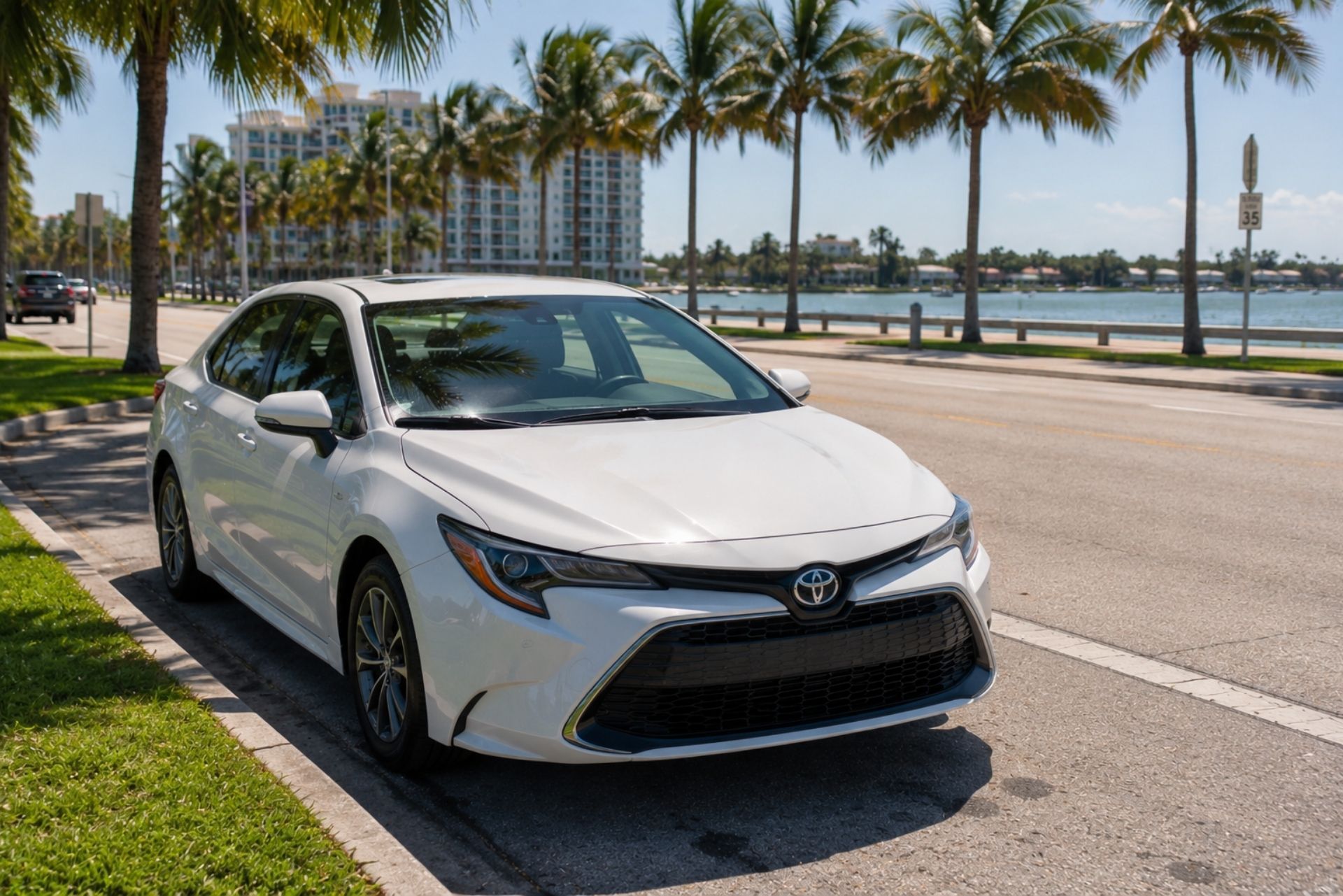
Impact of Safety Features and Toyota Safety Sense
Toyota Safety Sense (TSS) comes standard on most 2024 and newer models, and it can meaningfully reduce your premiums. Features like pre-collision braking, lane departure alert, adaptive cruise control, and automatic high beams reduce accident frequency and severity, which insurers reward.
Not all carriers weight these discounts equally, though. Some offer a flat percentage discount for advanced driver-assistance systems, while others factor the features into their actuarial models without a visible line-item discount. When gathering quotes, specifically ask each carrier how they account for TSS. A detailed breakdown of Toyota insurance costs can help you benchmark what you should expect to pay for your specific model and trim level.
Geographic Risks: Flood Zones and Hurricane Season
Where you park your Toyota overnight matters more in Florida than in almost any other state. Coastal ZIP codes from Jacksonville to Naples carry higher comprehensive premiums due to hurricane exposure, flood risk, and saltwater corrosion damage.
If you live in a FEMA-designated flood zone, comprehensive coverage becomes essential rather than optional. A single storm surge event can total a vehicle. Inland drivers in cities like Gainesville or Ocala generally pay less for comprehensive coverage, but summer thunderstorms still produce hail and flooding that generate claims. Florida's insurance market is showing signs of stabilization in 2026, but geographic risk remains a primary pricing factor.
Bundling and Multi-Vehicle Discounts
The simplest way to reduce your premium is bundling your auto policy with homeowners or renters insurance. Most carriers offer 5% to 15% off your auto premium for bundling, and multi-vehicle households can save an additional 10% to 25% by insuring all vehicles under one policy.
If your household has two or more Toyotas, the multi-vehicle discount alone could save you $400 to $800 annually. One common mistake: assuming your current carrier offers the best bundle price. Gather quotes from at least four to six different insurers using identical coverage levels. A local independent agent can run these comparisons across multiple carriers simultaneously, saving you time while ensuring an accurate price comparison.
Safe Driver Credits and Telematics Programs
A clean driving record is the single most powerful premium reducer. Most carriers offer safe driver discounts of 10% to 20% for drivers with no at-fault accidents or moving violations in the past three to five years.
Telematics programs take this further by tracking your actual driving behavior. Progressive's Snapshot monitors braking patterns, time of day you drive, and annual mileage. State Farm's Drive Safe & Save uses similar metrics through a mobile app or OBD-II plug-in device. These programs can yield discounts of 10% to 30%, but they come with a trade-off: you're sharing detailed driving data with your insurer. If you're a low-mileage Toyota owner who avoids rush-hour commutes, telematics programs are worth serious consideration. Drivers who brake hard frequently or drive late at night may actually see rate increases, so evaluate your habits honestly before enrolling.
Florida drivers completing a state-approved defensive driving course can also earn a discount, typically around 5% to 10%, that lasts for three years.
Common Questions About Florida Toyota Insurance
Do I need full coverage on my Toyota if I own it outright? Florida law doesn't require collision or comprehensive coverage on a vehicle you own free and clear. That said, if your Toyota is worth more than you could comfortably replace out of pocket, carrying full coverage is a smart financial decision.
Is Toyota auto insurance through the dealership a good deal? Toyota offers an insurance program through certain dealerships, but it isn't always the cheapest option. Treat it as one quote among several, and compare it against at least four to six other carriers using the same coverage levels.
What's the difference between an SR-22 and an FR-44 in Florida? An SR-22 is a certificate proving you carry minimum liability coverage, typically required after a license suspension. Florida's FR-44 is specific to DUI convictions and requires much higher liability limits: $100,000/$300,000 for bodily injury and $50,000 for property damage. FR-44 filings must be maintained for three years, and any policy lapse can reset that clock.
Will my premium go up if I file a comprehensive claim for hurricane damage? Comprehensive claims for weather events generally don't raise your rates the way an at-fault collision claim would. However, filing multiple comprehensive claims in a short period could affect your renewal pricing.
How does Florida's no-fault system affect my claim after an accident? Your PIP coverage pays your medical expenses regardless of fault. If the other driver caused the accident and your injuries exceed PIP limits, you may pursue a claim against their bodily injury liability coverage or file a lawsuit if your injuries meet Florida's serious injury threshold.
Are older Toyotas cheaper to insure? Generally yes. A 2015 Camry costs less to insure than a 2025 model because its replacement value is lower. However, older vehicles may lack modern safety features, which can partially offset the savings.
Making the Right Choice for Your Toyota
Florida auto insurance for Toyota vehicles isn't a one-size-fits-all decision. Your ideal policy depends on your specific model, where you live, how you drive, and how much financial risk you're willing to absorb. The state's minimum requirements leave significant gaps that could cost you tens of thousands of dollars in a serious accident.
The positive trend in 2026 is that average auto insurance premiums in Florida have dropped meaningfully, making this an excellent time to shop for better coverage at a lower price. Take advantage of the competitive market by collecting quotes from multiple carriers, asking about every available discount, and choosing coverage limits that genuinely protect your finances.
Your path forward starts with an honest assessment of your needs. Review your current policy against the comparison chart above. If you're carrying only state minimums, consider what a single serious accident could cost you personally. Then reach out to an independent agent or run online quotes from at least four to six carriers. The 30 minutes you invest comparing options could save you hundreds of dollars annually and, more importantly, protect you from a financial setback that no Toyota owner should have to face.
About The Author:
Evan Marcotte
As an Auto Insurance Specialist at 5-Star Insurance, I’m passionate about helping drivers get the protection they need with speed, clarity, and confidence. My goal is to make every policy simple to understand and every client fully supported — from quote to claim.
Menu Pop-Up
Real Reviews from Florida Drivers
At 5-Star Insurance, we help drivers across Florida get insured quickly and affordably even in challenging situations. Whether it’s handling SR-22 and FR-44 filings or finding the most budget-friendly policy, our clients count on us to make the process fast, simple, and stress-free. Here’s what some of them have shared

Coverage Tailored to Your Needs
We specialize in essential auto insurance products for Florida drivers:
Auto Insurance
Standard auto coverage for Florida drivers, including liability, comprehensive, and collision options.
Commercial Auto Insurance
Protection for vehicles used for business and commercial purposes.
Liability-Only Auto Insurance
Basic, affordable coverage meeting Florida’s minimum requirements.
SR-22 Insurance
Required filing for drivers needing to reinstate their license after violations.
Motorcycle Insurance
Affordable insurance for motorcycles, scooters, and similar vehicles.
Clear Answers to Your Auto Insurance Questions
At 5-Star Insurance, we make sure every driver understands their options. Whether you are dealing with a suspension, DUI, or just need affordable coverage, we are here to help you get back on the road with confidence.
Stay Informed with Our Latest Articles
Gain insights to make smarter decisions about your insurance coverage:
Check out Our Latest Videos
Quick clips to keep you up to date on SR22 and FR44 insights and news
Contact Us
