

Florida draws more RV owners than almost any other state, and for good reason. Year-round campgrounds, thousands of miles of coastline, and no state income tax make it a prime destination for seasonal travelers and full-time RV residents alike. RV shipments continue to hold strong nationally, with
industry data showing steady consumer demand heading into 2026. Yet many owners don't realize that insuring a motorhome, travel trailer, or fifth wheel in Florida involves a distinct set of rules, risks, and coverage decisions that differ sharply from
standard auto insurance. Whether you're a weekend warrior towing a pop-up camper or someone who calls a Class A diesel pusher home, understanding your
Florida RV insurance options is the first step toward protecting your investment and your peace of mind.
Understanding Florida RV Insurance Requirements
Florida treats RVs differently depending on whether the vehicle has its own engine. That distinction creates two separate sets of legal obligations, and confusing them is one of the most common mistakes new RV owners make. The state also operates under a no-fault insurance system, which adds a layer of complexity that doesn't exist in most other states.
Motorhome vs. Travel Trailer Legal Mandates
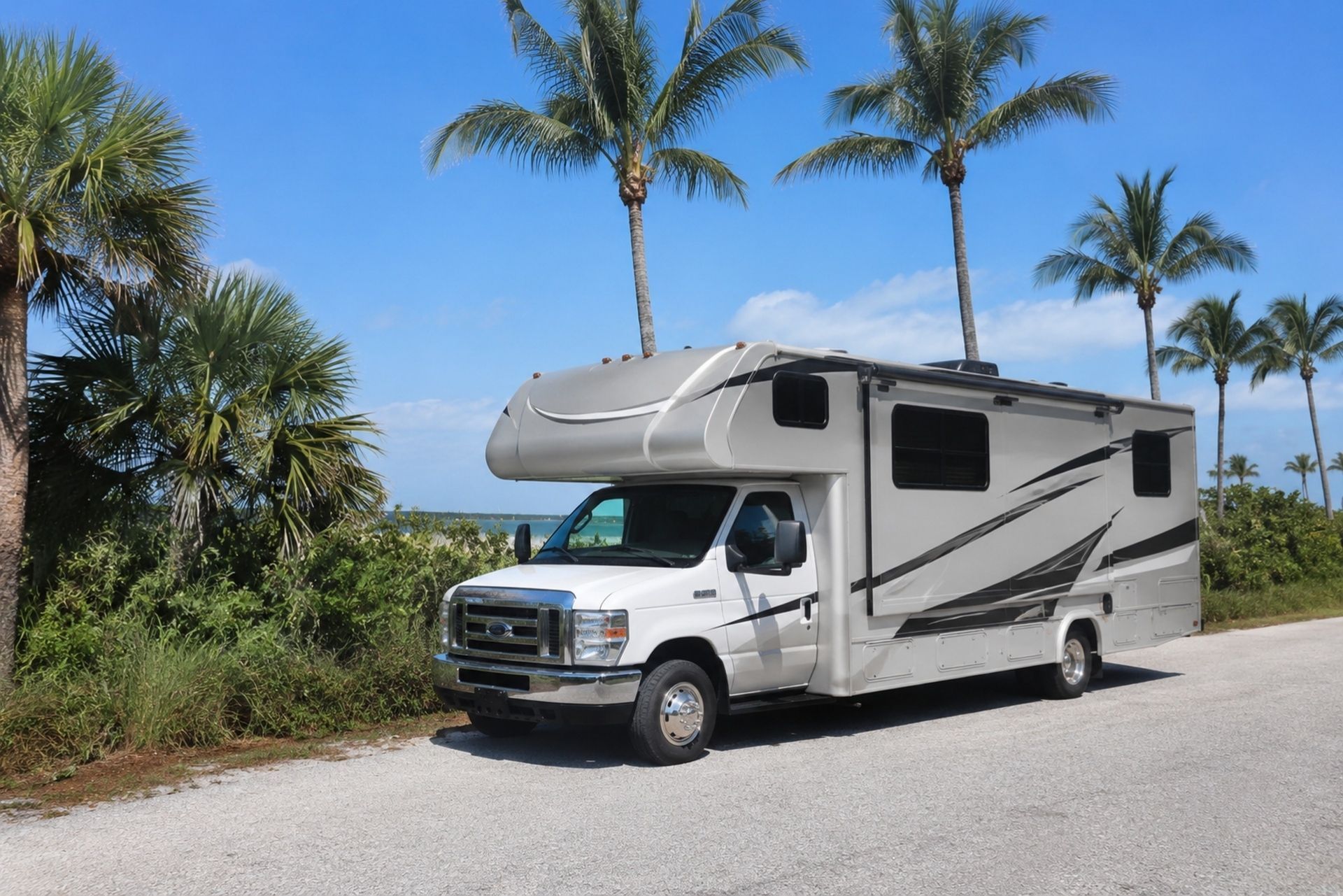
A motorhome, whether it's a compact Class B van conversion or a 45-foot Class A coach, is a motor vehicle under Florida law. That means it must carry a minimum of $10,000 in personal injury protection (PIP) and $10,000 in property damage liability (PDL) to be registered. These are the same minimums required for passenger cars, and they apply the moment you put a Florida tag on your motorhome.
Travel trailers, fifth wheels, and pop-up campers don't have engines. Florida doesn't require them to carry their own insurance policy because they're towed behind a separate insured vehicle. That said, relying on your tow vehicle's policy alone is risky. If your trailer detaches and causes an accident, or if a storm destroys it while it's parked at a campground, your auto policy may not cover the loss. A standalone travel trailer policy fills that gap.
Florida's No-Fault Insurance and PIP Basics
Florida's no-fault system means your own PIP coverage pays your medical bills after an accident, regardless of who caused it. PIP covers 80% of medical expenses and 60% of lost wages, up to the $10,000 policy limit. This applies to motorhomes just as it does to cars.
The catch is that $10,000 doesn't go far in a serious accident. A single ER visit can exhaust that limit. Many RV owners add bodily injury liability coverage, which isn't mandatory in Florida but becomes required if you're ever found at fault in an accident causing injury. Carrying at least $100,000/$300,000 in bodily injury liability is a practical minimum for most motorhome owners, even though the state doesn't mandate it upfront.

Choosing the right coverage for your RV goes well beyond meeting state minimums. Your policy should reflect how you use the vehicle, where you store it, and how much you'd lose if it were totaled or destroyed.
Liability, Collision, and Comprehensive Explained
Liability coverage pays for damage you cause to other people or their property. Collision covers your own RV if it's damaged in an accident, regardless of fault. Comprehensive handles non-collision events: theft, vandalism, falling trees, fire, and weather damage.
For Florida RV owners, comprehensive coverage deserves special attention. The state's exposure to hurricanes, tropical storms, and flooding makes this coverage far more relevant here than in landlocked states. A comprehensive policy typically accounts for a significant portion of your premium, but skipping it in a hurricane-prone state is a gamble most owners can't afford to take.
Total Loss Replacement vs. Actual Cash Value
If your RV is totaled, how your insurer calculates the payout matters enormously. An actual cash value (ACV) policy pays what the RV was worth at the time of the loss, minus depreciation. On a five-year-old motorhome that originally cost $150,000, you might receive only $90,000 or less.
Total loss replacement coverage, by contrast, pays to replace your RV with a new one of similar make and model. This option costs more in premium but eliminates the depreciation gap. It's most valuable during the first few years of ownership, when depreciation hits hardest. Some insurers offer an agreed value option as a middle ground, where you and the insurer set a fixed payout amount when the policy is written.
Specialized Protection for Full-Timers
If your RV is your primary residence, a standard RV policy won't cover you properly. Full-timer coverage functions more like a homeowner's policy, adding protection for personal belongings, liability for injuries that occur inside or around your RV, and sometimes even loss-of-use coverage that pays for temporary housing if your RV becomes uninhabitable.
Florida has a growing full-timer population, and
state-specific guidance on RV insurance for residents highlights the importance of matching your policy to your living situation. A full-timer policy typically includes $5,000 to $50,000 in personal property coverage, along with medical payments coverage for guests.
Comparing Basic and Extended RV Policies
Not all RV policies are built the same. A basic policy meets legal requirements, while an extended policy covers the gaps that cause real financial pain after a claim.
Coverage Comparison Table
| Coverage Feature | Basic Policy | Extended Policy |
|---|---|---|
| PIP ($10,000) | Included | Included |
| Property Damage Liability | $10,000 minimum | $50,000 - $100,000+ |
| Bodily Injury Liability | Not included | $100,000/$300,000+ |
| Collision | Optional | Included |
| Comprehensive | Optional | Included |
| Personal Belongings | Not covered | $5,000 - $50,000 |
| Full-Timer Liability | Not covered | Included |
| Total Loss Replacement | Not available | Available (newer RVs) |
| Emergency Expense | Not covered | $500 - $1,500 per incident |
| Roadside Assistance | Not covered | Included |
The difference in annual premium between basic and extended coverage might be $400 to $800, depending on your RV's value and your location. For a vehicle worth $80,000 or more, extended coverage is almost always worth the cost.
Factors That Influence Florida RV Rates
Your premium isn't arbitrary. Insurers weigh a specific set of variables, and understanding them helps you shop smarter.
Impact of Hurricane Season and Coastal Risks
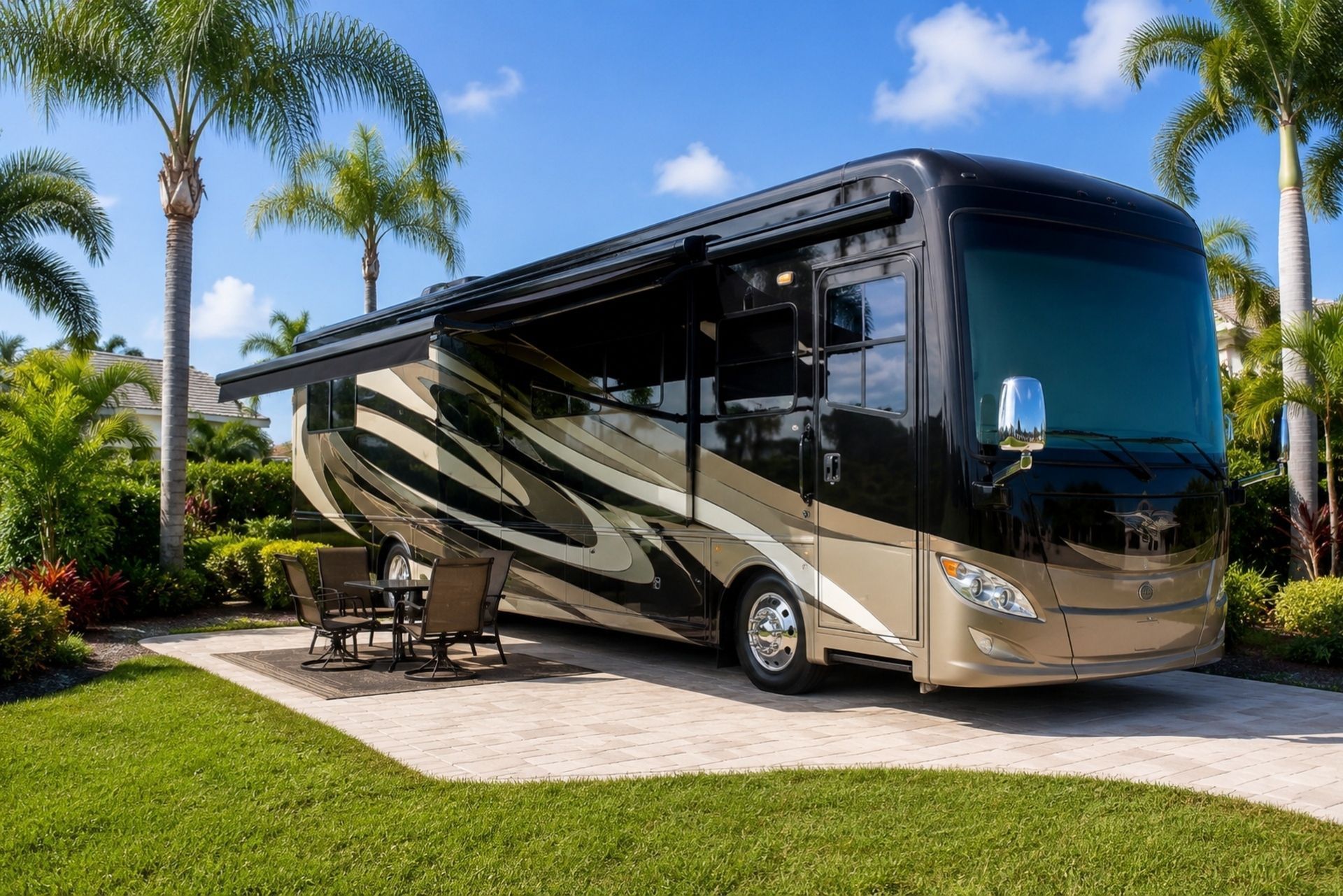
Florida's hurricane season runs from June through November, and insurers price that risk into every policy. If you store or park your RV in a coastal county, expect higher comprehensive premiums than someone keeping theirs in Ocala or Gainesville. A 2022 legislative reform led to a 66% reduction in property insurance litigation, and carriers have responded with an average 8% decrease in auto insurance rates heading into 2026. That relief is beginning to trickle into RV policies as well, though coastal zones still carry a premium.
One thing to keep in mind: some insurers exclude wind damage or require a separate hurricane deductible. Read your policy declarations page carefully, especially if you're storing your RV anywhere south of I-4.
Usage Frequency and Storage Locations
An RV that's driven 15,000 miles per year costs more to insure than one driven 3,000 miles. Insurers also care about where your RV sits when it's not on the road. A secured, covered storage facility earns lower rates than a driveway or open lot. Some carriers offer seasonal or storage-only policies if you only use your RV a few months each year, which can cut your premium by 30% to 50% during the off-season.
You can
estimate your specific costs using online RV insurance calculators that factor in your RV type, location, and usage patterns. Gathering quotes from at least four to six carriers using identical coverage levels gives you the clearest picture of your actual market rate.
Common Questions About Florida RV Policies
Does my car insurance cover my travel trailer?
Your auto policy's liability coverage may extend to a trailer you're towing, but it won't cover physical damage to the trailer itself. You'll need a separate travel trailer policy or an endorsement for collision and comprehensive protection on the trailer.
Is RV insurance required if I live in it full-time?
If your RV has an engine and is registered in Florida, yes, you must carry PIP and property damage liability at minimum. Beyond that legal requirement, full-timers should carry a full-timer policy that mirrors homeowner's coverage, since a standard RV policy won't protect your belongings or provide adequate personal liability.
Are my personal belongings covered inside the RV?
Not under a basic RV policy. You'll need either a full-timer endorsement or a personal effects coverage add-on. Standard add-ons cover $5,000 to $15,000 in belongings, while full-timer policies can go up to $50,000.
Do I need special coverage for hurricane damage?
Comprehensive coverage generally includes wind and storm damage, but some Florida policies impose a separate hurricane deductible, often 2% to 5% of the RV's insured value. Florida legislators have been tracking insurance reform bills aimed at stabilizing the market, but you should confirm your policy's hurricane provisions before storm season.
What happens if my RV breaks down on the highway?
Standard RV policies don't cover mechanical breakdowns. You'll need either a roadside assistance add-on or a separate extended warranty or service contract. Many extended RV policies include roadside assistance that covers towing, tire changes, and emergency fuel delivery for vehicles up to 45 feet.
Making the Right Choice for Your Sunshine State Adventures
Florida RV insurance isn't one-size-fits-all. A weekend camper towing a small trailer has different needs than a retiree living full-time in a diesel pusher on the Gulf Coast. The right policy matches your RV type, your usage pattern, and your tolerance for financial risk.
Start by confirming whether your RV requires its own registered insurance or can be covered under a tow vehicle policy. From there, build your coverage around the real threats you face: hurricane damage, theft, liability from accidents, and the cost of replacing a totaled vehicle. Don't settle for state minimums on a vehicle worth tens of thousands of dollars.
Get quotes from multiple carriers, compare them at identical coverage levels, and ask specifically about hurricane deductibles and personal property limits. A knowledgeable independent agent who understands Florida's motorhome, travel trailer, and full-timer coverage options can help you spot gaps you might miss on your own. Your RV represents freedom and flexibility. The right policy makes sure a single storm or accident doesn't take that away.
About The Author:
Evan Marcotte
As an Auto Insurance Specialist at 5-Star Insurance, I’m passionate about helping drivers get the protection they need with speed, clarity, and confidence. My goal is to make every policy simple to understand and every client fully supported — from quote to claim.
Menu Pop-Up
Real Reviews from Florida Drivers
At 5-Star Insurance, we help drivers across Florida get insured quickly and affordably even in challenging situations. Whether it’s handling SR-22 and FR-44 filings or finding the most budget-friendly policy, our clients count on us to make the process fast, simple, and stress-free. Here’s what some of them have shared

Coverage Tailored to Your Needs
We specialize in essential auto insurance products for Florida drivers:
Auto Insurance
Standard auto coverage for Florida drivers, including liability, comprehensive, and collision options.
Commercial Auto Insurance
Protection for vehicles used for business and commercial purposes.
Liability-Only Auto Insurance
Basic, affordable coverage meeting Florida’s minimum requirements.
SR-22 Insurance
Required filing for drivers needing to reinstate their license after violations.
Motorcycle Insurance
Affordable insurance for motorcycles, scooters, and similar vehicles.
Clear Answers to Your Auto Insurance Questions
At 5-Star Insurance, we make sure every driver understands their options. Whether you are dealing with a suspension, DUI, or just need affordable coverage, we are here to help you get back on the road with confidence.
Stay Informed with Our Latest Articles
Gain insights to make smarter decisions about your insurance coverage:
Check out Our Latest Videos
Quick clips to keep you up to date on SR22 and FR44 insights and news
Contact Us
