

A single dump trailer rollover on a Florida highway can generate six-figure liability claims before the dust settles. Fatal crashes involving dump trucks and trailers remain a persistent concern across the state, and the financial exposure extends far beyond the cost of replacing damaged equipment. Whether you're hauling fill dirt for a residential contractor or moving aggregate for a commercial project, your insurance policy is the barrier between a bad day and a business-ending event.
Florida's unique combination of high traffic density, hurricane exposure, and aggressive towing practices creates a risk profile that most generic
trailer policies don't adequately address. The state's no-fault auto insurance system adds another layer of complexity, since PIP requirements interact differently with commercial trailer operations than with standard passenger vehicles. Understanding how physical damage, liability, and cargo coverage work together is essential for any dump trailer operator in this state. This guide to Florida dump trailer insurance breaks down the coverage types you need, the factors driving your premiums, and the mistakes that leave operators dangerously underinsured.
Understanding Florida Dump Trailer Insurance Requirements
Florida treats dump trailers differently depending on how they're registered and used. The state requires any trailer operating on public roads to carry minimum liability coverage, but the specifics shift based on weight class, commercial registration status, and whether the trailer is owner-operated or leased. Many operators don't realize that their personal auto policy won't extend to a dump trailer used for business, even if it's technically titled in their personal name.
The Florida Department of Highway Safety and Motor Vehicles classifies trailers by gross vehicle weight rating (GVWR), and trailers exceeding 10,000 pounds face stricter insurance and registration requirements. You'll also need to account for the towing vehicle's policy, since gaps between the truck and trailer coverage are one of the most common sources of denied claims.
Personal vs. Commercial Use Policies
A personal-use dump trailer, one you use exclusively on your own property or for occasional non-commercial hauling, can sometimes be covered under a homeowner's or personal auto endorsement. The catch is that the moment you accept payment for hauling services, that personal coverage evaporates. Insurers investigate this distinction aggressively during claims.
Commercial use policies are structured around revenue-generating activity. They account for the higher frequency of road exposure, interaction with third-party job sites, and the increased likelihood of property damage claims. If you're running even a small side operation with your dump trailer, a commercial policy isn't optional. It's the only coverage that will hold up under scrutiny.
Florida State Minimum Liability Standards
Florida mandates that commercial vehicles carry minimum liability limits, but those minimums vary by vehicle weight and cargo type. For most dump trailer operations, you'll need at least $300,000 in combined single-limit liability, though many contracts and job sites require $1 million. Florida's no-fault PIP system covers medical expenses for auto accidents up to $10,000 per person, but PIP alone won't protect you from third-party bodily injury claims that exceed those limits.
One thing to keep in mind: Florida's predatory towing laws have undergone
significant legislative reform in recent years, but operators who don't carry proof of adequate insurance still face aggressive impound situations. Keeping your certificate of insurance accessible in the cab isn't just good practice. It can prevent a $5,000 towing bill.

Essential Coverage Types for Dump Trailer Owners
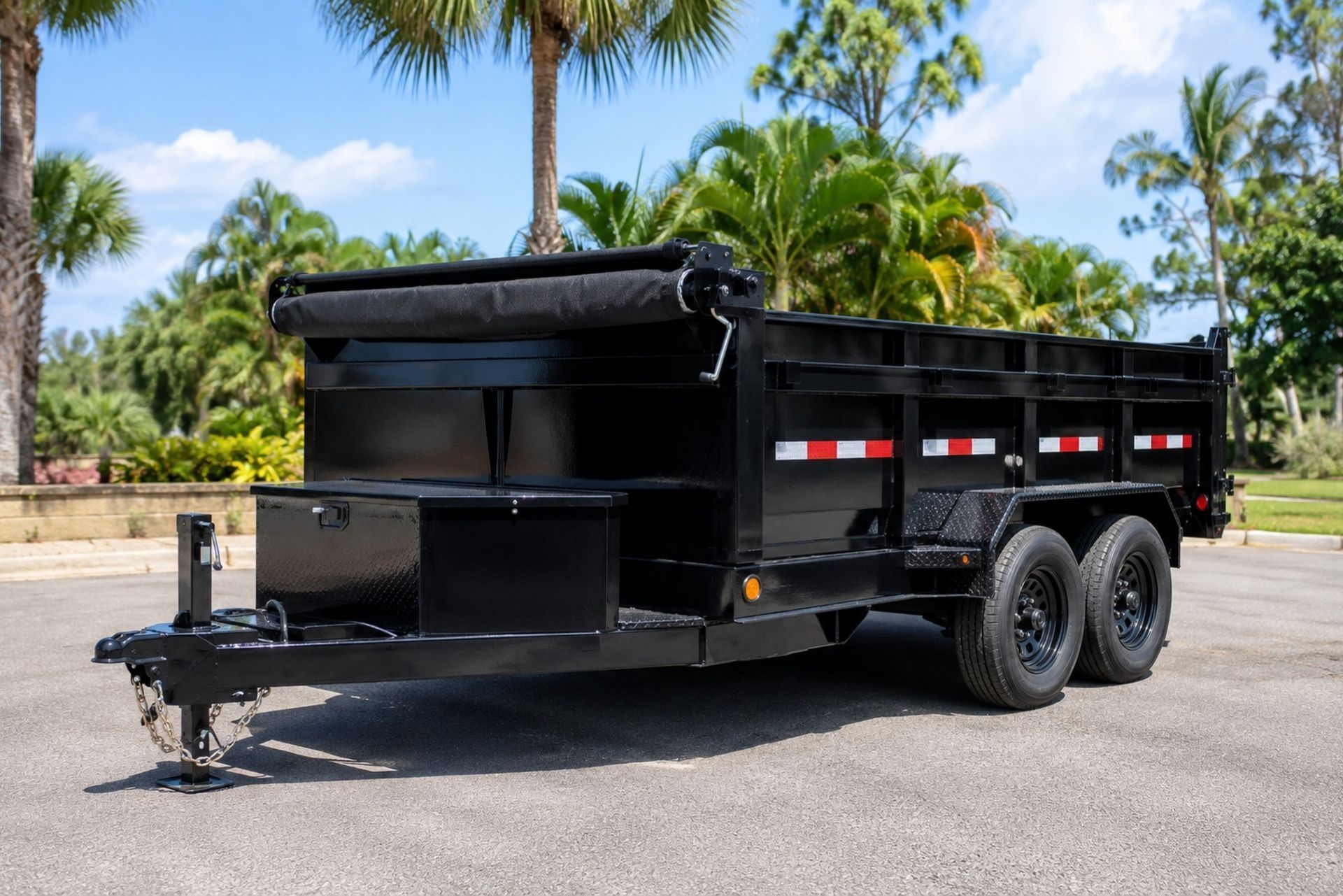
Your dump trailer insurance should function as a system of interlocking protections, not a single policy you hope covers everything. Three core coverage types form the foundation of any responsible insurance program for Florida dump trailer operators.
Physical Damage and Comprehensive Protection
Physical damage coverage pays to repair or replace your trailer after a collision, regardless of fault. Comprehensive coverage extends that protection to non-collision events: theft, vandalism, fire, flooding, and hurricane damage. In Florida, comprehensive coverage isn't a luxury. Hurricane season alone justifies the premium.
Stolen trailers without GPS tracking devices have a recovery rate of just 7%, which means theft without comprehensive coverage is essentially a total loss. Installing GPS tracking and anti-theft devices can lower your comprehensive premium by 5 to 15 percent, and some carriers require them for trailers valued above $30,000. Agreed-value policies, where you and the insurer set a fixed payout amount, tend to serve dump trailer owners better than actual cash value policies that depreciate your equipment over time.
General Liability and Property Damage
General liability covers third-party injuries and property damage that occur during your operations. If your trailer's hydraulic system fails and dumps a load onto a client's driveway, cracking the surface, that's a general liability claim. If a passerby is injured by debris falling from your trailer on a public road, general liability responds.
Most dump trailer operators need at least $1 million per occurrence with a $2 million aggregate. Florida's construction and landscaping industries typically require proof of these limits before allowing you on a job site. Your dump trailer business insurance should also include completed operations coverage, which protects you after a job is finished if damage surfaces later.
Cargo Insurance for Transported Materials
Cargo insurance covers the materials you're hauling, not your trailer itself. If you're transporting $15,000 worth of crushed limestone and it's lost due to an accident, cargo coverage reimburses the value of that material. This matters because you're often responsible for the cargo from the moment it's loaded until delivery.
Cargo theft losses
jumped 60% in 2025 as criminals targeted higher-value freight, and dump trailer operators aren't immune to this trend. Specialty aggregates, recycled metals, and topsoil blends can carry surprising value per load. Your cargo limits should reflect the maximum value you'd haul on any single trip, with a reasonable buffer for price fluctuations.
Comparison of Standard vs. Specialized Coverage
Not all dump trailer policies are created equal. A standard commercial auto policy with a trailer endorsement covers the basics, but specialized dump trailer coverage fills gaps that standard policies ignore.
| Feature | Standard Policy | Specialized Coverage |
|---|---|---|
| Physical Damage | Collision and comprehensive | Agreed-value, hydraulic system coverage |
| Liability Limits | $300K - $500K typical | $1M - $2M with umbrella options |
| Cargo Coverage | Often excluded or minimal | Per-load and annual aggregate options |
| Downtime/Loss of Use | Rarely included | Rental reimbursement, lost income |
| Environmental Cleanup | Not covered | Pollution liability endorsement |
| Hired/Non-Owned Trailers | Not covered | Available as endorsement |
The pollution liability endorsement deserves special attention. If your dump trailer spills contaminated fill or diesel fuel on a job site, standard policies exclude cleanup costs. In Florida, where environmental regulations are strict near wetlands and coastal areas, a single spill can generate $50,000 or more in remediation expenses.
Factors That Influence Your Florida Insurance Rates
Florida dump trailer insurance premiums aren't arbitrary. Carriers assess specific risk factors to price your policy, and understanding these factors gives you the ability to manage your costs.
Trailer Weight and Payload Capacity
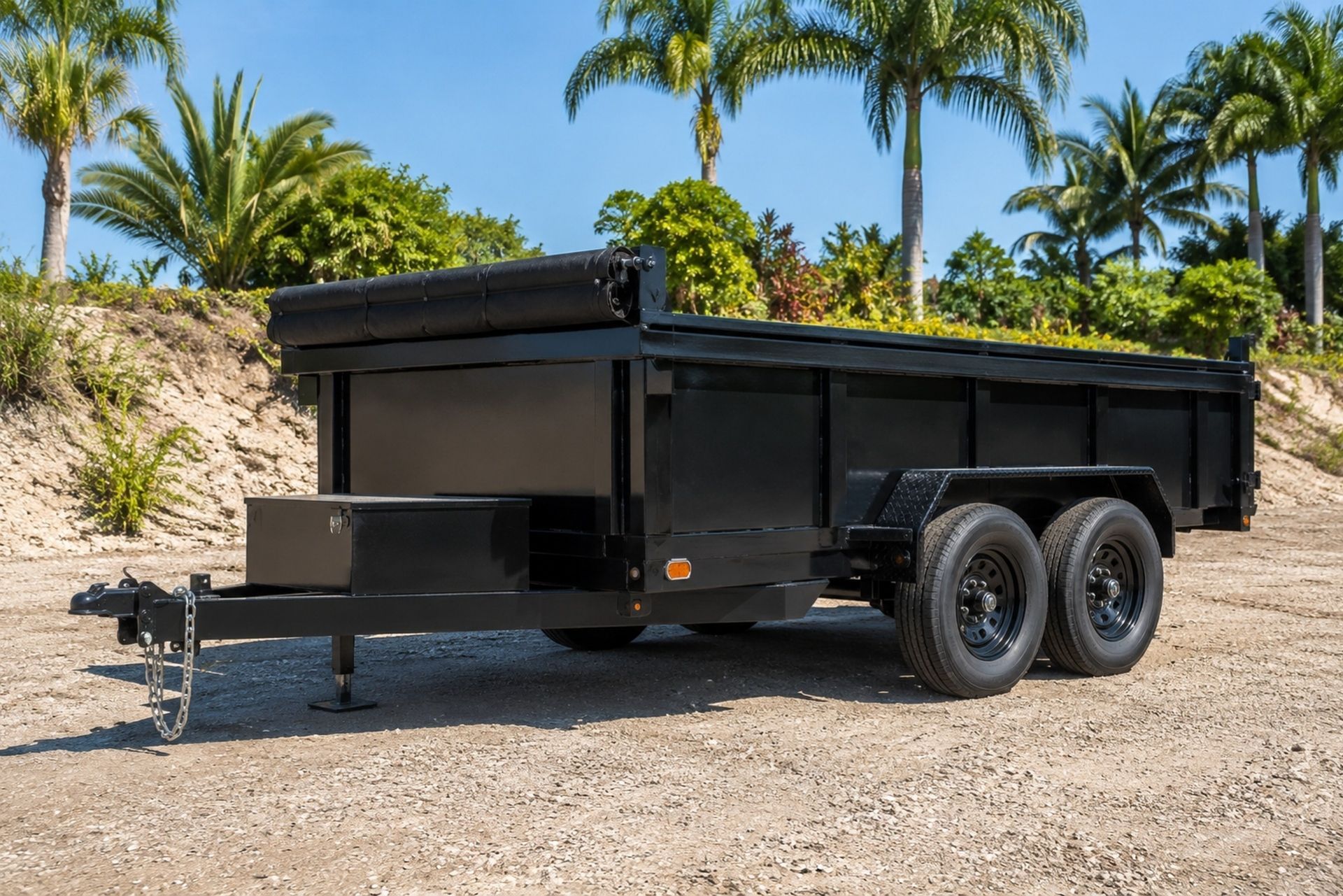
Heavier trailers with larger payload capacities carry higher premiums because they cause more damage in accidents and are harder to control in emergency situations. A 7,000-pound GVWR trailer hauling mulch presents a fundamentally different risk than a 14,000-pound trailer loaded with concrete debris.
Your premium will also reflect the trailer's replacement value. A new 14-foot hydraulic dump trailer costs between $8,000 and $18,000 depending on specifications, and insurers price physical damage coverage accordingly. That said, older trailers with higher maintenance needs can sometimes cost more to insure because they're more likely to experience mechanical failures on the road.
Operational Radius and Business Location
Carriers want to know how far you're driving and where you're parking overnight. A dump trailer operating within a 50-mile radius of its home base presents less risk than one traveling across multiple counties. Urban operations in Miami-Dade or Broward County carry higher premiums than rural operations in the Panhandle, reflecting traffic density and theft rates.
Florida's southeast corridor has seen
rising insurance costs across the commercial vehicle sector, driven by litigation trends and severe weather frequency. If your operation is based in this region, expect to pay 15 to 25 percent more than operators in less congested areas. Gathering quotes from at least four to six carriers using identical coverage levels is the most reliable way to find competitive pricing.
Common Questions About Insuring Dump Trailers
Do I need separate insurance for my dump trailer and my tow vehicle? Yes. Your tow vehicle's policy won't automatically cover the trailer. You need a separate trailer policy or a commercial auto policy that specifically lists the dump trailer as covered equipment.
Can I insure a dump trailer I use only on weekends? You can, and some carriers offer usage-based programs that adjust premiums based on actual mileage or days of operation. Ask about telematics options that track driving behavior and reward safe operation with lower rates.
What happens if my dump trailer damages a client's property? Your general liability policy responds to third-party property damage claims. Without it, you're personally responsible for repair or replacement costs, which can be substantial on finished landscapes or paved surfaces.
Does my policy cover me if I hire a subcontractor to drive my trailer? Only if your policy includes a hired and non-owned vehicle endorsement. Standard policies cover only named drivers. Adding this endorsement typically costs $200 to $500 annually.
How does Florida's hurricane season affect my coverage?
Most comprehensive policies cover wind and flood damage, but some carriers impose hurricane deductibles that are higher than standard deductibles. Review your policy's named-storm provisions before June 1 each year.
Making the Right Choice for Your Business
Choosing the right dump trailer insurance in Florida isn't about finding the cheapest premium. It's about matching your coverage to the actual risks your operation faces. A landscaping contractor hauling mulch within a single county has different needs than a demolition company moving concrete debris across the state.
Start by documenting your trailer's value, your typical cargo values, and your maximum operational radius. Bring these details to an independent agent who can compare quotes across multiple carriers. Independent agents are particularly valuable for dump trailer coverage because many major carriers don't write specialized trailer policies directly.
Your path forward starts with an honest risk assessment. Review your current policy for the gaps outlined in this guide, particularly pollution liability, cargo coverage, and agreed-value physical damage. Request certificates of insurance from any subcontractors using your equipment. And invest in GPS tracking and anti-theft devices that both protect your trailer and reduce your premiums. The right coverage protects more than your trailer. It protects the business you've built around it.
About The Author:
Evan Marcotte
As an Auto Insurance Specialist at 5-Star Insurance, I’m passionate about helping drivers get the protection they need with speed, clarity, and confidence. My goal is to make every policy simple to understand and every client fully supported — from quote to claim.
Menu Pop-Up
Real Reviews from Florida Drivers
At 5-Star Insurance, we help drivers across Florida get insured quickly and affordably even in challenging situations. Whether it’s handling SR-22 and FR-44 filings or finding the most budget-friendly policy, our clients count on us to make the process fast, simple, and stress-free. Here’s what some of them have shared

Coverage Tailored to Your Needs
We specialize in essential auto insurance products for Florida drivers:
Auto Insurance
Standard auto coverage for Florida drivers, including liability, comprehensive, and collision options.
Commercial Auto Insurance
Protection for vehicles used for business and commercial purposes.
Liability-Only Auto Insurance
Basic, affordable coverage meeting Florida’s minimum requirements.
SR-22 Insurance
Required filing for drivers needing to reinstate their license after violations.
Motorcycle Insurance
Affordable insurance for motorcycles, scooters, and similar vehicles.
Clear Answers to Your Auto Insurance Questions
At 5-Star Insurance, we make sure every driver understands their options. Whether you are dealing with a suspension, DUI, or just need affordable coverage, we are here to help you get back on the road with confidence.
Stay Informed with Our Latest Articles
Gain insights to make smarter decisions about your insurance coverage:
Check out Our Latest Videos
Quick clips to keep you up to date on SR22 and FR44 insights and news
Contact Us
