

A single scratched hardwood floor during a furniture haul can cost your junk removal company thousands in repair bills and lost clients. A truck accident on I-95 during peak season can threaten your entire operation. Florida's combination of extreme weather, dense population centers, and high litigation rates creates a risk profile that generic business insurance simply doesn't address. The junk removal industry is
projected to grow significantly through 2030, and Florida's booming construction and residential turnover fuel steady demand for hauling services. That growth, however, brings increased exposure. Your trucks are on the road daily, your crews handle heavy and sometimes hazardous materials, and your clients expect professional accountability. A complete coverage approach to junk removal insurance in Florida, spanning general liability, commercial auto, and workers' comp, isn't optional. It's the foundation that separates a sustainable business from one bad claim away from closing its doors. Whether you're running a single truck or managing a multi-vehicle fleet, understanding how these coverages work together in Florida's specific regulatory environment will save you money and protect your livelihood.
Why Florida Junk Removal Businesses Need Specific Insurance
Florida ranks among the most litigated states in the country, and the insurance market here reflects that reality. Junk removal operators face a distinct mix of risks: road hazards, property damage during pickups, worker injuries from heavy lifting, and potential environmental violations from improper disposal. A standard business owner's policy won't cover most of these scenarios adequately. The state's evolving insurance challenges include rising reinsurance costs and increased weather-related claims that ripple across all commercial lines.
Navigating Florida's Unique Liability Environment
Florida's legal climate is particularly tough on small service businesses. The state's comparative negligence rules mean you can be held partially liable even when a client or third party shares fault. Junk removal crews working on residential properties face slip-and-fall exposure, and commercial job sites introduce additional liability layers from general contractors. Hurricane season adds another dimension: if your debris removal service operates during storm cleanup, you're working in high-risk conditions with tight deadlines and unfamiliar terrain. Many counties, including Hernando County, require commercial waste haulers to carry specific insurance minimums before granting operating permits.
The Difference Between General Liability and Specialized Policies
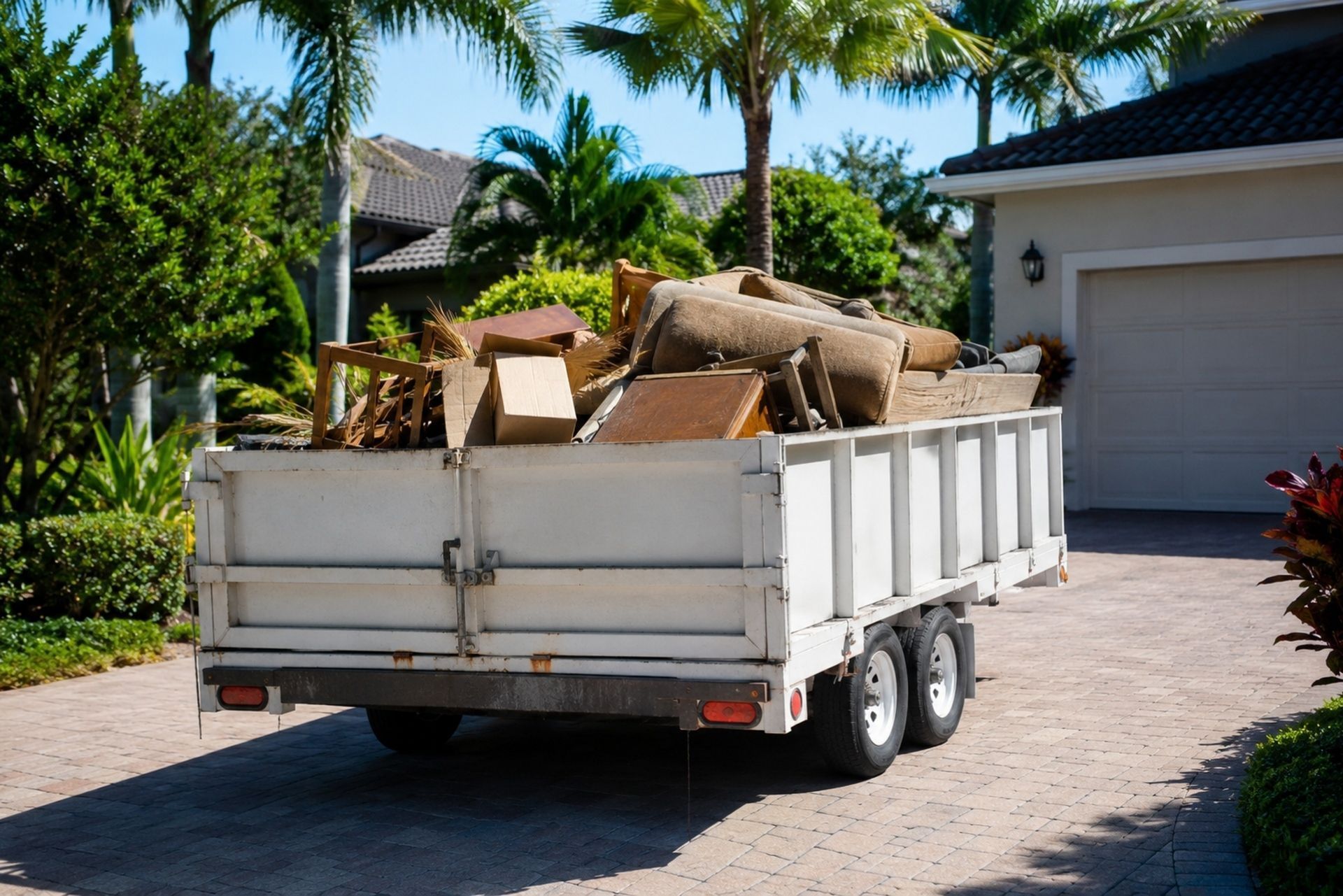
General liability covers third-party bodily injury and property damage, but it won't protect your trucks, your workers, or your equipment. A specialized junk removal insurance program bundles these coverages into a package designed for your actual operations. General liability might pay if a client trips over debris you left behind. It won't pay if your driver rear-ends someone on the way to a job, or if a crew member herniates a disc lifting a refrigerator. That's where commercial auto and workers' comp fill the gaps. Thinking of general liability as your complete solution is one of the most common mistakes new hauling businesses make.

Essential Coverage Types for Your Hauling Business
Building the right insurance program means understanding what each coverage type does and where it applies. Your junk removal business needs at minimum three core policies, and most successful operators carry additional coverages that address industry-specific exposures.
Commercial Auto and Fleet Insurance
Your trucks are the backbone of your business. Personal auto insurance won't cover vehicles used for commercial purposes, and Florida requires minimum liability limits of $10,000/$20,000/$10,000 for standard vehicles. Those minimums are dangerously low for a loaded hauling truck. Most insurance professionals recommend carrying at least $1 million in combined single-limit liability for commercial vehicles. Fleet policies covering multiple trucks often provide better per-vehicle rates than individual policies. If you're financing or leasing vehicles, your lender will require comprehensive and collision coverage as well.
Workers' Compensation Requirements in Florida
Florida law requires workers' compensation coverage for construction industry employers with one or more employees and non-construction employers with four or more employees. Junk removal businesses often fall into a gray area, but if your crews perform any demolition or debris removal from construction sites, you may be classified under construction codes. The good news: Florida workers' comp premiums have decreased by 6.9% for 2026, marking the tenth consecutive year of rate reductions. That said, even with lower premiums, a single uninsured workplace injury can result in state penalties and personal liability for the business owner.
Inland Marine Coverage for Tools and Equipment
Your
trailers, generators, power tools, and specialized equipment travel with your crews every day. Standard property insurance covers items at your business location, but inland marine insurance protects equipment in transit and at job sites. A stolen trailer full of tools can represent $10,000 or more in replacement costs. Inland marine policies are relatively inexpensive compared to the value they protect, typically running a few hundred dollars annually for $25,000 to $50,000 in coverage.
Comparison: Basic vs. Comprehensive Protection Plans
| Coverage Feature | Basic Plan | Comprehensive Plan |
|---|---|---|
| General Liability | $1M per occurrence | $2M per occurrence |
| Commercial Auto | State minimums only | $1M combined single limit |
| Workers' Comp | Statutory minimums | Statutory + employer's liability |
| Inland Marine | Not included | $50,000 equipment coverage |
| Pollution Liability | Not included | $500K-$1M coverage |
| Hired/Non-Owned Auto | Not included | Included |
| Umbrella Policy | Not included | $1M-$2M excess liability |
| Estimated Annual Cost (small fleet) | $3,500-$6,000 | $8,000-$15,000 |
The basic plan keeps you legal but leaves significant gaps. A comprehensive plan costs more upfront but protects against the claims that actually shut businesses down.
Practical Strategies to Lower Your Insurance Costs
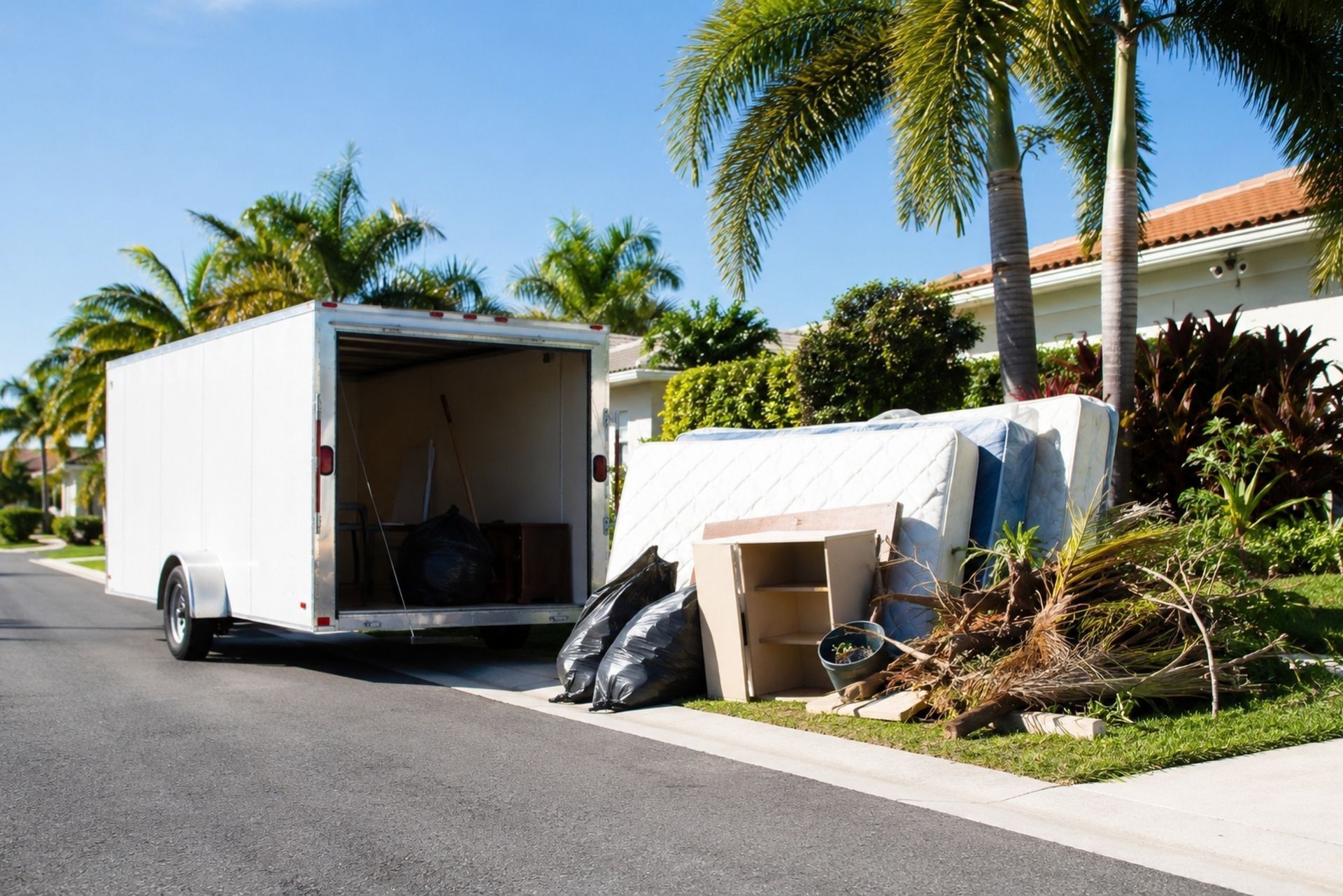
Paying less for insurance doesn't mean carrying less coverage. Several proven methods can reduce your premiums without increasing your risk exposure.
- Request quotes from at least four to six carriers using identical coverage levels to ensure accurate comparisons. Local independent agents can access markets that direct-to-consumer carriers don't offer.
- Bundle your general liability, commercial auto, and inland marine with a single carrier for multi-policy discounts, often 10% to 15% off.
- Increase your deductibles from $500 to $1,000 or $2,500. This shifts minor claims to your responsibility but can reduce premiums by 15% to 25%.
- Implement a formal safety program with documented training. Carriers reward businesses that track incidents and conduct regular safety meetings.
- Maintain clean driving records across your team. One DUI or at-fault accident on a driver's record can increase your fleet premium significantly.
Protecting Against Industry-Specific Risks
Junk removal creates exposures that most general business policies exclude or limit. Two areas deserve special attention because they generate some of the most expensive claims in the industry.
Environmental and Pollution Liability
Your crews may encounter paint cans, cleaning chemicals, old batteries, electronics, and even asbestos-containing materials. Improper disposal of these items can trigger EPA fines and cleanup costs that general liability specifically excludes. Pollution liability coverage fills this gap, and it's particularly relevant in Florida where groundwater contamination carries steep penalties. Even if you don't knowingly haul hazardous materials, a single load containing undisclosed chemicals can create liability.
Damage to Client Property During Removal
Scratched floors, dented walls, broken fixtures, and
damaged landscaping are routine risks during junk removal jobs. Your general liability policy should cover these incidents, but pay attention to your policy's "care, custody, and control" exclusion. Many standard policies exclude damage to property that's in your possession or under your direct control. Ask your agent specifically about this exclusion and whether your policy includes coverage for property damage at the job site. Documenting pre-existing conditions with photos before every job is one of the simplest ways to protect yourself from inflated damage claims.
Common Questions About Junk Removal Insurance
How much does junk removal insurance cost in Florida? A small operation with one truck and two to three employees can expect to pay $5,000 to $10,000 annually for a reasonable coverage package. Larger fleets with more employees will pay proportionally more.
Do I need insurance if I'm a sole proprietor with no employees? Yes. Florida still requires commercial auto insurance for business vehicles, and most clients and municipalities require proof of general liability before you can work on their property.
Can I use my personal auto policy for my junk removal truck? No. Personal auto policies exclude vehicles used for commercial purposes. A claim filed under a personal policy for a business-related accident will almost certainly be denied.
What happens if I hire subcontractors instead of employees? You should require certificates of insurance from every subcontractor. If an uninsured subcontractor is injured on your job, Florida law may hold you responsible for their workers' comp benefits.
Does my insurance cover dump fees or fines? No. Insurance covers liability claims and physical damage, not operational costs or regulatory fines from improper disposal.
Several carriers now offer telematics programs for commercial fleets that monitor driving behaviors like hard braking, rapid acceleration, and speeding. Programs similar to Progressive's Snapshot or State Farm's Drive Safe & Save are expanding into commercial lines. The data collected can earn discounts of 10% to 20% for fleets that demonstrate safe driving habits. The catch is privacy: these devices track location, speed, and driving patterns continuously. You'll need to weigh the premium savings against employee concerns about constant monitoring. If your drivers consistently score well, the savings can be substantial over multiple policy terms.
Florida's No-Fault Auto Insurance System and Your Fleet
Florida operates under a no-fault auto insurance system requiring Personal Injury Protection (PIP) coverage with a minimum of $10,000. This means your drivers' medical expenses after an accident are initially covered by your own PIP policy, regardless of fault. The junk removal industry's
profitability depends partly on controlling insurance costs, and understanding PIP helps you plan for those expenses. One thing to keep in mind: PIP only covers 80% of medical expenses and 60% of lost wages, up to the policy limit. For serious accidents involving your heavy trucks, those limits are exhausted quickly, making adequate liability coverage critical.
Filing Requirements and What Happens If Your Policy Lapses
If any of your drivers require an FR-44 filing (Florida's enhanced version of the SR-22, triggered by DUI convictions), you'll face significantly higher premiums. An FR-44 requires minimum liability limits of $100,000/$300,000/$50,000, far above Florida's standard minimums. These filings must remain active for three years. If your policy lapses during that period, the carrier notifies the state, your driver's license is suspended, and the three-year clock resets. For fleet operators, a single driver's FR-44 requirement can affect your entire commercial auto policy. Screening drivers thoroughly before hiring and running regular MVR checks protects your business from these costly surprises.
Your Path Forward
Building the right insurance program for your Florida junk removal business takes effort, but the process is straightforward once you understand your exposures. Start by assessing your actual operations: how many trucks, how many employees, what types of materials you handle, and which municipalities you serve. Then work with an independent agent who understands commercial hauling to build a coverage package that matches those risks.
Florida's insurance market is
shifting in ways that affect every commercial operator, from reinsurance costs to regulatory changes. Staying informed about these shifts helps you anticipate premium changes and adjust your coverage proactively.
Making the Right Choice for Your Fleet
Your junk removal insurance program is a direct reflection of how seriously you take your business. Clients, property managers, and general contractors check for adequate coverage before hiring haulers, and the businesses that carry proper protection win more contracts. The right combination of general liability, commercial auto, workers' comp, and specialty coverages doesn't just protect you from financial ruin. It positions your company as a professional operation worth trusting with valuable properties and high-volume work. Get quotes from multiple carriers, review your policies annually, and treat your insurance program as a business asset rather than an expense. The operators who do this consistently are the ones still growing five years from now.
About The Author:
Evan Marcotte
As an Auto Insurance Specialist at 5-Star Insurance, I’m passionate about helping drivers get the protection they need with speed, clarity, and confidence. My goal is to make every policy simple to understand and every client fully supported — from quote to claim.
Menu Pop-Up
Real Reviews from Florida Drivers
At 5-Star Insurance, we help drivers across Florida get insured quickly and affordably even in challenging situations. Whether it’s handling SR-22 and FR-44 filings or finding the most budget-friendly policy, our clients count on us to make the process fast, simple, and stress-free. Here’s what some of them have shared

Coverage Tailored to Your Needs
We specialize in essential auto insurance products for Florida drivers:
Auto Insurance
Standard auto coverage for Florida drivers, including liability, comprehensive, and collision options.
Commercial Auto Insurance
Protection for vehicles used for business and commercial purposes.
Liability-Only Auto Insurance
Basic, affordable coverage meeting Florida’s minimum requirements.
SR-22 Insurance
Required filing for drivers needing to reinstate their license after violations.
Motorcycle Insurance
Affordable insurance for motorcycles, scooters, and similar vehicles.
Clear Answers to Your Auto Insurance Questions
At 5-Star Insurance, we make sure every driver understands their options. Whether you are dealing with a suspension, DUI, or just need affordable coverage, we are here to help you get back on the road with confidence.
Stay Informed with Our Latest Articles
Gain insights to make smarter decisions about your insurance coverage:
Check out Our Latest Videos
Quick clips to keep you up to date on SR22 and FR44 insights and news
Contact Us
