

Running a locksmith business in Florida means working with other people's most valuable assets: their homes, vehicles, and commercial properties. A single mistake, whether it's a scratched door frame, a malfunctioning electronic lock, or an accusation of unauthorized entry, can expose you to claims that threaten your livelihood. That reality makes understanding Florida locksmith insurance essential, from general liability and bonding to care, custody, and control coverage and property protection.
Florida's regulatory environment for locksmiths has shifted considerably in recent years, and the insurance obligations that come with it aren't always straightforward. Some counties still enforce local bonding requirements while the state itself has no unified licensing framework. Whether you're a solo mobile locksmith or you run a storefront with multiple technicians, the right coverage protects both your customers and your bottom line. This guide breaks down each type of coverage you need, explains how bonding works across different Florida counties, and gives you a clear path toward securing your business properly. If you've been operating without adequate protection, or if you're just getting started, the information here will help you make informed decisions about your insurance portfolio.
Understanding Florida's Locksmith Licensing and Insurance Landscape
Florida stands out among U.S. states because it has no statewide locksmith license. That doesn't mean the profession is unregulated, though. Several counties have historically maintained their own licensing and bonding programs, creating a patchwork of local rules that can confuse both new and experienced locksmiths. The absence of a state-level framework means your insurance and bonding obligations depend heavily on where you operate.
This fragmented system also means that consumers have fewer built-in protections in some areas, which makes your voluntary decision to carry proper insurance a competitive advantage. Customers increasingly ask about insurance before hiring a locksmith, and commercial clients almost always require proof of coverage before granting access to their buildings.
State vs. County Level Requirements
Florida has no state licensing board for locksmiths, but counties like Miami-Dade and Hillsborough have historically required local licenses and surety bonds. That said, the regulatory picture shifted dramatically when Florida House Bill 735 took effect on July 1, 2025, which effectively dissolved local locksmith licensing programs in major counties like Miami-Dade. The bill's intent was to reduce regulatory barriers, but it also removed certain consumer protections that bonding requirements provided.
Here's what that means for you: even if your county no longer mandates a license or bond, carrying insurance and bonding voluntarily signals professionalism. Many commercial clients and property managers still require proof of both before they'll contract with you. The state's locksmith licensing requirements vary significantly by locality, and staying informed about your specific county's current rules is critical.
Why Florida Locksmiths Need Specialized Coverage
A standard business owner's policy won't cover the unique risks locksmiths face. You're regularly handling customers' property, working inside their homes and vehicles, and installing security systems that people depend on for safety. If a lock you installed fails and a burglary occurs, or if you accidentally damage a customer's vehicle ignition during a lockout service, generic coverage may deny the claim.
Specialized locksmith coverage addresses risks like damage to property in your care, errors in key programming for transponder systems, and liability from security system installations that don't perform as expected. Florida's high property values, particularly in South Florida and the Tampa Bay area, mean that even minor property damage claims can carry significant dollar amounts. A scratched luxury vehicle door or a damaged smart lock system on a high-end condo can quickly become a five-figure claim.

Essential Insurance Coverages for Florida Locksmiths
Your insurance portfolio should address three core risk categories: damage you cause to others, mistakes in your professional work, and protection for your own equipment and vehicles. Each type of coverage fills a different gap, and skipping any one of them leaves a vulnerability.
General Liability for Physical Property Damage
General liability insurance is the foundation of any locksmith's coverage. It protects you when your work causes bodily injury or property damage to a third party. If you accidentally break a customer's door frame while drilling out a deadbolt, or if a client trips over your toolbox and breaks a wrist, general liability responds to those claims.
Most Florida locksmiths carry $1 million per occurrence and $2 million aggregate limits. Florida locksmith insurance policies typically start around $400 to $800 per year for a solo operator, though rates vary based on revenue, number of employees, and the types of services you offer. One thing to keep in mind: general liability does not cover damage to property that's in your possession or control. That's where care, custody, and control coverage comes in, which we'll address below.
Professional Liability and Errors & Omissions
Professional liability, often called errors and omissions (E&O), covers claims arising from mistakes in your professional judgment or workmanship. If you rekey a lock incorrectly and a break-in results, or if you program a transponder key that fails to start a vehicle, E&O coverage handles the resulting claims.
This coverage is particularly important for locksmiths who work with electronic access control systems, smart locks, and commercial security hardware. A programming error on a commercial access system could leave an entire building unsecured. E&O policies for locksmiths typically run $500 to $1,200 annually, depending on your service mix and claims history.
Commercial Auto and Tools Coverage
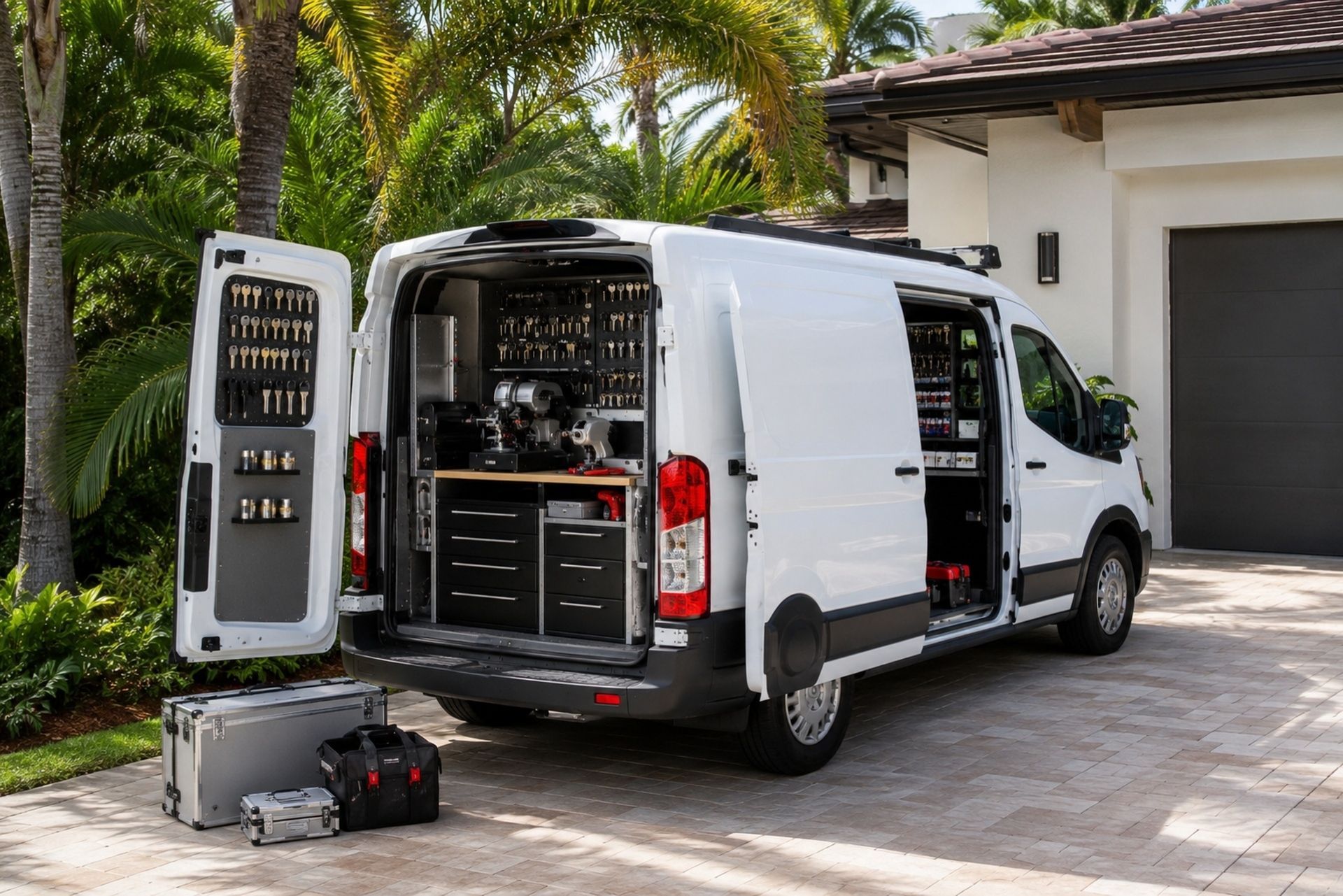
Most Florida locksmiths operate mobile businesses, which means your van or truck is both your office and your toolbox. Personal auto insurance won't cover accidents that happen while you're driving for business purposes. Commercial auto insurance fills that gap, covering collisions, liability, and sometimes the tools and equipment stored inside the vehicle.
A fully stocked locksmith van can carry $15,000 to $50,000 worth of key-cutting machines, pinning kits, transponder programmers, and specialty tools. An inland marine or tools and equipment policy protects this inventory whether it's in your van, at a job site, or stored at your shop.
Locksmith-specific insurance packages often bundle commercial auto with tools coverage for more favorable rates.
Comparing Insurance Needs: General Liability vs. Professional Liability
These two coverages are often confused, but they protect against fundamentally different risks. The table below clarifies the distinction:
| Feature | General Liability | Professional Liability (E&O) |
|---|---|---|
| What it covers | Bodily injury, property damage to third parties | Errors, omissions, faulty workmanship |
| Example claim | Customer trips over your equipment | Rekeyed lock fails, leading to a burglary |
| Typical annual cost | $400 - $800 | $500 - $1,200 |
| Required by clients? | Almost always | Often for commercial contracts |
| Covers care/custody/control? | No (requires separate endorsement) | No |
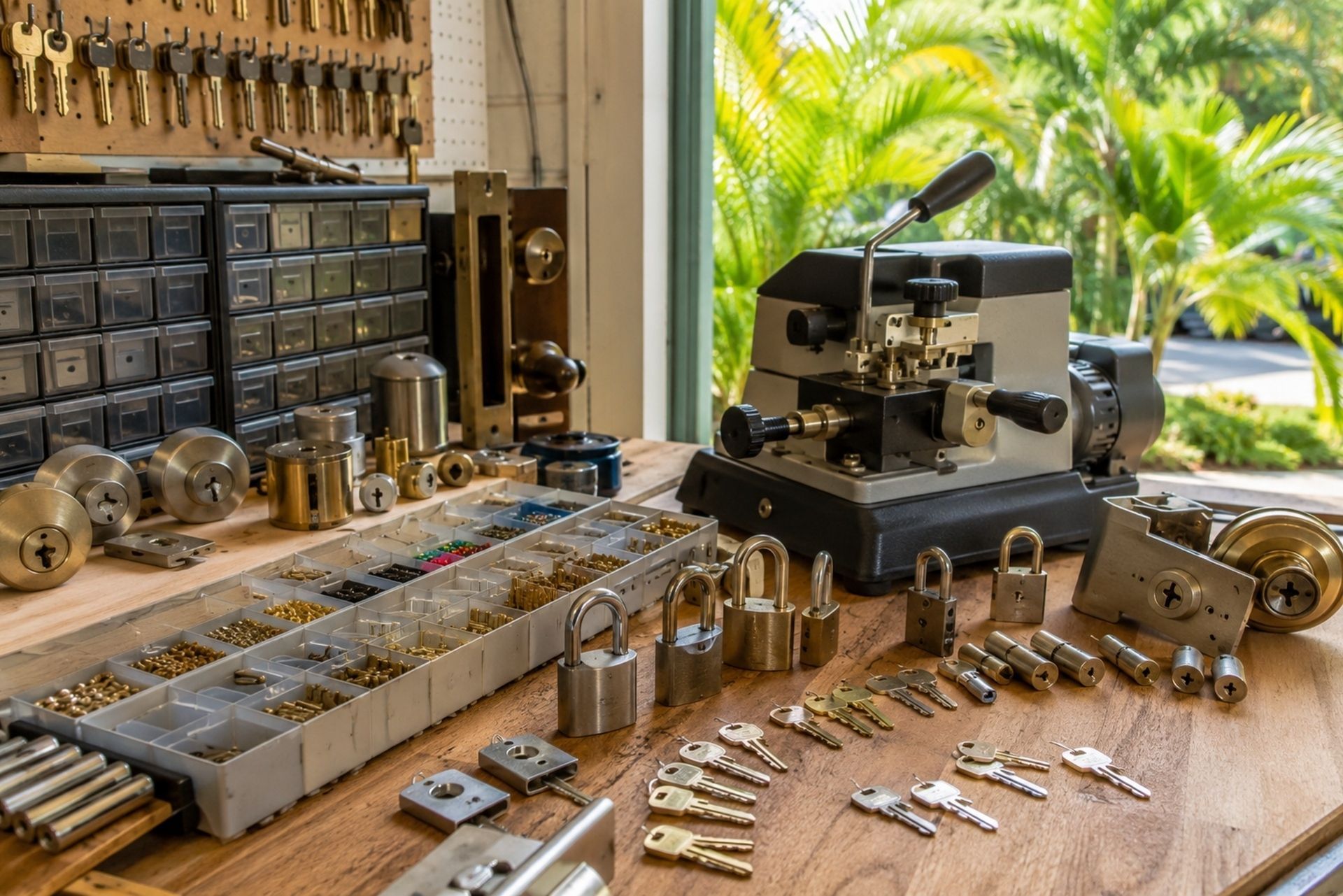
The catch is that neither policy covers damage to property you're actively working on or holding. If a customer hands you a set of antique keys and you lose them, or if you damage a vehicle's steering column during a lockout, you need a care, custody, and control (CCC) endorsement added to your general liability policy. CCC coverage is one of the most overlooked protections in the locksmith industry, and it's one of the most frequently triggered.
The Role of Surety Bonds in Florida
A surety bond is not insurance. It's a three-party agreement between you (the principal), your customer (the obligee), and the bonding company (the surety). If you fail to fulfill your obligations or act dishonestly, the bond provides financial recourse to the customer. You then owe the bonding company back for any payouts.
How a Surety Bond Protects Your Customers
Surety bonds exist primarily to protect consumers, not you. If a customer alleges that you duplicated their keys without authorization or damaged their property and refused to make it right, they can file a claim against your bond. The bonding company investigates and, if the claim is valid, pays the customer up to the bond's face value.
For locksmiths, bonds serve as a trust signal. They tell potential customers that a third party has vetted your business and stands behind your work. Even in counties where bonds are no longer legally required, many locksmiths maintain them voluntarily because commercial property managers and HOAs often include bonding in their vendor requirements.
Bonding Limits for Miami-Dade and Hillsborough Counties
Before HB 735 took effect, Miami-Dade County required locksmiths to carry a $10,000 surety bond, and Hillsborough County had similar bonding mandates. While these local requirements have been dissolved by the 2025 legislation, many locksmiths in these areas continue to maintain their bonds.
The cost of a $10,000 surety bond is typically $100 to $300 per year, depending on your credit score and business history. That's a minimal investment for the credibility it provides. If you operate in multiple counties, maintaining a bond at the highest previously required level ensures you meet any client's expectations regardless of location.
Common Questions About Locksmith Insurance
Do I need insurance if Florida doesn't require a locksmith license? Yes. The absence of a state license doesn't eliminate your liability exposure. Any customer can sue you for property damage, bodily injury, or faulty work, and without insurance, you're personally responsible for all legal costs and settlements.
What's the difference between a surety bond and insurance? A surety bond protects your customers. Insurance protects you. If a bond claim is paid out, you owe the bonding company that money back. Insurance claims are paid by the insurer based on your policy terms.
How much does locksmith insurance cost in Florida? A basic general liability policy runs $400 to $800 per year for a solo operator. Adding professional liability, commercial auto, and tools coverage brings the total to roughly $2,000 to $4,500 annually, depending on your revenue and service scope.
Does general liability cover damage to a customer's car during a lockout? Not usually. Damage to property in your care or control requires a care, custody, and control endorsement. This is one of the most common coverage gaps for mobile locksmiths.
Should I get insurance quotes from multiple carriers?
Gather quotes from at least four to six different carriers using identical coverage levels. An independent insurance agent who works with trade contractors can often access multiple markets and find better rates than going direct.
Steps to Securing Your Florida Locksmith Business
Getting properly insured doesn't need to be complicated, but it does require deliberate action. Start by assessing your actual risk exposure: the types of services you offer, the value of property you handle, and whether you work residential, commercial, or automotive jobs. Each service line carries different risks and may require different coverage endorsements.
Next, contact an independent agent who specializes in contractor or trade insurance. These agents understand the specific exposures locksmiths face and can build a policy package that includes general liability, professional liability, CCC coverage, commercial auto, and tools protection. Ask specifically about care, custody, and control endorsements, as many standard policies exclude this coverage by default.
Finally, maintain your surety bond even if your county no longer requires one. The annual cost is negligible compared to the trust it builds with customers and commercial clients. Keep certificates of insurance current and readily available, because you'll be asked for them regularly by property managers, general contractors, and HOA boards.
Your path forward is straightforward: identify your risks, build coverage around them, and treat insurance as a business investment rather than an expense. The locksmiths who thrive in Florida's competitive market are the ones who can prove they're properly protected, giving customers confidence before the first key is ever cut.
About The Author:
Evan Marcotte
As an Auto Insurance Specialist at 5-Star Insurance, I’m passionate about helping drivers get the protection they need with speed, clarity, and confidence. My goal is to make every policy simple to understand and every client fully supported — from quote to claim.
Menu Pop-Up
Real Reviews from Florida Drivers
At 5-Star Insurance, we help drivers across Florida get insured quickly and affordably even in challenging situations. Whether it’s handling SR-22 and FR-44 filings or finding the most budget-friendly policy, our clients count on us to make the process fast, simple, and stress-free. Here’s what some of them have shared

Coverage Tailored to Your Needs
We specialize in essential auto insurance products for Florida drivers:
Auto Insurance
Standard auto coverage for Florida drivers, including liability, comprehensive, and collision options.
Commercial Auto Insurance
Protection for vehicles used for business and commercial purposes.
Liability-Only Auto Insurance
Basic, affordable coverage meeting Florida’s minimum requirements.
SR-22 Insurance
Required filing for drivers needing to reinstate their license after violations.
Motorcycle Insurance
Affordable insurance for motorcycles, scooters, and similar vehicles.
Clear Answers to Your Auto Insurance Questions
At 5-Star Insurance, we make sure every driver understands their options. Whether you are dealing with a suspension, DUI, or just need affordable coverage, we are here to help you get back on the road with confidence.
Stay Informed with Our Latest Articles
Gain insights to make smarter decisions about your insurance coverage:
Check out Our Latest Videos
Quick clips to keep you up to date on SR22 and FR44 insights and news
Contact Us
