

Running a courier operation in Virginia means your vehicle is your livelihood, and a single uninsured accident can shut down everything overnight. Whether you're delivering medical supplies across Northern Virginia or handling same-day packages in Richmond, the insurance your
personal auto policy provides almost certainly won't cover you. This guide to Virginia
courier insurance coverage and costs breaks down the policies you need, what they'll run you each month, and how to keep premiums from eating into your margins. Virginia's updated liability minimums, which took effect in early 2025, have changed the baseline for every
commercial driver in the state. Understanding those changes, along with cargo protection, general liability, and workers' comp rules, is the difference between a protected business and a financial disaster waiting to happen. If you're an independent contractor or a small fleet owner, the specifics here apply directly to your situation. Don't assume your current coverage is enough just because you haven't filed a claim yet.
The Importance of Specialized Insurance for Virginia Couriers
Courier work creates a
risk profile that standard insurance products simply aren't designed for. You're driving more miles, carrying other people's property, and operating on tight schedules that increase exposure to accidents. Insurers know this, and they've structured their policies accordingly. The gap between what you think you're covered for and what your policy actually pays out can be devastating.
Personal Auto Policy Exclusions
Most personal auto policies contain a "business use" or "livery" exclusion that voids coverage the moment you're transporting goods for pay. This isn't a technicality that adjusters overlook. It's one of the first things they check after an accident. If your insurer determines you were on a delivery run, your claim gets denied, and you're personally liable for all damages, injuries, and legal costs.
The catch is that many couriers don't discover this exclusion until they file a claim. By then, it's too late. Some gig platforms like Amazon Flex or DoorDash provide limited coverage windows, but those policies typically carry high deductibles and only apply during active deliveries, not while you're driving to a pickup location.
Virginia State Minimums vs. Courier Requirements
Virginia raised its mandatory minimum liability limits effective January 1, 2025, increasing bodily injury coverage to $50,000 per person and $100,000 per accident, with $25,000 for property damage. These are the legal minimums for any registered vehicle. For courier operations, however, most insurance professionals recommend carrying at least $100,000/$300,000/$100,000 in liability limits.
Here's what that means for you: state minimums might keep you legal, but they won't keep you solvent after a serious accident. A multi-vehicle collision on I-95 can easily generate claims exceeding $200,000. Operating at minimum limits as a commercial driver is a calculated gamble that rarely pays off.

Essential Coverage Types for Delivery Professionals
Building the right insurance stack for courier work involves more than just upgrading your auto policy. You need coverage that protects your vehicle, the cargo you carry, and your business itself from third-party claims.
Commercial Auto Insurance
A commercial auto policy is the foundation of your courier insurance program. It covers liability, collision, and comprehensive protection while you're operating your vehicle for business purposes. Unlike personal policies, commercial auto explicitly accounts for the higher mileage, increased road time, and business-related risk that courier work involves.
Expect commercial auto premiums in Virginia to run between $150 and $350 per month for a single vehicle, depending on your driving record, the vehicle you operate, and your coverage limits. Carriers like Progressive Commercial and Nationwide offer policies tailored to delivery drivers, though rates vary significantly. Gathering quotes from at least four to six carriers using identical coverage levels gives you the most accurate price comparison.
Cargo and Inland Marine Coverage
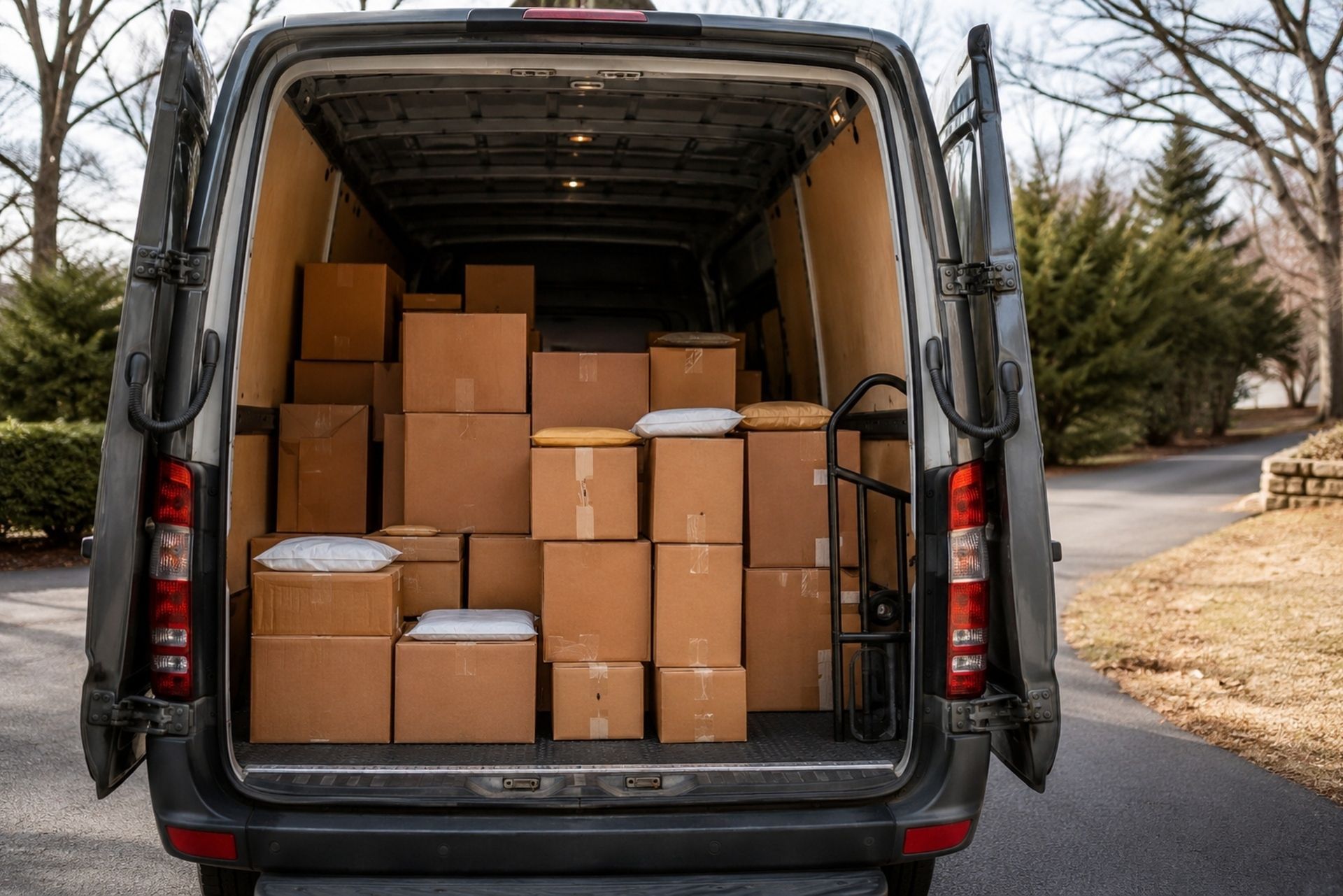
If you're transporting someone else's property and it gets damaged, stolen, or lost, you're responsible. Cargo insurance, sometimes structured as an inland marine policy, covers the goods in your possession during transit. Policies typically range from $5,000 to $100,000 in cargo limits, with premiums starting around $30 to $75 per month.
Medical couriers and those handling electronics or high-value documents should pay close attention to per-item sublimits within their cargo policies. A $50,000 cargo policy might cap individual item coverage at $1,000, which won't help if you're transporting a $15,000 piece of lab equipment.
General Liability for Independent Contractors
General liability insurance protects you from claims that fall outside your auto policy, such as a client alleging that your delivery caused property damage at their facility, or a slip-and-fall incident at a pickup location. Most contracts with logistics brokers and freight companies require independent contractors to carry at least $1 million in general liability coverage.
Annual premiums for a $1 million general liability policy typically fall between $400 and $1,200 for a solo courier operation in Virginia. This coverage is separate from your commercial auto policy and addresses a different category of risk entirely.
Your premium isn't a random number. Insurers calculate it based on measurable risk factors that you can partially control. Understanding these factors helps you make informed decisions about your coverage and your operations.
Service Radius and Territory Risks
A courier operating exclusively in suburban Loudoun County faces different risks than one running deliveries through downtown Norfolk or along the I-64 corridor. Urban territories carry higher premiums because of increased traffic density, higher theft rates, and more frequent claims. If your delivery radius includes Washington, D.C., expect your rates to reflect the metro area's elevated risk profile.
Drivers who can document a defined, lower-risk service area sometimes qualify for territory-based discounts. On the flip side, couriers who accept jobs across the entire state without geographic limits will pay more for that flexibility.
Vehicle Type and Payload Capacity
The vehicle you drive has a direct impact on your premium. A Honda Civic used for small-parcel delivery costs less to insure than a Ford Transit cargo van, both because of the van's higher replacement cost and its increased liability exposure due to size and weight. High-theft models, particularly older Honda and Toyota vehicles, also carry higher comprehensive premiums because vehicle theft rates directly influence how insurers price risk.
Payload capacity matters too. Vehicles rated for heavier loads present greater potential for property damage and bodily injury in an accident, which translates to higher
liability premiums.
Estimated Costs and Budgeting for Virginia Drivers
Here's a practical breakdown of what Virginia courier operators can expect to spend annually on insurance:
| Coverage Type | Monthly Estimate | Annual Estimate |
|---|---|---|
| Commercial Auto | $150 - $350 | $1,800 - $4,200 |
| Cargo / Inland Marine | $30 - $75 | $360 - $900 |
| General Liability | $35 - $100 | $400 - $1,200 |
| Workers' Comp (if required) | $50 - $150 | $600 - $1,800 |
| Total Range | $265 - $675 | $3,160 - $8,100 |
These figures assume a single-vehicle operation with a clean driving record. Adding a second vehicle or a driver with prior claims can push annual costs above $12,000. One thing to keep in mind: budgeting 8% to 12% of your gross revenue for insurance is a reasonable target for most courier businesses.
Virginia-Specific Regulations and Workers' Comp Requirements
Virginia has several insurance regulations that apply specifically to commercial delivery operations. The state does not operate under a no-fault insurance system, meaning the at-fault driver's liability coverage pays for the other party's damages. This makes adequate liability limits even more critical for couriers, since you could be held personally responsible for costs that exceed your policy limits.
Virginia is also one of the few states that allows drivers to pay an uninsured motor vehicle fee instead of carrying insurance, but this option applies only to personal vehicles and provides zero coverage. It's not a viable path for any commercial operation.
The Two-Employee Rule for Workers' Compensation
Virginia requires workers' compensation insurance for any business with two or more employees, including part-time workers. If you're a solo independent contractor, you're exempt. But the moment you hire a helper, even occasionally, you trigger the requirement.
The penalty for operating without required workers' comp in Virginia is severe: fines up to $250 per day of noncompliance, plus personal liability for any workplace injury. Some courier operators carry a voluntary workers' comp policy even as solo operators because certain contracts and brokers require it as a condition of doing business.
Strategies for Reducing Your Annual Insurance Expenses
Insurance is a fixed cost, but it's not immovable. Several practical strategies can lower your premiums without sacrificing the coverage you need.
Fleet Safety and Telematics Programs
Telematics programs like Progressive's Snapshot and State Farm's Drive Safe & Save monitor driving behaviors including hard braking, rapid acceleration, time of day, and total mileage. Drivers who demonstrate safe habits through these programs can earn discounts of 10% to 25% on their premiums. The trade-off is privacy: these devices track your location and driving patterns continuously, and that data belongs to the insurer.
For small fleet operators, establishing a formal safety program with documented training, regular vehicle inspections, and incident reporting procedures can qualify you for fleet safety discounts. Some carriers offer these reductions for as few as three vehicles.
Bundle and Deductible Management
Bundling your commercial auto, general liability, and cargo coverage with a single carrier often produces savings of 10% to 15% compared to purchasing each policy separately. A local independent agent can compare bundled packages across multiple carriers, which is particularly useful since not every insurer writes all three coverage types.
Raising your collision and comprehensive deductibles from $500 to $1,000 can reduce your premium by 15% to 20%. That said, make sure you can comfortably cover the higher deductible out of pocket if you need to file a claim. Setting aside a small emergency fund specifically for deductible payments is a practical approach.
Frequently Asked Questions
Does my DoorDash or Amazon Flex coverage replace commercial auto insurance? No. Platform-provided coverage only applies during active delivery windows and typically carries deductibles of $1,000 to $2,500. You need your own commercial policy for full protection.
Can I add a commercial endorsement to my personal auto policy instead? Some insurers offer a "business use" endorsement, but these are designed for occasional business driving, not full-time courier work. Most won't cover regular delivery operations.
What is an SR-22, and does it affect courier insurance? An SR-22 is a certificate of financial responsibility that Virginia requires after certain violations like DUI or driving uninsured. It's not a separate policy but a filing your insurer makes on your behalf. An FR-44, specific to Virginia, requires higher liability limits of $50,000/$100,000/$40,000 and applies after DUI convictions. Both filings increase your premiums significantly.
How many quotes should I get before choosing a policy? Aim for four to six quotes using identical coverage levels. Rates for the same driver and vehicle can vary by 40% or more between carriers.
Do I need cargo insurance if I only deliver documents? It depends on the value of what you're carrying. Legal documents, medical records, and financial paperwork can carry significant replacement or liability costs if lost or damaged.
Your Path Forward
Securing the right insurance for your Virginia courier operation isn't just a legal checkbox. It's the foundation that lets you take on better contracts, protect your income, and operate with confidence. Start by reviewing your current personal auto policy for business-use exclusions. Then request commercial auto quotes from at least four carriers, making sure each quote reflects identical coverage limits so you're comparing real numbers.
Work with a local independent agent who understands Virginia's commercial auto market. They can access carriers that don't sell directly to consumers and help you build a coverage package that fits your specific operation. Your courier business deserves protection that matches the risks you face every day on Virginia roads. Take the time to get this right, and you'll avoid the financial consequences that catch unprepared drivers off guard.
About The Author:
Evan Marcotte
As an Auto Insurance Specialist at 5-Star Insurance, I’m passionate about helping drivers get the protection they need with speed, clarity, and confidence. My goal is to make every policy simple to understand and every client fully supported — from quote to claim.
Menu Pop-Up
Real Reviews from Florida Drivers
At 5-Star Insurance, we help drivers across Florida get insured quickly and affordably even in challenging situations. Whether it’s handling SR-22 and FR-44 filings or finding the most budget-friendly policy, our clients count on us to make the process fast, simple, and stress-free. Here’s what some of them have shared

Coverage Tailored to Your Needs
We specialize in essential auto insurance products for Florida drivers:
Auto Insurance
Standard auto coverage for Florida drivers, including liability, comprehensive, and collision options.
Commercial Auto Insurance
Protection for vehicles used for business and commercial purposes.
Liability-Only Auto Insurance
Basic, affordable coverage meeting Florida’s minimum requirements.
SR-22 Insurance
Required filing for drivers needing to reinstate their license after violations.
Motorcycle Insurance
Affordable insurance for motorcycles, scooters, and similar vehicles.
Clear Answers to Your Auto Insurance Questions
At 5-Star Insurance, we make sure every driver understands their options. Whether you are dealing with a suspension, DUI, or just need affordable coverage, we are here to help you get back on the road with confidence.
Stay Informed with Our Latest Articles
Gain insights to make smarter decisions about your insurance coverage:
Check out Our Latest Videos
Quick clips to keep you up to date on SR22 and FR44 insights and news
Contact Us
